


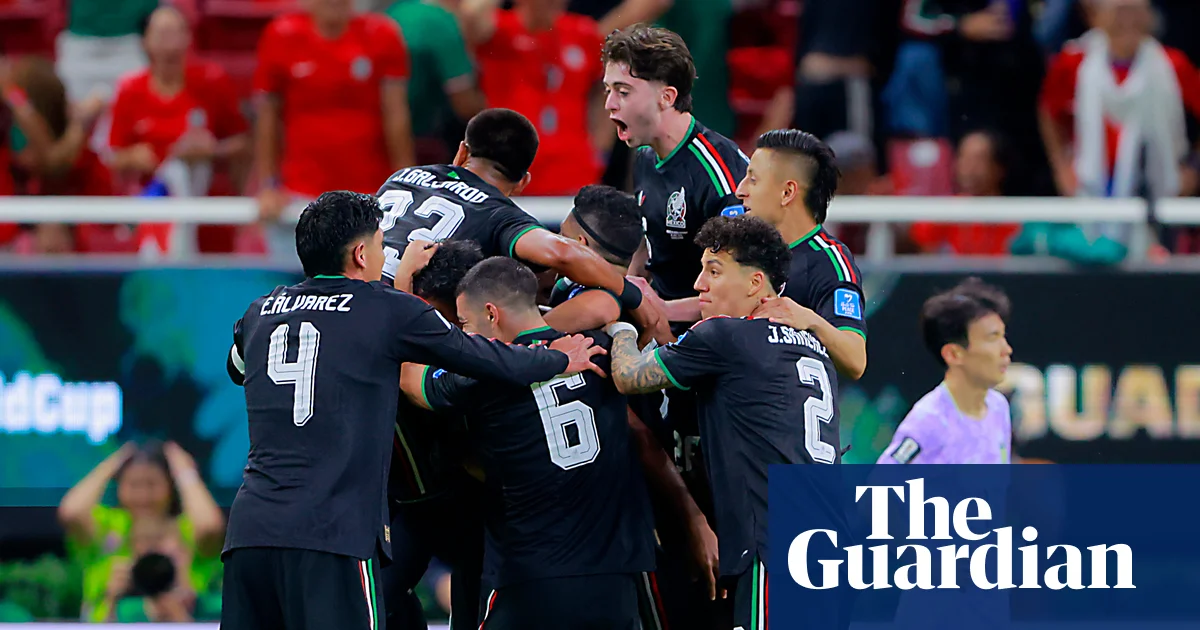
Mexico Defeats South Korea, Securing Knockout Stage in 2026 World Cup
With a striking black and lilac color scheme, Mexico has made history by becoming the first team to qualify for the knockout stages of the 2026 World Cup. Remaining in Mexico City at the top of their group sets the stage for a formidable clash in the Round of 16 at the iconic Azteca Stadium. Following their opening victories, the question lingered for both Mexico and South Korea: did they prove their strength, or were their opponents simply lacking? The match offered a definitive answer—both teams struggled to showcase creativity.
Decisive Goal Highlights South Korea’s Error
The only goal of the match came after 50 minutes and was notably a gift from South Korea. Goalkeeper Kim Seung-gyu miscalculated a looping header that eluded defender Lee Ki-hyuk and led to a fumble. This fortunate error allowed Luis Romo to capitalize, netting his fifth goal for Mexico in his 64th appearance. Romo was one of three players altered from Mexico’s initial lineup, stepping in for Alvaro Fidalgo after coach Javier Aguirre opted against starting 17-year-old Gilberto Mora, amid public demand. Romo’s contribution was crucial, complemented by Raul Rangel’s spectacular double save that held the lead intact during the game’s dying moments.
Aguirre Credits Team’s Maturity
Reflecting on the match, Aguirre acknowledged the tactical nature of the game, which he believed might have been challenging for fans to appreciate. “This win speaks to our maturity as a team,” he stated. Despite a few scares, notably a close opportunity before Rangel’s impressive save, Aguirre emphasized the team’s ability to manage tightly contested matches. In his third World Cup with Mexico, the coach noted his own evolution, stating he has learned to stay calm in pressure situations, including accepting the team’s affinity for technology and smartphones during training.
Estadio Akron: A New Venue with Old Memories
This match marked the first World Cup appearance for Mexico in Guadalajara, yet attendance fell short of expectations. While the crowd was larger than when South Korea faced the Czech Republic, many plastic seats remained conspicuously unoccupied, particularly in the corporate sectors around the stadium. Unlike the historic Estadio Jalisco, where pivotal moments transpired in past tournaments, Estadio Akron, which opened in 2010, boasts a modern design but lacks the nostalgic ambiance fans reminisce about.
Expectation vs. Reality on the Pitch
Both teams seemed to play with the knowledge that a draw would secure their advancement, lacking the urgency seen in their previous matchups. Notable was the patience displayed by the crowd; although they were generally supportive, their frustrations surfaced when Mexico went ahead against ten men in an earlier game, resulting in boos from the stands. In this encounter, spectator restlessness mirrored the on-field play, marked by a slow build-up where the first corner kick only materialized during stoppage time.
Cultural Connections and Competitive Spirit
Mexico and South Korea share a rich history dating back to the arrival of Korean immigrants in 1905, culminating in a free trade agreement initiated in 2012, although it remains unratified. Currently, South Korea ranks as Mexico’s sixth-largest trading partner. Despite this friendship off the pitch, the competition on the field remained fiercely competitive. A mistake from Kim proved advantageous for Mexico, yet his subsequent save from Raul Jimenez was not enough to alter the final result.
South Korea Faces Challenges Ahead
South Korea’s journey into this match was marred by controversy, following the leak of a video featuring journalists making disparaging remarks about Son Heung-min’s military service. In solidarity, players opted out of media engagements just days before the match. On field, Son struggled to perform, unable to adapt to Mexico’s offside strategy and ultimately being substituted. Coach Hong Myung-bo voiced disappointment regarding the match outcome, acknowledging the mistakes but maintaining hope for their next game against South Africa, which, if drawn, could still see them progress, although their advancement seems uncertain. Meanwhile, Mexico’s two wins have highlighted their solid, albeit functional play, creating mixed feelings about their overall performance.
