


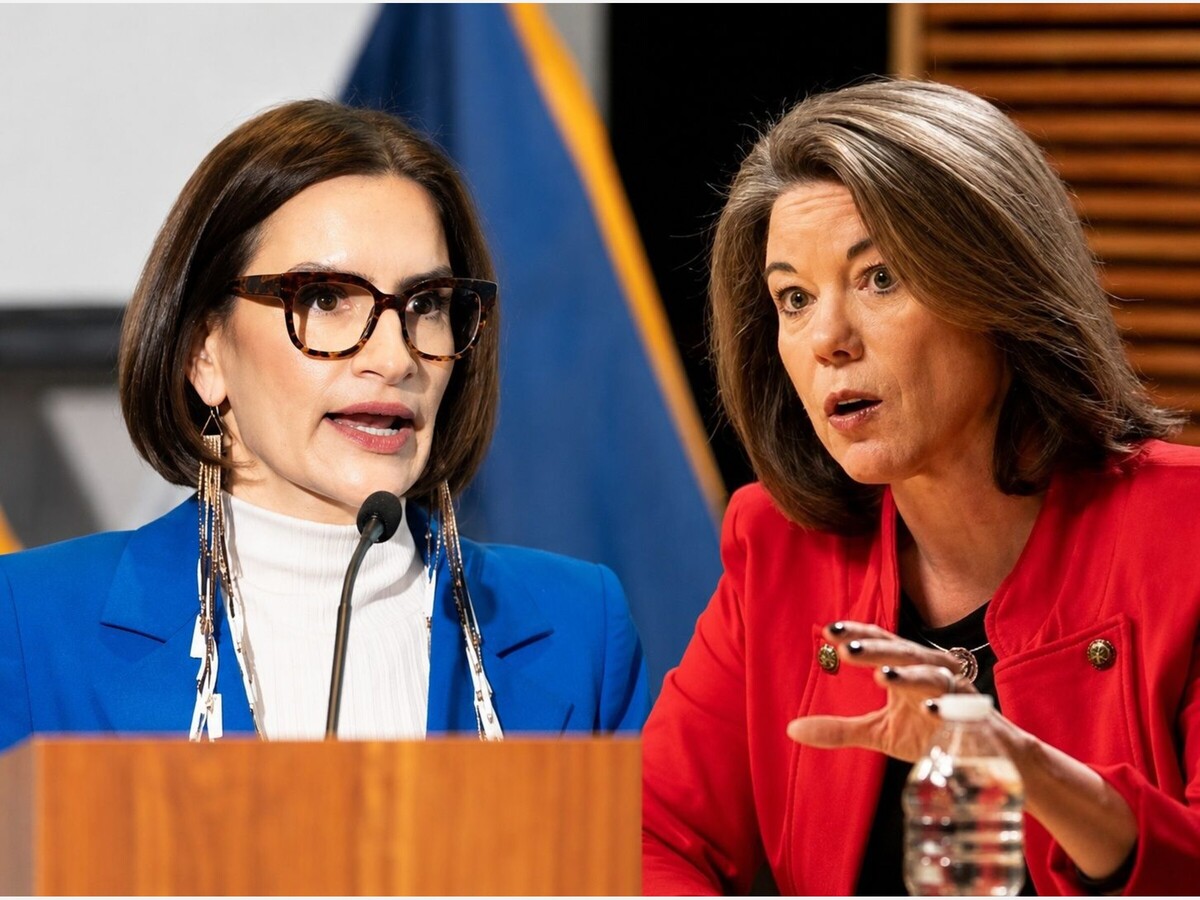
Confrontation Marks Minnesota’s Senate Race as Candidates Debate
ST. PAUL, Minn. (June 21, 2026) — The race to succeed retiring U.S. Senator Tina Smith escalated significantly on Friday night, as U.S. Representative Angie Craig and Lieutenant Governor Peggy Flanagan shared the debate stage for the first time. This moment provided voters with a direct comparison of their divergent visions for the future leadership of the Democratic-Farmer-Labor Party (DFL).
The 30-minute debate aired statewide on PBS’s “Almanac” in the Twin Cities, showcasing the first televised face-off between the two frontrunners vying for the DFL’s vacant Senate nomination. With the August 11 primary just around the corner, this event underscored the high stakes involved in one of Minnesota’s most intense political contests in recent memory.
Although both candidates identify as Democrats, the debate highlighted notable differences in their policy priorities, political strategies, and governing philosophies, as well as the coalitions each aims to forge ahead of the general election.
This debate also represents a pivotal moment in a race increasingly viewed as a proxy conflict between influential factions within the modern DFL. Flanagan, who has served as Minnesota’s lieutenant governor since 2019 and is recognized as a leading progressive figure, garnered the DFL’s official endorsement to a resounding ovation during the party’s state convention in Rochester last May. In contrast, Craig opted out of the endorsement process, claiming a focus on engaging directly with the broader statewide primary electorate rather than just party delegates.
These differing approaches are central to their respective campaigns. Craig presents himself as a pragmatic legislator with a proven record of winning tough elections in Minnesota’s competitive 2nd Congressional District. Since his election to Congress in 2019, Craig has successfully defended his seat in what is considered one of the state’s most hotly contested districts.
Flanagan, on the other hand, positions herself as a coalition builder focused on affordability, economic stability, and expanding opportunities for working families. Her campaign emphasizes critical issues such as housing costs, affordable childcare, healthcare access, and economic equity. The debate covered a wide array of topics, but immigration quickly emerged as a particularly contentious issue.
Craig defended his support for increased border security, citing his endorsement of federal immigration laws like the Laken-Riley Act. Signed into law earlier this year, the act expands federal mandatory detention for certain undocumented immigrants accused of violent crimes. While proponents argue it enhances public safety, opponents contend it contributes to a broader immigration crackdown, further complicating the landscape in states like Minnesota.
In response to this heated topic, Flanagan emphasized the need for a more compassionate approach to immigration policy, focusing on principles like family stability and community trust. Candidates also addressed the imperative of government accountability in light of recent high-profile corruption investigations that have marred state government operations. Flanagan defended the current administration’s actions, stating that Governor Tim Walz has taken responsibility for acknowledging and addressing vulnerabilities.
Craig countered, insisting that voters expect accountability from all levels of government and questioned whether the administration had sufficiently taken responsibility. This exchange underscored a recurring challenge for Flanagan: as lieutenant governor, she must balance defending the current administration’s record while convincing voters that she embodies the future of leadership.
Campaign finance emerged as another lingering point of contention. Flanagan emphasized her refusal to accept donations from corporate political action committees, framing her campaign as a battle between grassroots activism and conventional political fundraising. Craig defended his fundraising approach, arguing that competitive statewide campaigns require substantial financial resources and underscoring his ability to build coalitions that can succeed in both primary and general elections.
The candidates delved into various topics, including U.S.-Israel relations, Social Security, and the economic challenges faced by Minnesota families. Flanagan frequently returned to the issue of affordability, while Craig focused on legislative efficacy and the importance of experience in winning competitive elections. Both candidates cited polling data indicating that the party maintains a favorable stance among Democratic voters, amplifying the uncertainty that continues to shape the race.
With the stakes particularly high, as vacancies in the U.S. Senate are rare in Minnesota, Smith’s retirement has led to one of the most significant political battles of the 2026 cycle. The eventual Democratic nominee will face a challenging contest against Republicans, including prominent candidates like former sportscaster Michele Tafoya and businessman Adam Schwartz, who are eager to address voter concerns regarding inflation, immigration, and public safety.
The Friday debate marked just the beginning of their exchange, with Craig and Flanagan set to face each other at least two more times leading up to the primary, including a highly anticipated forum at Farmfest in early August focusing on rural issues and economic development. As the campaign progresses into summer, Minnesota Democrats are presented with a critical choice between two prominent figures who may differ in their approaches but share similar policy goals. Craig’s narrative emphasizes experience and electability, while Flanagan’s focuses on grassroots mobilization and progressive governance. The discussion has evolved beyond a simple candidate matchup to a broader debate on the vision for Democratic politics in Washington as Minnesota heads towards a new chapter.
