


Federal Judge Blocks Trump Administration’s Subpoena of Minnesota Officials
A federal judge has halted the Trump administration’s effort to subpoena Minnesota Governor Tim Walz and other state officials. The judge accused the Justice Department of misusing its investigative powers to retaliate against state leaders who resisted federal initiatives aimed at cracking down on illegal immigration.
Subpoena Found to Be Retaliatory
In a ruling issued on Monday, U.S. District Judge Patrick Schultz determined that the “primary purpose” of the subpoena was to coerce Minnesota authorities into supporting federal enforcement of immigration laws, while also harassing those who refused to comply. This decision further reflects the ongoing tensions between the Trump administration and Minnesota’s Democratic leadership.
Escalating Tensions Following Clashes
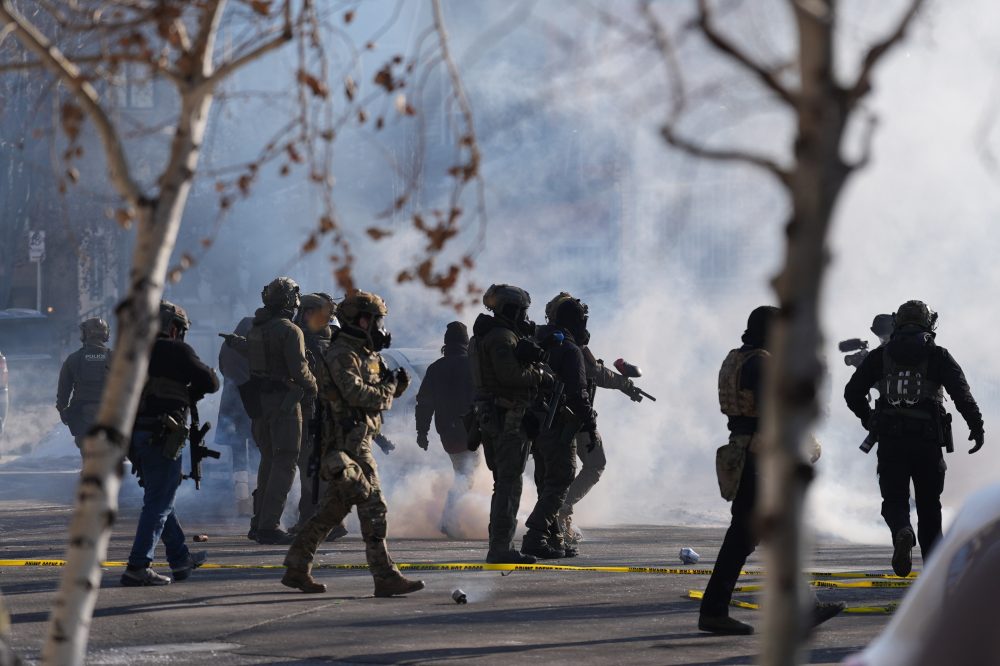
These tensions reached new heights in January when federal immigration agents clashed with protesters in the Minneapolis-St. Paul area following police shootings involving Renée Good and Alex Preti. President Trump even threatened to invoke the Insurrection Act to quell the unrest, claiming that Governor Walz, who is aligned with 2024 Democratic presidential candidate Kamala Harris, was encouraging protesters to obstruct the operations of Immigration and Customs Enforcement (ICE).
Details of the Subpoena
The subpoena, served in January, was part of an inquiry into whether Walz and his colleagues obstructed law enforcement efforts. It specifically targeted records from Governor Walz, Attorney General Keith Ellison, Minneapolis Mayor Jacob Frey, St. Paul Mayor Kaori Harr, and officials from Ramsey and Hennepin counties.
Implications of the Judicial Ruling
This ruling represents yet another setback for the Justice Department in its attempts to enforce the Trump administration’s policies and to investigate political opponents through subpoenas. Judge Schultz highlighted that there was “very weak or no connection” between the information being sought and any potential criminal activity. He acknowledged that the materials requested largely pertained to constitutionally protected conduct, affirming that Minnesota has the legal right not to allocate resources towards enforcing federal immigration laws.
Political Reactions Following the Ruling
In response to the ruling, Governor Walz deemed it a “victory for the rule of law and democracy.” He alleged that the U.S. Department of Justice was engaged in criminal investigations targeting the president’s political adversaries. “The incidents we see in Minnesota and nationwide serve as reminders of this administration’s misconduct,” he stated.
Concerns Over Justice Department’s Integrity
Ellison emphasized the troubling nature of the Justice Department’s actions, suggesting they signal a troubling trend of using the criminal justice system as a political weapon. Meanwhile, Mayor Frey characterized the investigation as lacking genuine intentions of justice or law enforcement, remarking that “summoning political opponents for advocating on behalf of their constituents violates core tenets of democracy.”
Ongoing Legal Challenges and Broader Implications
Amidst ongoing legal battles related to immigration policies, the Justice Department faces increased scrutiny for its perceived politicization. New allegations have surfaced, with Vice President J.D. Vance calling for an investigation into Walz and Ellison for allegedly ignoring widespread social services fraud. Walz and Ellison have denounced these claims as politically motivated while defending Minnesota’s efforts to combat fraud.
