


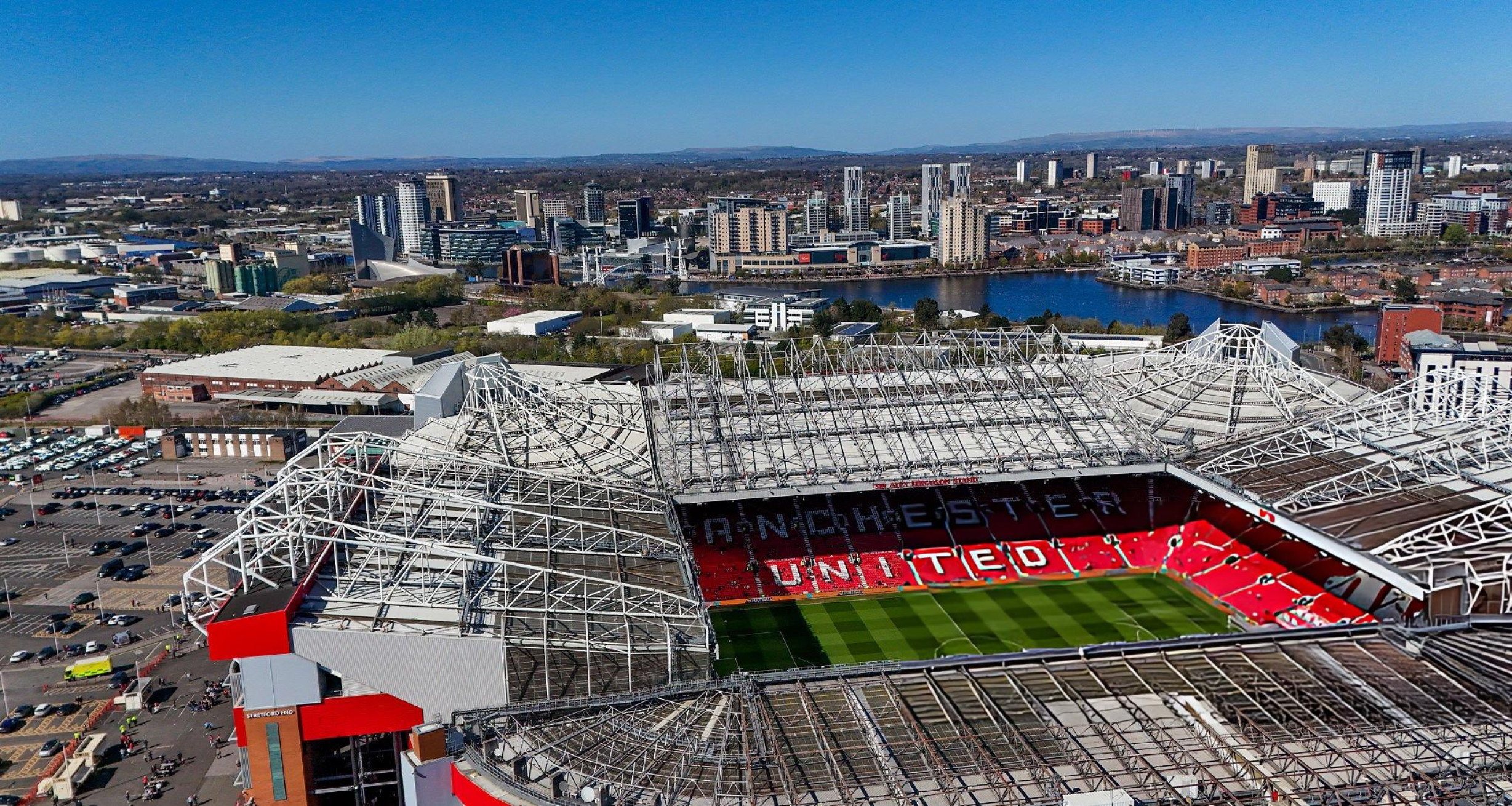
Manchester United has announced significant progress in its plans for a new 100,000-seat stadium by securing the majority of the necessary land. This marks a pivotal step in the club’s transformative vision for the future.
On Monday, the Premier League club confirmed its acquisition of a 25-acre site adjacent to Old Trafford, which is set to become the largest sports arena in Britain. The ambitious project, first introduced by minority owner Sir Jim Ratcliffe in March 2025, has an estimated cost of around £2 billion ($2.64 billion), though the club has yet to disclose the financing details for this landmark development.
The land acquisition signals a clear commitment from United to move forward with its plans to create a modern home for the club, stepping away from its historic stadium. This transition is seen as essential for the club’s long-term vision.
Securing a Key Location for Development
A source at the club confirmed that United has acquired a triangular plot situated between Wharfside Way, Europe Way, and John Gilbert Way, adjacent to the car park behind the iconic Stretford End. This site will provide the necessary space for the development of the proposed state-of-the-art stadium.
The land was purchased from Indurent, a prominent provider in the industrial space sector and part of Blackstone’s portfolio. However, the club did not disclose the financial details regarding the land acquisition or how the transaction was financed. Ongoing negotiations with existing leaseholders in the area are expected to take place prior to the commencement of construction.
Club Leadership Welcomes Milestone
Colette Roche, Manchester United’s chief executive for the new stadium initiative, described the land acquisition as a crucial advancement in the club’s long-term goals. She expressed enthusiasm about this step forward in realizing a world-class home for Manchester United.
Roche highlighted that building near Old Trafford would allow the club to honor the traditions and identity cherished by its supporters. She emphasized the commitment to engaging fans throughout the process of creating a stadium that prioritizes atmosphere, affordability, and accessibility.
She pointed out that the redevelopment represents a once-in-a-generation opportunity, aligning perfectly with the club’s ambitions for both regional and national growth. Securing a suitable site has been a pivotal milestone for the organization.
Potential Challenges and Project Vision
When Sir Jim Ratcliffe unveiled his vision for the new stadium, skepticism existed regarding the feasibility of such an ambitious project. Despite mixed reactions to the design, discussions surrounding land acquisition have persisted, showcasing the confidence of United officials in the project’s progression.
The stadium is anticipated to serve as the centerpiece of a larger regeneration initiative for the Old Trafford area, overseen by the Old Trafford Regeneration and Mayoral Development Corporation. This vision aims to rejuvenate the neighborhood while preserving its historical significance.
Political Developments and Their Impact
The announcement coincides with a significant political transition, as Andy Burnham, a vocal supporter of the project and outgoing Mayor of Greater Manchester, steps down to serve as Makerfield MP. While his departure has raised concerns about future developments, sources indicate that the project remains on track. They assert that only the UK government holds the authority to substantially alter or halt the ambitious regeneration plan.
Uncertainty Surrounds Funding
Despite recent strides in land acquisition, questions regarding funding persist. Manchester United recently secured $550 million (£415.35 million) to refinance existing bonds due in June 2027. However, it remains unclear whether these funds were allocated for the recent land purchase, and the specifics of financing the projected £2 billion construction cost have not been disclosed by the club or Sir Jim Ratcliffe.
Improving Transport Infrastructure
A notable advantage of the chosen location is its potential to enhance transport accessibility for fans. Club officials believe it offers the opportunity to add an additional stop to Manchester’s Metrolink network, ensuring better connections to the broader rail system. Improving transport infrastructure is deemed essential for accommodating 100,000 spectators, with the aim of surpassing Wembley Stadium as England’s largest sporting venue.
Upcoming Master Plan Presentation
Supporters can look forward to more information as the draft masterplan for the Old Trafford regeneration project will be unveiled on July 9. This presentation is expected to clarify how the new stadium will fit into the surrounding landscape and outline the future of one of football’s most celebrated venues.
