


Republicans Override Governor’s Vetoes in North Carolina
RALEIGH, N.C. – North Carolina Republicans advanced several contentious bills this week, successfully overriding vetoes from Democratic Governor Josh Stein despite his staunch opposition.
As the state prepares for the 2024 elections, key legislative positions will remain in the hands of Democrats, marking a narrow loss for Republicans in their bid for a veto-proof majority. However, the absence of two legislators enabled the GOP to push through measures with a three-fifths majority needed for overrides.
Among the bills passed was a significant immigration initiative, alongside a series targeting diversity, equity, and inclusion (DEI) initiatives within state and local governments, public education systems, and universities.
Following months of stagnation due to Stein’s vetoes, driven by the House’s failure to achieve the requisite majority during the 2025 session, legislators finally made headway. Despite Speaker Destin Hall’s assertion that the party seemed to function with a supermajority, the path to passing these bills faced several challenges.
Notably, Senate Bill 227 restricts DEI efforts in the K-12 educational sector by barring public school employees from teaching or engaging with what the bill deems “divisive concepts.” These concepts include teachings that suggest superiority based on race or gender and the categorization of individuals as inherently oppressive due to their identity.
The legislation explicitly prohibits public schools from endorsing discriminatory practices, promoting divisive concepts to students and staff, or developing DEI departments. Furthermore, it restricts the incorporation of DEI topics into employee training programs.
In reflecting on the implications of the bill, Hall stated it aims to eliminate race considerations in government decision-making. He emphasized that while private companies can maintain their own DEI policies, taxpayer-funded entities should not engage in such practices.
Governor Stein criticized the legislation, advocating for a focus on increasing diversity and encouraging diverse perspectives in educational settings. He argued that students should be allowed the freedom to learn from a variety of viewpoints, rather than having their education constrained.
Another bill approved on the same day seeks to dismantle DEI frameworks in higher education, coinciding with North Carolina’s university system’s plans to eliminate its own DEI policy by 2024. This legislation forbids state universities from maintaining DEI offices or adopting teachings that imply individuals’ worth should be associated with their race or gender.
Democratic House Leader Robert Reeves II expressed concern over the impact of these measures on the educational landscape and the state’s future competitiveness, highlighting the importance of diverse perspectives in fostering growth and opportunity.
Additionally, House Bill 171, which is awaiting a final Senate vote, proposes restricting state agencies from supporting DEI initiatives in hiring and training, imposing potential fines and removal penalties for violators.
House Majority Leader Brenden Jones defended the bill, suggesting it would restore merit-based recruitment practices and ensure equal access to government services for all citizens.
In a recent legislative session, the amendment known as the North Carolina Border Protection Act was also passed, which mandates collaboration between state law enforcement agencies and ICE to identify custody cases involving illegal immigration. Critics warn that this measure could strain community relations and exacerbate fears surrounding deportation.
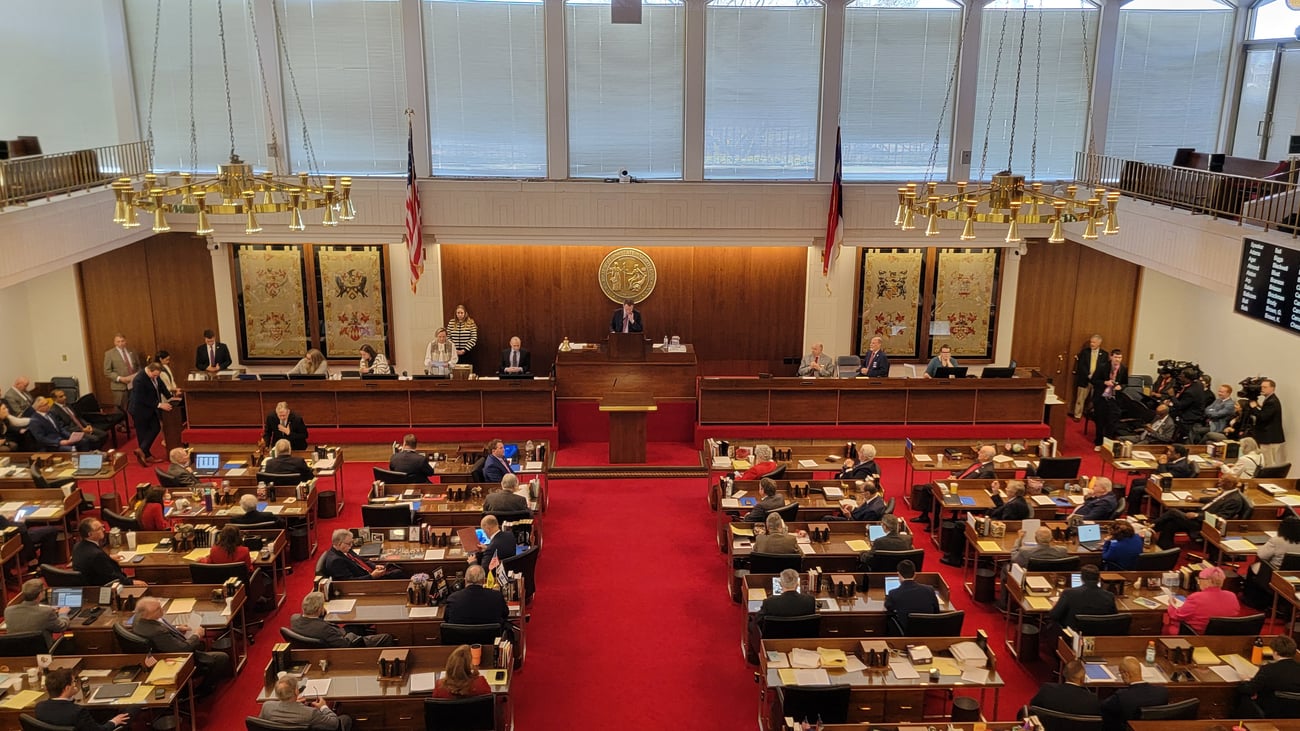
Discussions on these bills faced limitations, as Hall restricted debate to three minutes for both sides, leading to a 71-47 party-line vote on all four measures. Absent from the vote were two legislators, one of whom, Carla Cunningham, recently shifted her party affiliation from Democrat to Independent, prompting scrutiny from her peers.
While legislative leaders work on a biennial budget, Democrats have been vocally critical of the majority party’s delays, pointing out that it has been over 1,000 days since the last budget was approved in September 2023. The ongoing disagreements among Republicans over spending priorities have postponed consensus, leaving essential public service raises in limbo.
Stein remarked on the ongoing stalemate, accusing the General Assembly of igniting a divisive culture war instead of meeting their fiscal obligations to advance the state’s interests.
