


(TNND) — The Supreme Court delivered two significant victories for the Trump administration regarding immigration policy on Thursday, but experts remain uncertain about how the justices will address a pending case concerning birthright citizenship next week.
Birthright citizenship presents a unique challenge, according to Ernest Sagas, a political expert and immigration policy scholar at Colorado State University.
Kevin R. Johnson, a law professor at the University of California, Davis, noted that the decisions made this week—one concerning temporary protection for immigrants fleeing violence or disaster and the other related to implementing “metering” measures to control asylum requests at the border—demonstrate the president’s considerable discretion under immigration statutes.
Johnson argued that the same logic does not extend to the constitutional requirement of birthright citizenship. He believes that, despite a challenging term for immigrants before the Supreme Court, the justices may uphold birthright citizenship as guaranteed by the Constitution, potentially invalidating parts of the executive order aimed at overturning it. This could result in continued citizenship rights for individuals born on U.S. soil.
He anticipates a ruling on the birthright citizenship issue will likely be issued by Monday or Tuesday at the latest.
Implications of the TPS Decision
Temporary Protected Status (TPS) allows the Secretary of Homeland Security to temporarily designate countries that are unsafe for their nationals due to crises such as war or natural disasters.
Established in the 1990s, this program was designed to provide refuge for foreign nationals who’ve fled dire circumstances in their home countries. Currently, twelve nations are designated for TPS by U.S. Citizenship and Immigration Services.
Last year, former Secretary of Homeland Security Kristi Noem lifted TPS designations for Haiti and Syria, impacting approximately 350,000 Haitians and over 6,100 Syrians currently benefiting from this protection, according to official government figures.
The Supreme Court’s 6-3 ruling empowered the government to revoke TPS status at its discretion. Consequently, many Haitians and Syrians residing in the U.S. under this program could find themselves facing loss of status, work authorization, and potential deportation.
While government officials emphasize the temporary nature of TPS, many individuals have been living in the U.S. under its protections for years. Haiti was designated for TPS in 2010, and Syria followed in 2012.
Johnson observed that the TPS Act is intended to protect individuals from unsafe conditions in their home countries. Adjustments in TPS status for Haiti raise questions about what constitutes a “temporary” situation, given the years of ongoing violence and turmoil.
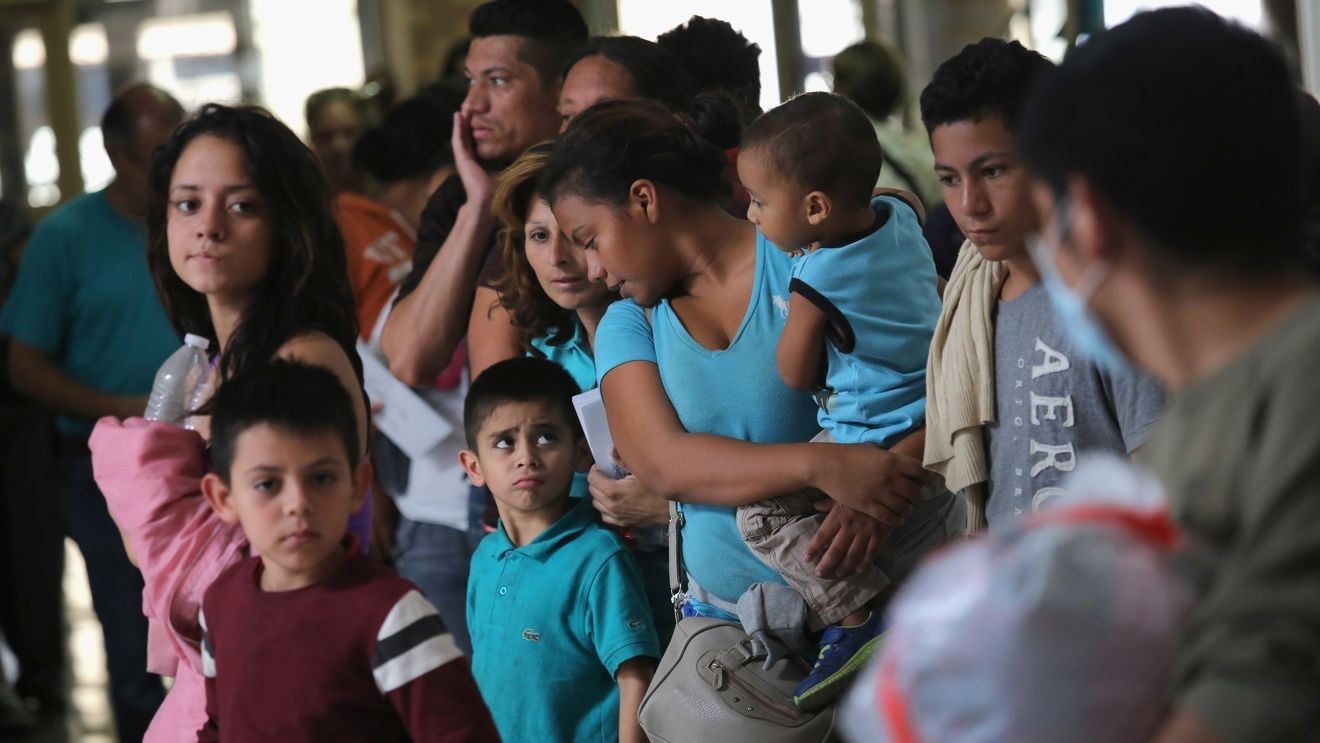
Sagas described the precarious situation for Haitians and Syrians, who live daily with the uncertainty that their temporary legal status could change at any moment.
In a case that made its way to the Supreme Court, Haitian plaintiffs challenged the decision to revoke TPS, raising concerns about the process followed by Noem and arguing that racial bias influenced the ruling, which they claimed violated the Constitution’s Equal Protection Clause. However, Justice Samuel Alito, representing the conservative majority, stated that decisions regarding TPS are generally not subject to judicial review, dismissing the racial discrimination argument.
Border Metering Policy Overview
Another 6-3 decision announced on the same day permits the president to implement border metering policies. This approach, initially used during the Obama administration to manage the influx of asylum seekers, was reinstated during Trump’s presidency but was reversed in 2021.
Metering limits migrants’ ability to apply for asylum until they physically reach the U.S. border, despite the legal right to seek refuge if facing credible threats in their home countries.
Johnson criticized the Supreme Court’s ruling, deeming it problematic. He expressed concerns that it could lead to scenarios in which the U.S. blocks entry for asylum seekers and then denies them the chance to apply for legal protection.
According to Sagas, the court’s ruling diverges from the fundamental spirit of U.S. immigration law, particularly following World War II when the U.S. embraced immigrants more willingly.
The narrative surrounding immigration has shifted over the years, with changing perceptions that have emerged during the Biden administration, often portraying the border as being “open” or chaotic.
Alito’s majority opinion emphasized the legal implications of metering and the criteria for determining when an immigrant has “arrived” at the border. He analogized the situation to sports scenarios, comparing asylum seekers turned away at the border to football players being tackled just short of a goal.
This analogy sparked criticism from Johnson, who voiced concern over its insensitivity in light of the serious nature of asylum cases. He pointed out that such comparisons could diminish the humanitarian aspect of individuals fleeing violence.
Johnson further emphasized that the legal framework governing asylum should not be manipulated to erect barriers against migrants seeking refuge.
