


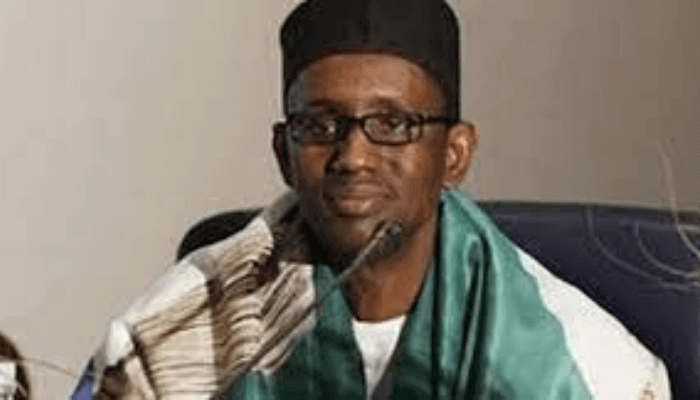
Marking Three Years of New Security Leadership in Nigeria
June 26, 2026, marks the third anniversary of President Bola Ahmed Tinubu’s appointment of Malam Nuhu Ribadu as National Security Adviser (NSA). Over these three years, Nigeria has undergone a significant transformation in its approach to tackling terrorism, insurgency, and banditry. This new strategy emphasizes accurate intelligence, enhanced interagency coordination, the economic disruption of criminal enterprises, and the pragmatic restoration of international partnerships.
Significant Progress and Results
The effectiveness of the new approach is evident in the results. Thousands of terrorists and bandits have been neutralized, key leaders apprehended across various states, and oil theft in the Niger Delta has seen a remarkable decline. Importantly, the Nigeria-U.S. security partnership has been revitalized, yielding historic impacts against global terrorist networks.
A Break from Tradition
President Tinubu’s decision to appoint Malam Nuhu Ribadu as Director-General of the Office of the National Security Adviser marked a significant departure from tradition. Historically, this role was predominantly held by retired military officials. Ribadu, a former police intelligence officer and notable chairman of the Economic and Financial Crimes Commission (EFCC), was selected for his innovative approach and expertise in tackling financial crimes.
Strategic Vision in Security
This appointment was not merely symbolic; it represented a strategic vision aimed at injecting fresh ideas and expertise into Nigeria’s security framework. Ribadu’s extensive experience in law enforcement, intelligence operations, and dismantling financial crime syndicates uniquely positioned him to navigate the evolving threat landscape, where terrorists and bandits now increasingly depend on illicit funding and logistical networks.
Operational Precision and Success
Under Ribadu’s guidance, security operations have become more intelligence-driven and precise. This shift has led to numerous high-profile successes across the Northeast and Northwest. For instance, the neutralization of Abu Bilal al-Minuki, identified as ISIS’ deputy global commander, in May 2026, underscores the effectiveness of this new operational strategy. Conducted in collaboration with U.S. Africa Command, this operation was a watershed moment in the fight against terrorism.
Disruption of Criminal Networks
The campaign against criminal kingpins in the Northwest has seen notable achievements, with the systematic eradication of figures such as Kachara Khalil Subbu and the notorious “TikTok bandit commander,” Arti. Meanwhile, in the Northeast, a cohesive coalition is dismantling ISWAP and remnants of Boko Haram, with reports indicating that over 13,000 terrorists and associated criminals have been neutralized since implementing the new security strategy.
A New Era of Coordination and Synergy
Among Ribadu’s impactful contributions has been his ability to foster collaboration among Nigeria’s disparate security and intelligence agencies. For years, interagency conflicts led to inefficiencies and mission failures. Today, under the Office of the National Security Adviser, collaboration between the Armed Forces, Nigeria Police Force, and various intelligence organizations has significantly improved operational effectiveness through shared intelligence and unified command structures.
Significant Economic Impact
Ribadu’s leadership has extended its influence beyond traditional security issues. In the Niger Delta, a concerted campaign targeting crude oil theft has yielded remarkable results. Oil theft, which once exceeded 100,000 barrels per day, has plummeted to between 5,000 and 9,600 barrels daily. This drastic reduction has contributed to a resurgence in Nigeria’s oil production, reaching over 1.7 million barrels per day.
Future Challenges and Goals
While the achievements of the past three years are commendable, vigilance remains essential. The fight against terrorist remnants and emerging threats is ongoing, and all regions of Nigeria must strive for the same safety and security that has begun to take root in key areas. Ribadu’s focus on reinforcing intelligence capabilities, deepening interagency cooperation, and engaging regional and international partners will be crucial in maintaining this momentum.
Dr. Ukemen Sylvester Obos is a Houston-based security analyst and researcher.
