


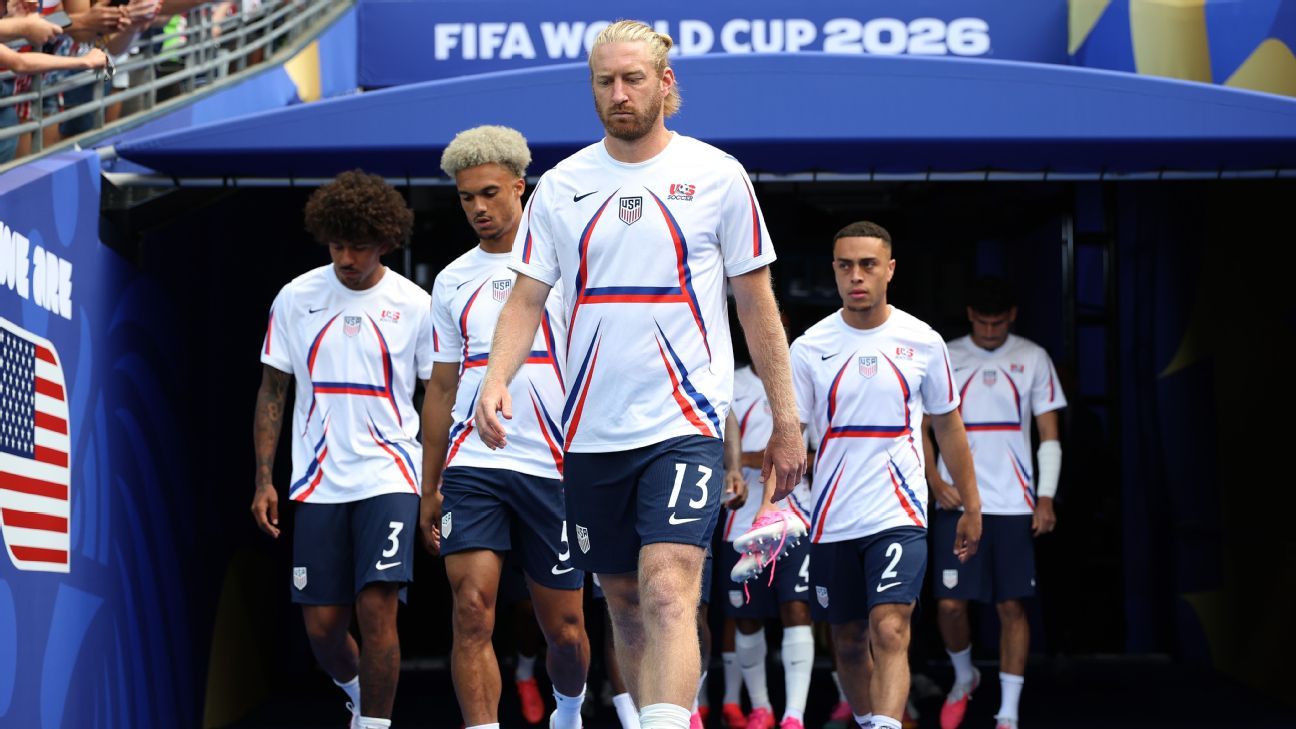
IRVINE, Calif. — Observing the U.S. men’s national soccer team, an outsider might find it challenging to identify a single leader. While U.S. captain Tim Ream stands out, the roster is filled with players who embody diverse leadership styles and personalities. Midfielder Weston McKennie, known for his lighthearted demeanor, often lightens the mood with humor, while vocal leaders like midfielder Tyler Adams and defender Chris Richards assert themselves with direct communication. At 38 years old, Ream serves as a seasoned advisor, attuned to the needs of teammates who may require encouragement or guidance. This is just a glimpse of the leadership pool within the team.
Ream emphasized the numerous individuals capable of offering guidance within the squad during an exclusive interview with ESPN at the team’s training facility, noting, “There are many guys in this locker room with leadership abilities and valuable perspectives.”
Changing Leadership Dynamics
The team’s current leadership structure is notably more egalitarian compared to previous years. The previous cycle’s “leadership council,” which relied heavily on a select few players for counsel, has been replaced by a more inclusive approach. There is no universally correct way to designate leaders, but Ream believes this new system fosters open communication among players, reducing the likelihood of crises arising.
Upon being named captain of the World Cup squad on May 30, one of Ream’s first acts was to communicate a fundamental principle to his fellow leaders: his captaincy does not make him the sole authority. He expressed a strong desire to share this responsibility.
Empowerment Through Shared Voices
“There’s too much going on,” Ream remarked regarding the dynamics at play. “I want my teammates to feel empowered to voice their opinions and engage in dialogue. They shouldn’t feel they must come to me to express their thoughts.” He aims to create an environment where open communication is the norm, emphasizing that his designation as captain does not change the team’s dynamics.
The presence of experienced players like Adams, McKennie, and Richards, all of whom have held captaincy roles in the past, adds depth to this leadership framework. McKennie highlighted that effective team chemistry can often make the captaincy merely a symbolic role, stating, “As long as we share a common goal and vision, the captaincy band is just a symbol of who the referee communicates with.”
Navigating Pressures and Responsibilities
While Ream leads the team, McKennie’s previous experience led him to don the captain’s armband during a match against Tourquier. However, leadership roles can come with unexpected pressures. Adams, during a pre-match press conference for the 2022 World Cup, faced challenging questions from Iranian reporters concerning social issues and political tensions, as well as personal critiques regarding his pronunciation of “Iran.” Displaying the skills of a seasoned diplomat, Adams addressed the inquiries with poise and humility.
“I appreciate that I don’t have to field those questions today,” he stated. “I believe in being straightforward and candid. My experiences enable me to respond openly, regardless of the pressure.” This philosophy is mirrored in his team interactions.
Leading With Respect and Understanding
While multiple players possess the qualities to take on the captaincy, Ream acknowledges the weight of the role. He views himself as a key connection between players and the coaching staff as well as the medical and training teams. His appointment as captain was unexpected, but his previous experiences, particularly with Fulham in the Premier League, prepared him to contribute meaningfully.
In discussing Ream’s captaincy, coach Mauricio Pochettino praised his leadership both on and off the field, stating, “We are fortunate to have him, as he embodies the qualities we seek in a positive leader who can influence his teammates.” Ream’s extensive professional experience has equipped him with a nuanced understanding of human behavior, enabling him to navigate various situations adeptly.
A Thoughtful Approach to Leadership
Ream recognizes the importance of how he communicates—adapting his tone and approach based on the individual’s needs. “Observing body language and tone is critical,” he explained, emphasizing that effective leadership is as much about knowing when to speak as it is about what to say. He prefers engaging in leadership away from the eyes of everyone else; one-on-one conversations often prove to be the most effective means of providing support.
However, on the field, immediate communication becomes vital. “In the heat of the moment, there’s no time to wait for the perfect thing to say,” Ream lamented. “When I sense confusion among my teammates, I know it’s crucial to step in.” With the U.S. squad preparing to face Bosnia and Herzegovina in the Round of 32, both Pochettino and his assistant coaches remain attentive to optimizing team performance, alongside the efforts of Ream and other leadership figures.
