


Nasa Aims to Save Flagship Space Telescope with Upcoming Mission
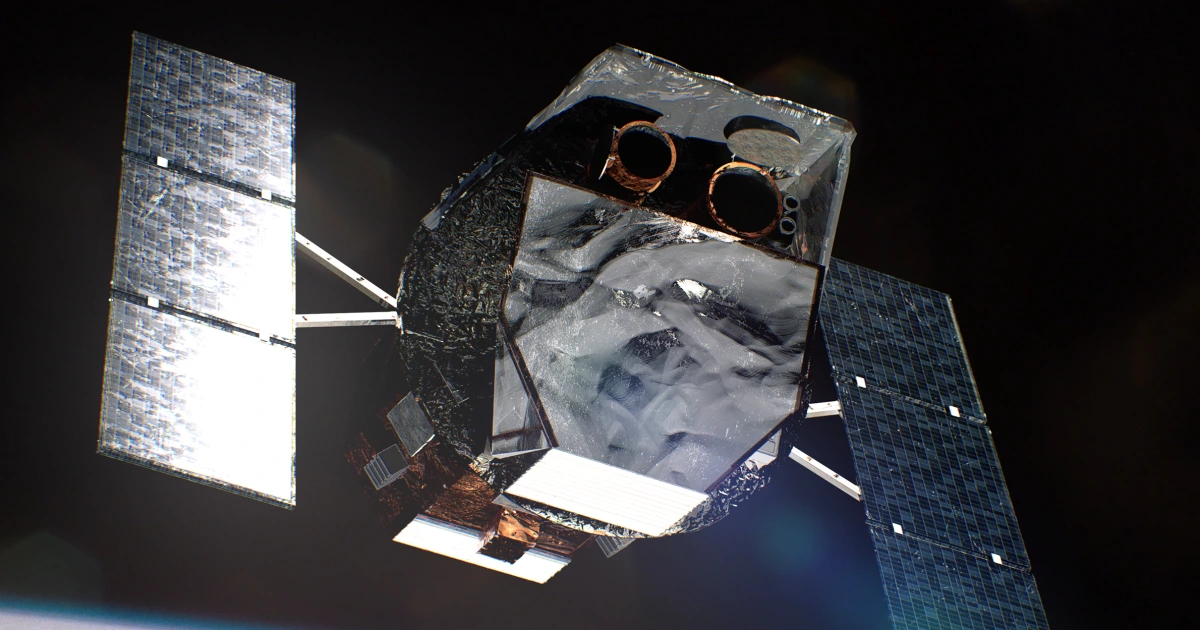
NASA is preparing to launch a mission next Tuesday to save one of its premier space telescopes, the Neil Gehrels Swift Observatory. This telescope has been in orbit for over two decades, focusing on gamma-ray bursts—some of the universe’s most powerful explosions, primarily caused by phenomena such as black hole formations or the collision of dense stars.
Swift Observatory at Risk of Re-entry
However, Swift is now at significant risk of re-entering Earth’s atmosphere and breaking apart. According to NASA’s predictive models, the telescope’s orbit is expected to drop below 185 miles in altitude by October, a level considered perilous.
The Importance of the Swift Observatory
This observatory is uniquely agile, capable of rapidly scanning the night sky to detect transient astronomical events. Dr. Sean Domagal Goldman, head of NASA’s Astrophysics Division, underscored its value during a recent press conference, emphasizing the need to preserve this vital tool for scientific exploration.
Robotic Spacecraft to the Rescue
To prevent the loss of Swift, NASA will launch a robotic spacecraft intended to elevate the telescope’s orbit. The agency awarded a $30 million contract to Arizona-based Catalyst Space Technologies for the spacecraft’s development, while aerospace giant Northrop Grumman will provide the necessary launch vehicles.
Launch Schedule and Mission Objectives
The mission is set to begin with Northrop Grumman’s Stargazer aircraft taking off from the Marshall Islands by 6:23 a.m. on Tuesday. Once it reaches an altitude of 40,000 feet, the Stargazer will deploy a Pegasus XL rocket carrying LINK, a 6-foot-tall robotic spacecraft weighing 880 pounds. After launch, LINK will work to capture the Swift Observatory and gradually increase its orbit over the coming months.
The Impact of Solar Activity
In low Earth orbit, satellites experience a natural decline in altitude due to atmospheric drag, a phenomenon that has recently affected Swift. Additionally, an intense phase of solar activity in 2024—part of the sun’s 11-year cycle—has further degraded the satellite’s orbit, as the atmosphere expands with increased heat, creating more resistance for orbiting objects. This situation can be likened to attempting to fly against strong headwinds.
Broader Implications for Satellite Longevity
John Nosek, a professor of astronomy and astrophysics at Penn State University, noted that the success of this mission could yield significant advantages beyond preserving Swift’s operational life. He pointed out that rescuing satellites like Swift, which were not designed to be serviced in orbit, could pave the way for reusing and enhancing existing spacecraft functionalities at a fraction of the cost of new missions. If the LINK mission is successful, it could restore the $300 million (2004 dollars) satellite to full operational capacity for just $30 million (2026 dollars).
Future of Satellite Missions
Kieran Wilson, vice president of technology at Catalyst Space Technologies, expressed hope that the Swift Boost mission will revolutionize astronomers’ perspectives on satellite longevity. He believes there should be a paradigm shift towards the ability to refuel, reposition, and upgrade satellites, even those not initially designed for it.
History and Challenges Ahead
Since its launch in 2004, Swift Observatory has far exceeded its original two-year mission, enabling the study of over 1,400 gamma-ray bursts and other high-energy astrophysical phenomena. In September 2025, NASA plans to launch the LINK spacecraft to rendezvous with Swift. Although the timeline remains on track, Wilson highlighted the challenges involved in maneuvering the spacecraft and successfully adjusting Swift’s orbit, acknowledging that significant technical hurdles lie ahead.
