


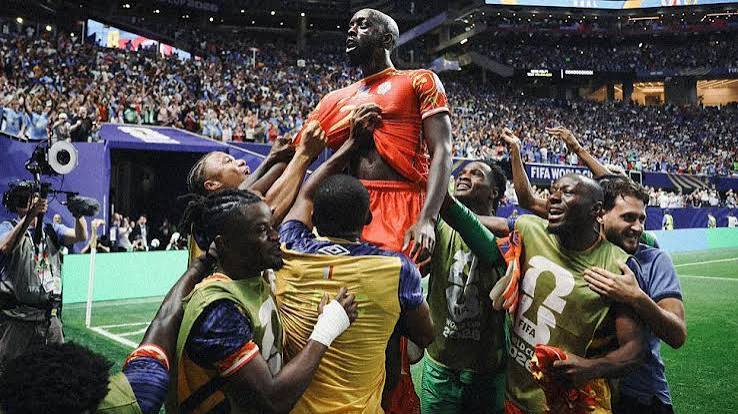
African Football Shows Remarkable Growth at the World Cup
The evolution of African football during the World Cup has been nothing short of astonishing. At the 2018 World Cup in Russia, none of the five African teams advanced past the group stage, mustering only three victories from fifteen matches. However, as the 2026 World Cup approaches, African nations are poised to demonstrate the success of Gianni Infantino’s expansion initiative.
In a striking turnaround, nearly all of Africa’s ten representatives managed to progress beyond the group stage. Tunisia was the sole exception, while Cape Verde, Egypt, Ivory Coast, Morocco, and South Africa secured second positions, and Algeria, the Democratic Republic of the Congo, Ghana, and Senegal finished third but still advanced.
Contrasting Fortunes: Africa vs. Asia
The situation in Asia presents a stark contrast, with only two out of nine teams moving past the group stage. Japan faced an early exit against Germany in the round of 32, leaving Australia as the continent’s sole remaining contender. While Africa celebrates its achievements, Asia is left to grapple with disappointing outcomes.
The Foundation for Success in Africa
Approved well before the 2018 World Cup, Infantino’s World Cup reform met skepticism when African teams underperformed in Russia, raising doubts about justifying additional spots for the continent. Fast-forward eight years, and those concerns have been laid to rest. This remarkable resurgence can be attributed to the persistent efforts of organizations like the Moroccan Football Association and the streamlined investment in youth development, coaching, and professional leagues, as noted by Patrice Motsepe, president of the Confederation of African Football (CAF).
The first signs of this transformation were evident four years ago in Qatar, when two African nations advanced to the knockout stages for the first time. Historically, only three African teams had reached the quarterfinals—Cameroon in 1990, Senegal in 2002, and Ghana in 2010. Morocco, in particular, made headlines by reaching the semifinals, triumphing over Belgium, Spain, and Portugal along the way, a feat unparalleled by any other African team before being halted by France.
Blueprint for Future Success
If Morocco can establish a sustainable framework that leads to consistent results, other African nations are inspired to follow suit. William Troost-Ekong, former captain of Nigeria, emphasized Morocco’s dedication to grassroots development and the establishment of academies as a model for success. He praised their substantial investment in infrastructure and the structured approach across various age levels, suggesting this is the path others should emulate.
Analyzing World Cup Performance Trends
The newly adopted World Cup format has certainly played a role in Africa’s success, but it doesn’t fully explain the contrast with Asia’s struggles. In recent tournaments, two of the top fifteen teams can emerge from each group. Currently, these sixteen teams are divided into twelve groups, resulting in only four groups featuring two traditionally strong countries. This structure inherently improves African teams’ chances as they generally face weaker opposition.
In terms of match play, African nations have displayed superior performance metrics. While Asian representatives managed just three wins across 27 matches—yielding an average of 0.67 points per match—African teams recorded ten victories out of 30 games, achieving an average of 1.33 points per game. In crucial group matchups, African teams showcased their growth, while Asian countries faltered, failing to win a single match in critical encounters.
The Development Gap Between Continents
Despite some progress, Asia faces a significant challenge in bridging the development gap in football. Jordan, participating in the World Cup for the first time, lost all three matches, leading to questions about the level of competition faced by players in their domestic leagues. As Jordan’s head coach pointed out, the disparity arises from the African players’ presence in prestigious European clubs. For instance, a remarkable 20 out of Morocco’s 26 players are currently competing in Europe, with 15 in top-tier leagues.
In contrast, the Democratic Republic of the Congo, despite having 24 players abroad, fields only 11 in major leagues, while Egypt struggles with 17 local players and just six in Europe. With countries like Japan and South Korea boasting high numbers of players in competitive leagues, it’s evident that addressing this gap is crucial for Asia’s future football prospects. The Asian Football Confederation now faces the challenge of enhancing its teams’ competitiveness in this expanded World Cup format.
