


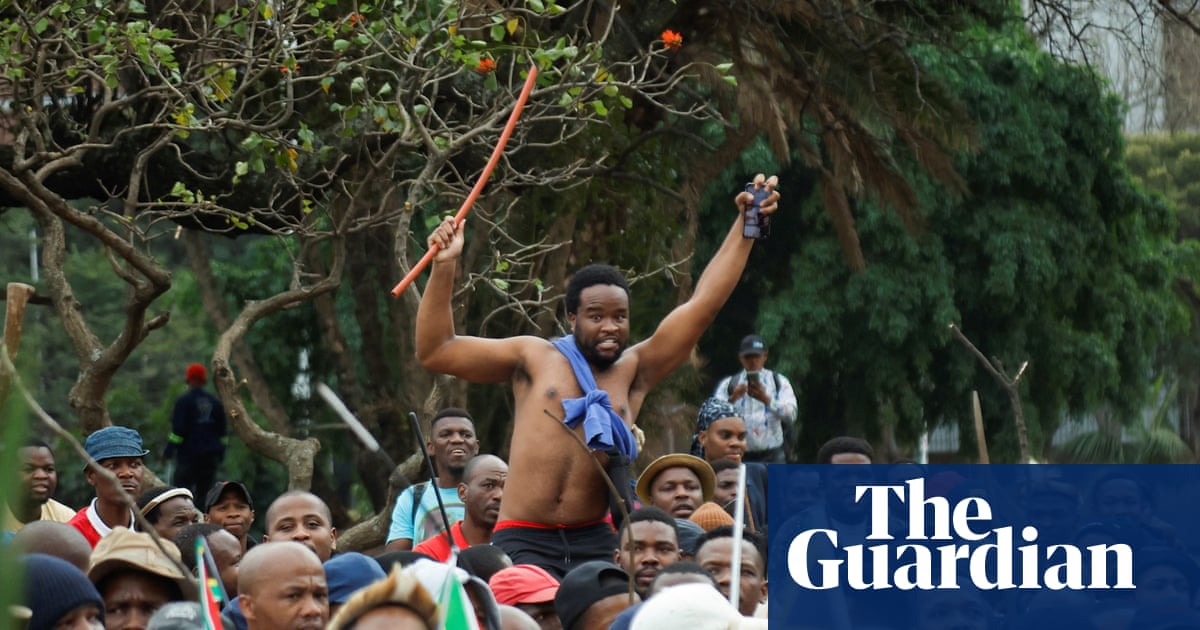
Police Mobilization in South Africa Preempts Anti-Immigrant Protests
South African authorities have mobilized police forces in towns and cities nationwide as demonstrations against illegal immigrants are set to unfold. In Johannesburg, the country’s economic hub, security personnel have been patrolling the central business district, prompting many shopkeepers to close their doors ahead of the planned protests.
Local media reports indicate that the South African National Defense Force’s trucks and other assets are on standby. The demonstrations are organized by anti-immigrant groups, notably one named March and March, which has issued an unofficial deadline of June 30 for illegal immigrants to leave the country. While organizers assert that the protests will remain peaceful and focus solely on undocumented immigrants, many foreigners have reported experiencing targeted harassment.
Jacinta Ngobese Zuma, the leader of the march, emphasized that their intentions are non-violent, stating that there will be no deaths or looting associated with the event. Nevertheless, the show of force by security agencies reflects deep-seated fears of potential looting and mob violence reminiscent of the deadly 2008 anti-immigrant riots, which resulted in 62 fatalities.
Moreover, the 2021 civil unrest following the jailing of former president Jacob Zuma, which left over 350 individuals dead, further complicates the current climate of tension. Over recent weeks, men armed with sticks have been observed moving through Johannesburg and Durban, chanting “abahambe”—a phrase meaning “I must leave” in IsiZulu and IsiXhosa—while questioning and sometimes assaulting individuals. Reports indicate that five Mozambicans have lost their lives in this volatile environment.
Foreign-born immigrants constitute an estimated 4% of South Africa’s population of 62 million, although figures suggest their presence may range from 15 to 20 million. Many of these migrants work within the informal sector, seeking economic opportunities in what is one of Africa’s largest economies, as challenges in neighboring countries force them to migrate.
Crime statistics indicate that only a small fraction of crimes are committed by foreigners, challenging the prevailing narratives among protest organizers. Yet, South Africa grapples with one of the highest unemployment rates globally, and economic disparities often lead to African immigrants being unjustly scapegoated.
The government has faced criticism for its lack of decisive action in curbing rising violence. In a recent forum with traditional leaders, President Cyril Ramaphosa stated that there is no place for racism, sexism, tribalism, xenophobia, or any form of intolerance in society.
In response to the unrest, several governments, including those of Nigeria, Ghana, Malawi, and Uganda, have commenced repatriation efforts for their nationals. Some individuals remain stranded in South Africa with reports of Malawians camping outdoors near their consulate in Johannesburg, anxiously awaiting processing to leave before the impending deadline.
