


U.S. Companies Strengthen Economic Ties in Nigeria
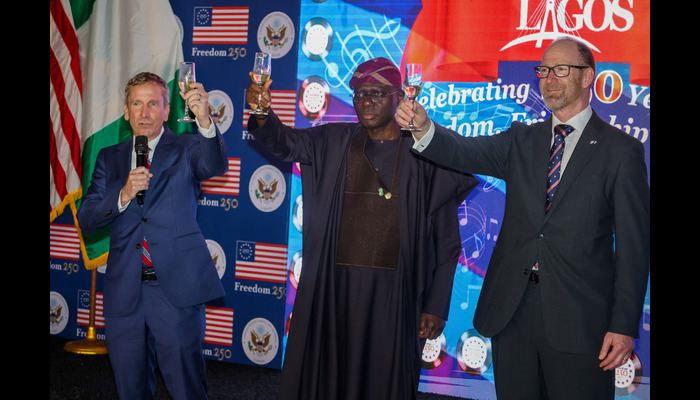
Keith Heffern, Chargé d’Affaires at the U.S. Embassy in Nigeria, emphasized that over 100 American companies are operating in Nigeria, contributing to job creation, boosting investment, and driving economic transformation. He made these remarks during the Freedom 250 Celebration held at the U.S. Consul General’s Residence in Lagos, an event marking the 250th anniversary of American independence.
During his address, Heffern highlighted the tangible economic benefits of the evolving trade relationship between the United States and Nigeria. He stated that this partnership is yielding significant outcomes beyond just impressive statistics, showcasing the commitment of both nations to deepening their ties.
The celebration illustrated the strengthened alliance as both countries collaborate to expand trade, foster innovation, enhance security, and build lasting connections among their citizens. Heffern noted that Nigeria now ranks as the United States’ second-largest trading partner in sub-Saharan Africa. Projections indicate that two-way trade could approach $15 billion by 2025, reflecting a 14% increase from the previous year.
This growth in trade exemplifies the United States’ broader strategy of prioritizing trade and investment across Africa. “Cities like Lagos, known for their energy and innovation, are pivotal in driving economic growth and enhancing commercial relationships,” Heffern mentioned.
Advancing Bilateral Trade and Security Initiatives
To support these goals, Heffern referenced the U.S.-Nigeria Commercial and Investment Partnership, a five-year memorandum of understanding established with Nigeria’s Ministry of Industry, Trade, and Investment. This partnership aims to strengthen bilateral trade relations and is now entering its second year, uniting approximately 50 American and Nigerian companies in an initiative to eliminate trade barriers.
“This partnership exemplifies our trade relationship in action,” he explained. The focus areas for collaboration include agriculture, the digital economy, and infrastructure—sectors vital for fostering sustainable economic growth and creating new business opportunities in both nations.
While trade and investment remain central to this partnership, Heffern underscored the importance of security cooperation, which is crucial for ensuring long-term economic prosperity. He cited a recent collaboration between Nigeria’s National Drug Law Enforcement Agency and the U.S. Drug Enforcement Administration that successfully dismantled an international criminal organization involved in drug trafficking and money laundering.
The charge d’affaires also discussed recent advancements in maritime security cooperation, including African navies’ participation in the Nigerian Navy’s 70th-anniversary celebrations, reinforcing a commitment to regional stability through a partnership that is both African-led and U.S.-supported.
Cultural Exchange as a Cornerstone of Relations
Heffern noted that cultural exchange remains a strong foundation of U.S.-Nigeria relations. Drawing on the night’s Motown theme, he highlighted how the global influence of American music parallels the rapid ascent of Nigeria’s Afrobeats genre. He specifically praised artists like Rema and Burna Boy for showcasing Nigerian music on the global stage, including performances at the opening ceremony of the 2026 FIFA World Cup.
Looking forward, Heffern indicated the United States aims to further enhance cooperation through sports, creating new opportunities for commercial and cultural alliances in preparation for the upcoming 2028 Summer Olympics. He acknowledged the vital role of over 14,000 Nigerians who have participated in U.S. government exchange programs, recognizing them as a network of leaders enhancing economic cooperation and innovation between the two nations.
He concluded his remarks by affirming that the progress made in U.S.-Nigeria relations is rooted in decades of partnership, investment, and diplomatic engagement. The upcoming construction of a new U.S. Consulate General in Eko Atlantic, according to Heffern, serves as a tangible sign of American confidence in Nigeria’s future and commitment to fostering enduring partnerships.
