


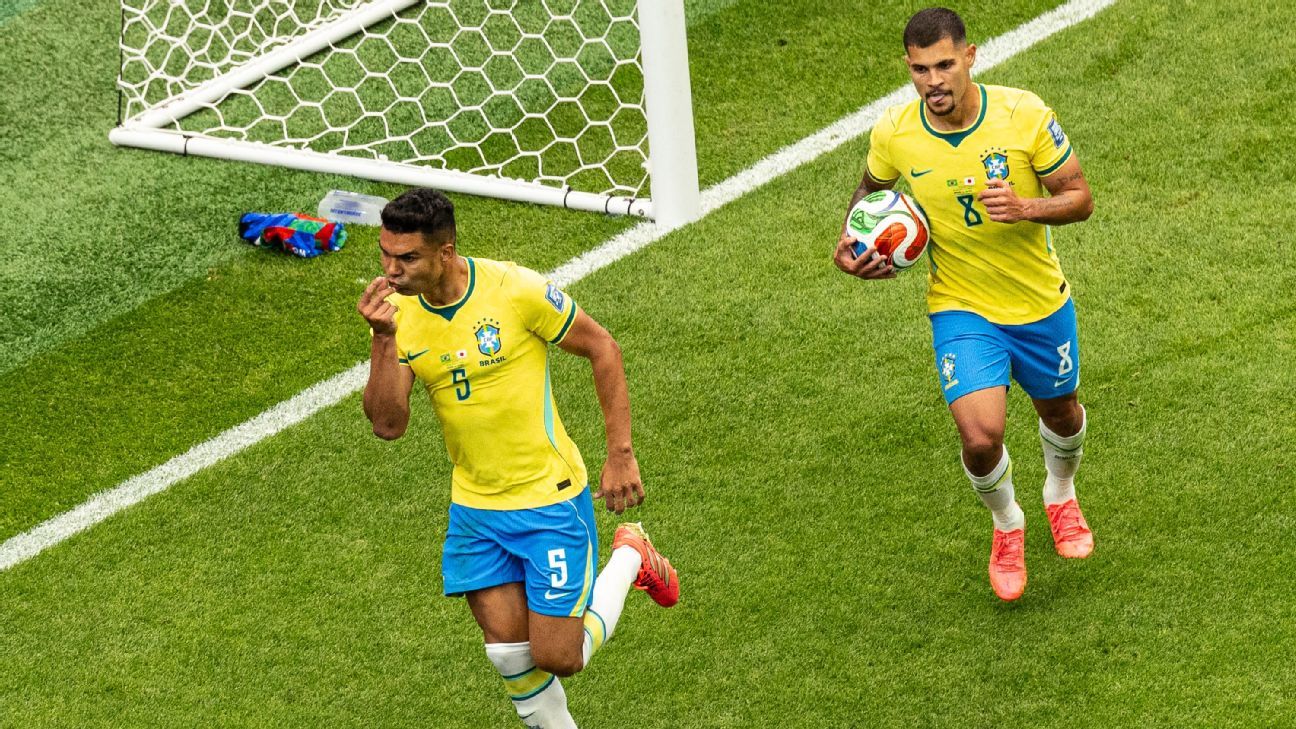
At halftime, Brazil found themselves trailing Japan by a goal, casting a shadow over their hopes of advancing to the last 16 of the 2026 FIFA World Cup. The question now is how manager Carlo Ancelotti will respond. With Lucas Paquetá sidelined due to injury, Brazil’s bench holds several attacking options, and changes are anticipated after the break. Among the top candidates to make an impact is the dynamic striker Endrick.
As the second half unfolds, Brazil equalizes, heightening the tension as they strive for victory. The big question is: who will join the attack next? Neymar’s name surfaces frequently among fans, but Brazil’s strategy involves leveraging crosses against Japan’s relatively smaller defense, which suggests Igor Thiago could also prove useful. Ultimately, it was Gabriel Martinelli who was called upon as the second substitution.
Strategic Adaptations Pay Off
The shift caught many by surprise. A plausible rationale might have been to free up Vinícius Júnior, allowing him greater mobility while Martinelli occupied the left flank. Contrarily, Vinícius effectively stretched Japan’s defense on one side while Rayan did similarly on the other, creating the much-needed space that led Brazil to a 2-1 victory, with Martinelli netting the decisive goal just before full-time.
Ancelotti displayed remarkable tactical acumen. While most coaches would have substituted Casemiro at halftime, given his struggles that led to Japan’s goal, Ancelotti kept faith with the veteran midfielder. Despite being cautioned with a yellow card, Casemiro’s resilience shone through when he nodded in Brazil’s equalizer after his initial header was cleared.
This exemplifies Ancelotti’s managerial brilliance. The Italian coach remains composed under pressure, trusting his players to perform even when expecting them to do so seems daunting. As the World Cup intensifies and Brazil occasionally shows frailty in midfield, all eyes will be on Ancelotti’s next move regarding Casemiro.
Since taking the helm of the Brazilian squad over a year ago, Ancelotti’s first priority was to reintegrate Casemiro, who had been absent from the international scene for 18 months. His return was instrumental in injecting balance and structure into the team. Given their collaborative history at Real Madrid, the partnership has flourished, with Casemiro effectively functioning as Ancelotti’s on-field extension.
This strategic move has proven successful, particularly in revitalizing Bruno Guimarães’ performance. Brazil faced disarray during World Cup qualifying, and Guimarães’ struggles were evident. Following his last match under former coach Dorival Júnior, he expressed concerns about improving his play from the back. With Casemiro anchoring the midfield, Guimarães is now liberated to pursue offensive plays.
Emerging Challenges Ahead
However, vulnerabilities remain. Ancelotti’s initial lineup, which featured four attackers with Casemiro and Guimarães in central midfield, proved beneficial against Japan when the team was on the offensive. Yet, such a formation is fraught with risks from the outset.
In a pre-tournament friendly against Panama in May, Brazil struggled with this setup, easily bypassed by Panama’s players. Adjustments were made, and Paquetá assumed the role of a third midfielder. Following his injury, the pressing question is who will step in for Brazil’s upcoming match against Norway in New Jersey. The likelihood of returning to a front-heavy approach seems low; bringing in Danilo Santos, a dynamic midfielder who has emerged this year, appears to be a more prudent option.
Casemiro’s upcoming match could see him face off against Martin Ødegaard, whose playmaking abilities amplify the threat posed by the formidable Erling Haaland. This matchup holds significant implications. Despite Casemiro’s strong second-half performance against Japan, concerns from the first half linger. Given that he is already carrying a yellow card, another could lead to his suspension, mirroring the fate he suffered in 2018 when Brazil fell to Belgium.
In the event of another card, Fabinho may take the field as Casemiro’s immediate replacement. Renowned for his constructive play, Fabinho could somewhat compensate for the defensive void. However, some may argue that Ancelotti should have considered Chelsea’s Andrei Santos, whose stamina could be of great help in the midfield. Compounding these choices is the fact that Ancelotti originally selected only five midfielders, and injuries have necessitated further adjustments.
Now, as he weighs his options, Ancelotti is faced with critical decisions: when to act, when to hold back, and how to accentuate Casemiro’s strengths while mitigating his vulnerabilities. Striking the right balance remains the key to Brazil’s aspirations for their sixth World Cup title.
