


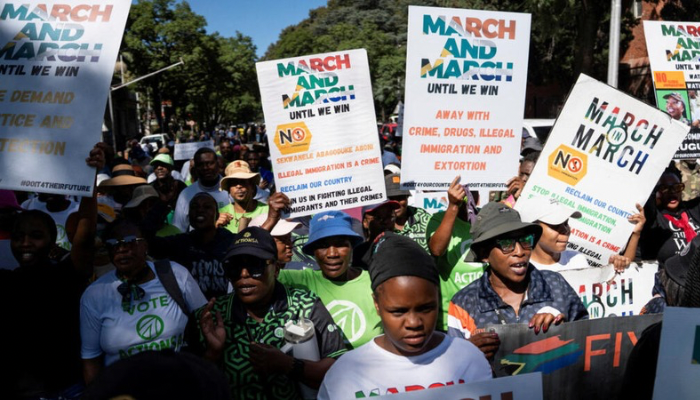
Historic Protests Erupt Over Immigration Policy in South Africa
On June 30, 2026, South Africa became the epicenter of intense anti-immigrant sentiment as the government expelled “illegal aliens” from various African nations, amid widespread protests. This marked a significant moment in the nation’s history, with 120 demonstrations occurring nationwide; 108 of them remained peaceful while 12 escalated into violence.
Voices of Concern Amid Rising Tensions
Thousands of South Africans filled the streets, chanting “Abahambe!”—translating to “They must go!”—reflecting a strong sentiment prevalent among many. Yet, not all South Africans view these protests as representative of their beliefs. Critics, particularly from the political right, voice concerns about potential backlash and the growing divisions within society. Amid public outcry, some worry that the protests persisted despite appeals from multiple stakeholders, including community activists, investors, and diplomats, to halt the unrest.
Government Responses and Misconceptions
Travel agent Sifiso Mbela from Johannesburg expressed frustration regarding public perceptions of government support for the protests. He clarified that President Ramaphosa had actively engaged with protest leaders, urging them to reconsider their actions. However, the insistence on the right to protest prevailed. He reflects on the irony of major trade unions warning over two million South African workers that non-participation could risk their union protections, yet the calls for protest persisted.
Consequences of the Protests
With the cessation of protests, experts assert that the repercussions for South Africa are profound. Authorities have arrested over 900 individuals amidst incidents of violence and looting that targeted foreign-owned businesses. Kenyan resident Marcel Khumalo noted the damage caused by the protests, suggesting they may have exacerbated problems rather than provided solutions. Notably, looting of informal convenience stores, known locally as spaza shops, raised concerns about escalating demands that could extend to formal foreign-owned enterprises.
Continued Unrest and Demands for Change
The remnants of unrest linger, with protest organizers committing to return to the streets weekly until demands regarding immigration and unemployment are addressed. Obanda Asiwi, a Cameroonian expatriate, pointed out that following the protests, safety for immigrants—both illegal and legal—has diminished significantly. He voiced concerns about the rise of anti-immigrant coalitions, which could perpetuate violence against foreigners.
Implications for Regional Relations
The scale of unrest in South Africa stands out, prompting reflection on broader regional relations. Afam Onyari, a Nigerian academic, raises critical questions about the treatment of legal immigrants, emphasizing the need for thoughtful migration policies that do not yield to vigilante justice. Amnesty International has also condemned the treatment of migrants, attributing socio-economic challenges to systemic government failures rather than to foreign nationals.
Economic Repercussions and Tourist Fallout
The unrest has dire economic implications, particularly for South Africa’s tourism sector. The ongoing volatility has resulted in significant booking cancellations among African travelers, jeopardizing a crucial revenue stream. Mbela predicts a reduction in adventure tourism by approximately $1.5 billion and a loss of over 100,000 jobs, demonstrating the far-reaching impact on local businesses reliant on foreign visitors.
Future Challenges for South Africa and its Economic Ties
As South African companies face backlash in overseas markets, the repercussions are becoming increasingly evident. Countries like Nigeria are poised to impose stricter regulations on foreign businesses, including those from South Africa. Economist Onyeuchi Akabubul noted that while repatriation of South Africans seems unlikely, businesses may face heightened scrutiny and operational challenges in foreign markets.
