


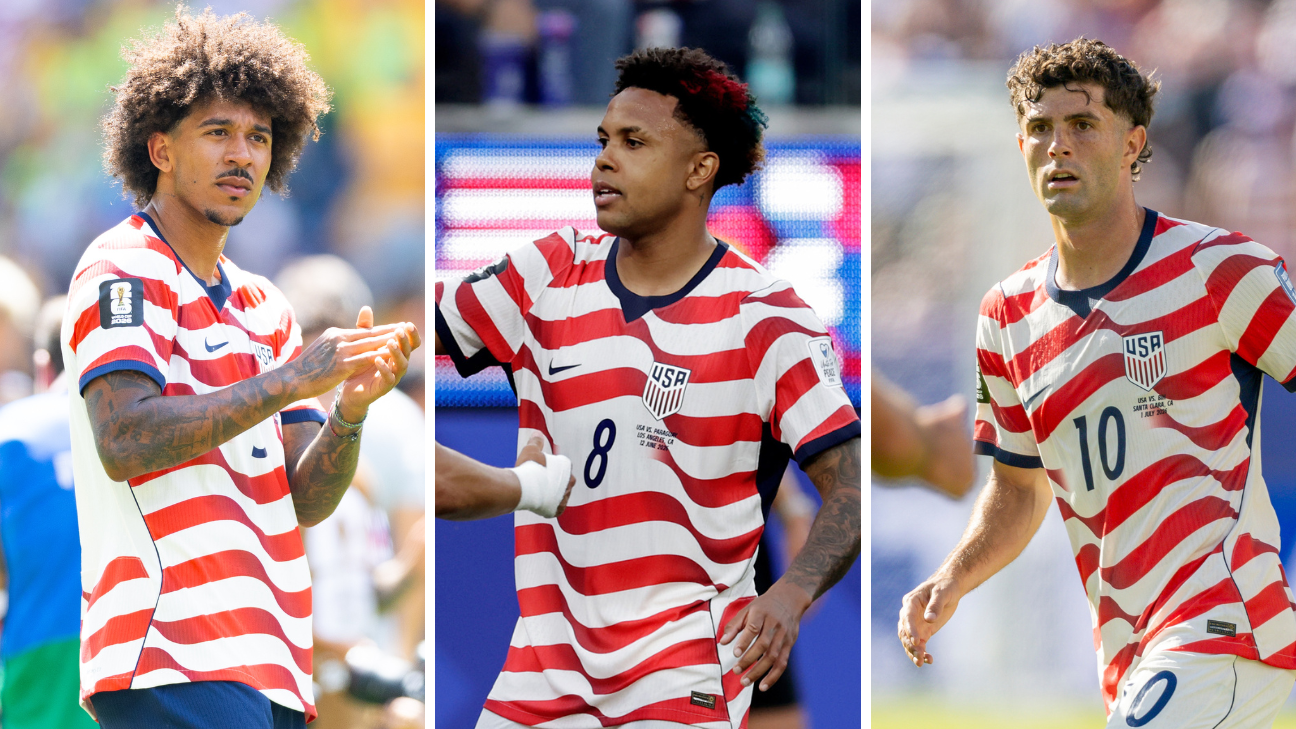
SEATTLE — As the U.S. men’s national team gears up for what could be its most significant match in history, it’s worth delving into an intriguing question that intertwines sports and culture: How does the team’s hairstyles compare to those of its predecessors?
With attention-grabbing looks ranging from Christian Pulisic’s trendy tapered mullet to Weston McKennie’s red, white, and blue dyed hair, the variety is striking. Other noteworthy styles include Folarin Balogun’s tight curls, Tim Ream’s man bun, Chris Richards’ Afro, and Anthony Robinson’s bleached locks. The current squad has undoubtedly made a bold statement in the hair department.
Opinions on whether this is the best hair generation in U.S. soccer history are mixed. Tony Meola, a member of the U.S. World Cup teams in 1990, 1994, and 2002, offers a unique perspective. With roots as the son of a New Jersey barber, Meola reflects on the stylistic choices of his era, notably highlighting Alexi Lalas’ iconic red mane and Cobi Jones’ distinctive dreadlocks. He emphasizes that hairstyles were a significant aspect of the team’s identity back then, setting them apart in a way that he feels is less pronounced today.
Significant Hairstyles in U.S. Soccer History
Meola reminisces about how Clint Mathis’ mohawk during the 2002 World Cup was a radical departure from the norm. However, he acknowledges that today’s players are increasingly using hairstyles as a form of self-expression, marking a significant cultural shift. Sheldon Edwards, a renowned stylist associated with HD Cutz, is playing a vital role in refining the team’s looks throughout the tournament. Edwards notes that the players’ commitment to exploring various styles is contributing to their connection with fans.
Edwards, who has extensive experience with athletes and their hairstyles, explains that American soccer players take their hair seriously, often having specific concepts in mind. For instance, Ream has been experimenting with hair ties acquired in London to perfect his bun, while Tyler Adams aimed for a meticulously smooth finish. Edwards collaborates closely with players to ensure their styles reflect personal flair and individuality.
The absence of bald players on the current roster marks a notable distinction from past teams—an examination of U.S. World Cup history reveals that this is the first time in over two decades that both the team and coaching staff lack bald heads. Bob Bradley, who coached the U.S. team in 2010 and had a bald player in his son Michael, remarks on how hair has become a more significant part of player identity today compared to previous years.
Edwards skillfully weaves history into his work with players, drawing inspiration from the past while helping them create personal styles. For example, Chris Richards draws from the influential electric Afro of former Belgium international Marouane Fellaini. Edwards believes this approach not only showcases individuality but also strengthens the team’s character on the field.
As fans celebrate this World Cup, it’s clear that hairstyles have evolved into an important aspect of identity within the U.S. soccer narrative. Embedded in the vibrant hairstyles of this year’s squad is a deeper cultural significance that resonates with players and fans alike. While comparisons to past teams can ignite debate, Meola suggests a balanced perspective: while the 1994 team might have claimed the crown for best hairstyles, he believes this current squad possesses the talent to lift the trophy.
