


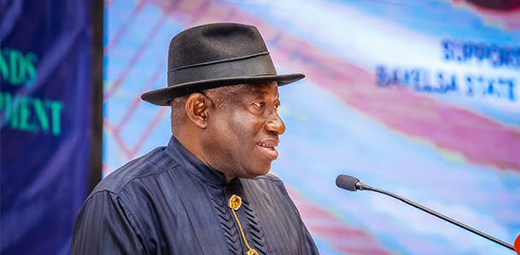
Goodluck Jonathan Refutes N500 Billion Campaign Allegation
Former President Goodluck Jonathan has categorically rejected claims suggesting he was offered a N500 billion campaign against Peter Obi, the presidential candidate of the Nigeria Democratic Congress (NDC) for the upcoming 2027 general election. Calling the allegations misinformation, Jonathan’s spokesperson, Dr. Ikechukwu Eze, asserted that these claims are nothing more than a fabricated attempt to mislead the public and embroil the former president in political drama.
Official Statement Denies Fabricated Claims
In a statement released on Sunday, Eze emphasized that Jonathan has not made any statements regarding a potential presidential bid for 2027, nor has he participated in any interviews discussing a supposed rejection of a presidential offer. He urged the public to disregard the viral report circulating on social media, labeling it entirely fictitious.
Call for Caution in Political Discourse
Eze highlighted the absence of credible evidence backing the claims, including details on when and where Jonathan allegedly spoke or the identities of those purportedly involved in the discussions. He cautioned Nigerians to approach political narratives online with skepticism, especially as the country gears up for the 2027 elections.
Encouragement to Verify Information Sources
The spokesperson advised citizens to seek reliable information from trustworthy sources before sharing politically relevant content, stressing that the spread of such misinformation could exacerbate existing tensions in the political landscape.
Jonathan’s Stance on the Presidency
Moreover, Eze reaffirmed that Jonathan has not expressed any intention to run for president in the forthcoming election, nor has he entertained thoughts of being financially incentivized to oppose Obi. This clarification aims to curtail further speculation surrounding Jonathan’s political ambitions.
Calls for Responsible Journalism
Eze also appealed to news organizations and online publishers to adhere to journalistic standards, emphasizing the importance of validating politically sensitive information prior to publication. The recent inflammatory report claimed that unspecified political actors had approached Jonathan to participate in the 2027 race with the intention of fracturing the voting bloc within the north-south geopolitical zone and undermining Obi’s chances at the polls.
Context of Misinformation in Political Landscape
Jonathan’s office has strongly dismissed these claims, urging the Nigerian public to disregard unverified reports. As speculation surrounding his potential candidacy continues, Jonathan remains a figure of interest in the political arena while maintaining his silence on any plans to reclaim the presidency. The environment surrounding the upcoming elections has seen a troubling rise in misinformation, necessitating vigilant discourse among the electorate and responsible reporting from media outlets. Observers warn that the proliferation of fake news could significantly undermine public debate and the integrity of the electoral process.
