


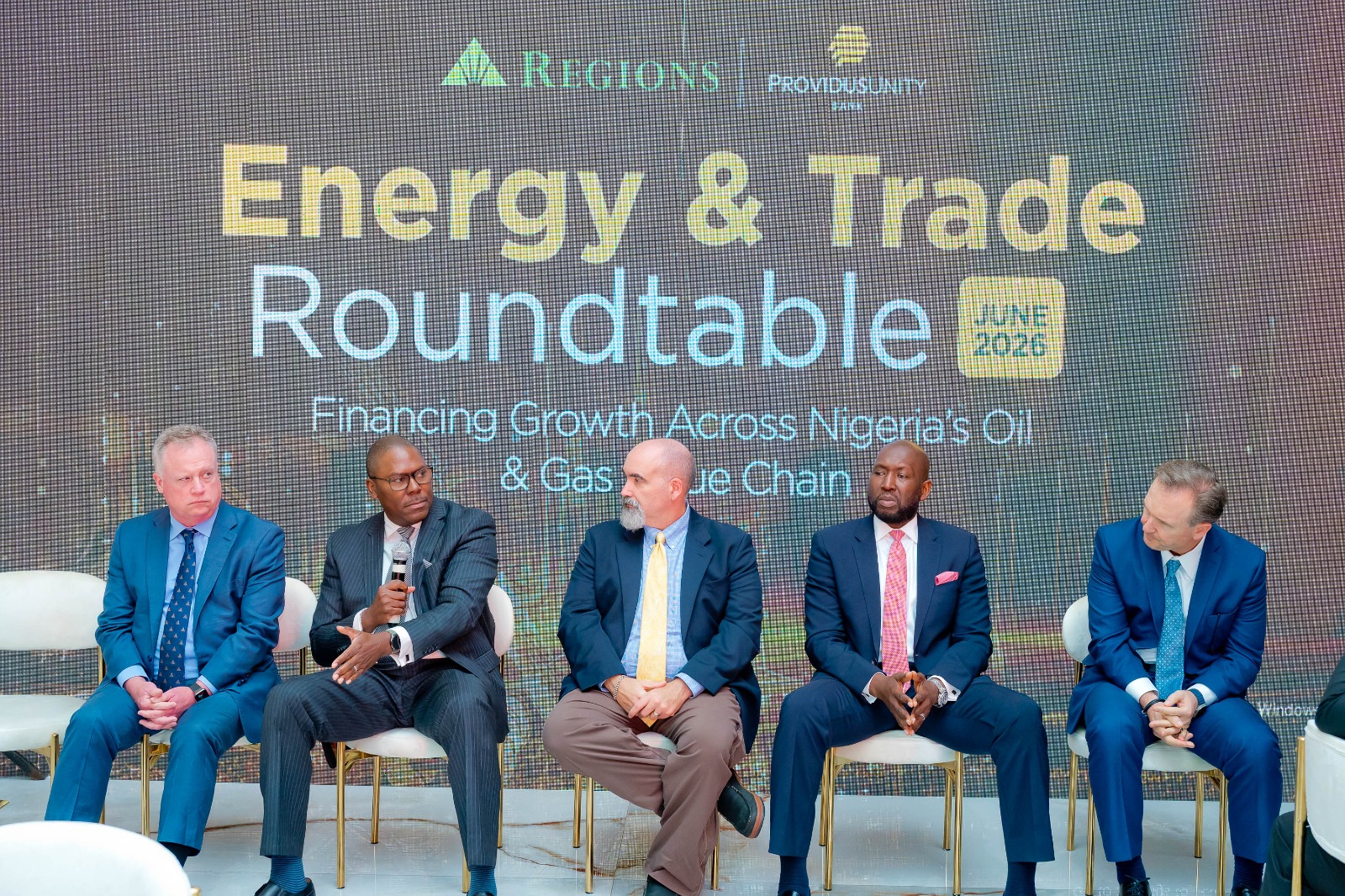
Panel Highlights Urgent Need for Investment in Nigeria’s Oil and Gas Sector
During a recent panel session at the Energy and Trade Roundtable in Lagos, key industry leaders discussed the pressing need for enhanced financing in Nigeria’s oil and gas sector. The discussion included insights from Conal Duffy, Practice Leader for Political Risk at Alliant Insurance Services, Thomas Mathias, Executive Director of International Trade Finance, Basim Nasr, Business Solutions Director, and Vernon Darko, Founder and CEO of EQUIPXP, LC, who engaged with Sem Hasioglu, President and CEO of West Africa LNG Group.
Financing Gap Requires Cross-Border Collaboration
Nigeria’s oil and gas sector faces a staggering annual financing requirement of approximately $25 billion for new investments and production expansion. However, both local and international financial institutions emphasize that bridging this funding gap hinges on fostering stronger cross-border partnerships.
Providus Unity Bank and Regions Bank Collaborate for Financing Solutions
In response to this challenge, Providus Unity Bank partnered with the U.S.-based Regions Bank to convene a roundtable aimed at connecting energy operators with potential financing partners. The event, titled ‘Financing Growth Across Nigeria’s Oil and Gas Value Chain’, attracted key figures from banking, oil and gas, and government sectors, including representatives from the Nigerian National Petroleum Corporation (NNPC Ltd.). The goal was to strategize on improving access to long-term capital.
Strengthening Connections Between Industry and Financial Partners
Biodun Ariyo, Head of Global Trade and Structured Finance at Providus Unity Bank, noted that the initiative seeks to establish vital connections between industry stakeholders and financing partners, ultimately facilitating substantial energy investments. He stressed that finance remains a critical constraint for Nigeria’s energy sector despite recent reforms aimed at attracting private capital.
International Institutions Eye Africa’s Energy Sector
As governments intensify their search for new funding sources to enhance oil, gas, and midstream infrastructure, international financial institutions are turning their attention to Africa’s energy sector. Thomas Mathias from Regions Bank highlighted the bank’s commitment to a deeper engagement in Africa through collaborations with local financial entities.
Nigeria’s Key Role in Future Energy Markets
Mathias expressed optimism about Nigeria’s growing significance in Africa’s energy landscape as global energy markets transform. He noted that evolving dynamics present opportunities for increased investment and production, further solidifying Nigeria’s place on the continent’s energy stage.
Evolving Financing Structures for Better Project Viability
Industry experts participating in the roundtable emphasized the necessity for financing structures to adapt to the capital-intensive nature of oil and gas projects. Discussions revolved around developing insurance solutions for cross-border transactions, innovative financing models for marginal and idle assets, and effective gas monetization strategies. Additionally, the need for sustained liquidity to support large-scale energy investments was a focal point.
Strategies for Enhanced Project Financing in Nigeria
Participants examined potential strategies for increasing the pipeline of financeable energy projects in Nigeria. By leveraging the strengths of both domestic and international financial institutions, attendees sought to develop tailored financing solutions that would encourage more investment in the sector, addressing the significant challenges the industry currently faces.
Continued Commitment to Strengthening Strategic Partnerships
Amidst ongoing struggles to secure adequate investment in Nigeria’s oil and gas sector, Providus Unity Bank reaffirmed its dedication to forging strategic partnerships aimed at expanding capital access for companies throughout the energy value chain. Enhancing financing avenues is crucial for the country to boost oil production, advance gas development, and achieve broader energy security and economic growth objectives.
