


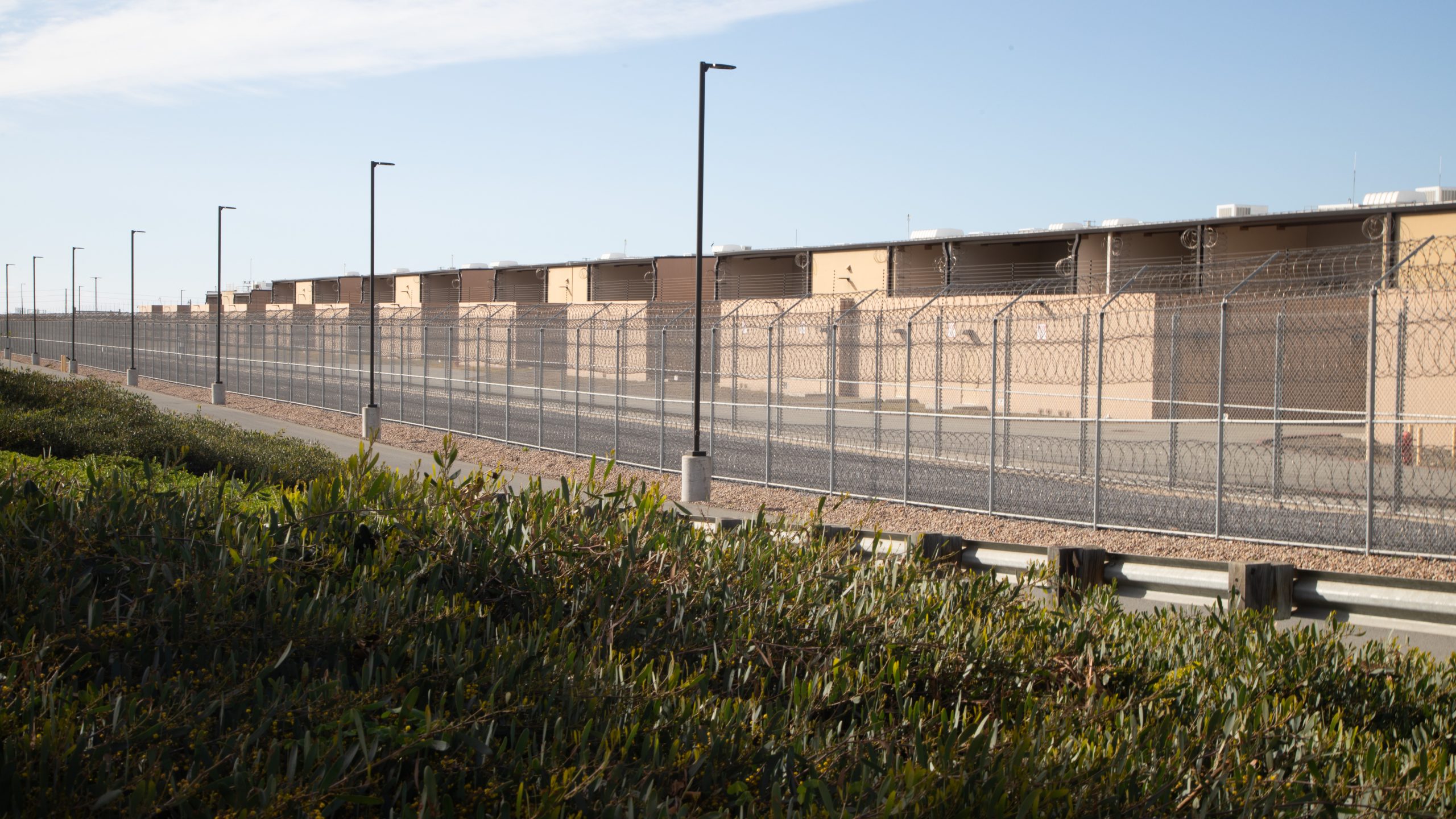
Federal Government Acquires Ownership of Otay Mesa Detention Center
In a significant development, the Otay Mesa Detention Center has transitioned into federal ownership. Private prison operator CoreCivic announced on Monday its decision to sell both the Otay Mesa and California City detention facilities to the Department of Homeland Security (DHS) for a total of $1.5 billion.
Details of the Transaction and Continued Management
The Otay Mesa facility, located in southeast San Diego, has a capacity of approximately 2,000 beds, accommodating detainees from Immigration and Customs Enforcement (ICE) as well as the U.S. Marshals Service. CoreCivic finalized the sale by transferring its San Diego facility for $739.2 million and the California City facility for $732.6 million. Despite the change in ownership, CoreCivic will retain management of both facilities under existing contracts with ICE as the Biden administration continues its focus on immigration enforcement.
CoreCivic’s Commitment to Operational Continuity
In a recent statement, CoreCivic spokesperson Ryan Gustin emphasized that the company expects to retain its current employees and ensure operational continuity. He noted, “This type of asset transaction is not unusual for governments. We have previously completed facility sales to government partners, and managing government-owned facilities is a well-established model within our business.”
Local Oversight and Legislative Response
The sale has faced criticism from Democratic lawmakers and the San Diego County Board of Supervisors, who have filed a lawsuit against DHS for access to the facility, citing repeated denials for on-site inspections. County Board Chair Tera Lawson Rimmer, who was barred from accessing the site, voiced concerns over the implications of the sale for oversight and transparency. She remarked, “This means President Trump’s mass detention program will become larger, more permanent, and more expensive.”
Background on CoreCivic’s Involvement
CoreCivic originally acquired a 37-acre site for the Otay Mesa facility in 2010 for $10.3 million, later opening the detention center in 2015, aiming to serve migrants along the U.S.-Mexico border. The California City facility has been utilized as an immigrant detention center since 2022, having been built in 1998.
Financial Outcomes and Future Plans
CoreCivic’s CEO, Patrick Swindle, expressed satisfaction with the sale, which he described as a rigorous and transparent process conducted in conjunction with government partners. Approximately half of the $1.5 billion in proceeds will be allocated to debt reduction, while the remainder will be utilized for general corporate purposes. Notably, CoreCivic’s revenue surged to $2.2 billion last year, marking a 13% increase from $1.96 billion in 2024.
Concerns Over Health Conditions at Detention Centers
This acquisition occurs against the backdrop of ongoing reports detailing alleged poor health conditions and inadequate medical care at the Otay Mesa Detention Center. Investigations have revealed multiple cases in court documents where detainees reported serious health concerns and lack of necessary medical treatments. A recent letter sent to ICE and CoreCivic regarding these allegations drew no interviews but received standard statements insisting that facilities follow federal guidelines and prioritize detainee well-being. Despite assurances, external evaluations point toward troubling conditions that persist as the size of ICE detention centers nationwide continues to grow.
