


California Takes Action Against Immigration Detention Facilities
In 2023, California regulators imposed fines exceeding $100,000 on private operators of federal immigration detention facilities, marking the beginning of a prolonged dispute regarding the classification of detainees as employees. This question transcends mere terminology; recognizing detainees as employees would subject them to California’s workplace protection laws.
Settlement Confirms Worker Safety Protections
A legal settlement announced recently affirms that private immigrant detention facilities must adhere to California’s workplace safety and health regulations. Dennis Gomez, a spokesperson for the California Occupational Safety and Health Administration (Cal/OSHA), emphasized that all workers deserve a safe environment and should be free to report hazards without fear of retaliation.
GEO Group Agrees to Pay Fines
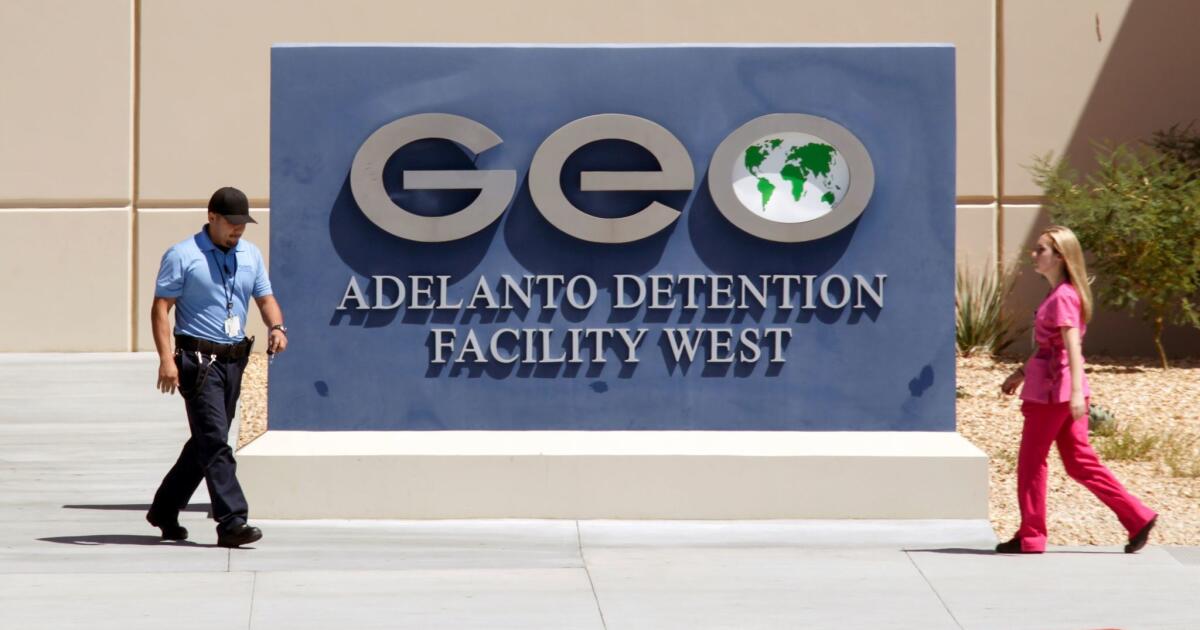
Under the terms of the settlement, the GEO Group, a Florida-based private prison company, dropped its legal challenges and agreed to pay more than $100,000 in penalties. GEO Group did not respond to requests for comment regarding the matter.
Documented Violations Highlight Concerns
In 2023, Cal/OSHA issued $104,510 in fines against GEO Group after identifying six violations of state law. Detainees raised concerns over inadequate protective equipment and insufficient training while tasked with cleaning the facility for a mere $1 a day. During the COVID-19 pandemic, detainees reported having to wipe down black mold in showers and experiencing poor air quality, with unspecified cleaning products exacerbating health hazards.
Legal Challenges Continue Despite Settlement
The most substantial fine levied against GEO Group stemmed from its failure to implement “effective written procedures to reduce the risk of employee exposure to aerosol communicable diseases.” Despite efforts to appeal the ruling, the state’s Occupational Safety and Health Appeals Board upheld the decision early last year, affirming that the detainees ought to be classified as “affected employees.” GEO Group subsequently filed a lawsuit, but resolved the disputes through a settlement just days before a scheduled court appearance.
Future Protections Remain Uncertain
Beyond paying the fines, GEO Group has agreed to devise a plan aimed at minimizing aerosol transmission in 12 secure reentry facilities in California, which includes five immigrant detention centers. The settlement specifies that GEO Group must ensure detainees receive adequate tools and personal protective equipment for their tasks. Furthermore, the appellate board’s ruling allows immigrant detainees in work programs to participate anonymously, recognizing the risk of retaliation.
New ICE Standards Spark Controversy
Despite these developments, the federal government’s stance on detainee status remains unresolved. Last month, U.S. Immigration and Customs Enforcement (ICE) unveiled new national standards stating that “inmate volunteers who participate in volunteer work programs are not considered facility employees,” thereby exempting them from labor regulations. Attorney Mariel Villarreal noted that the timing of these new standards raises questions about whether GEO Group influenced ICE to clarify that detainees are not employees. She implied this change might be a direct reaction to the California settlement.
Ongoing Legal Issues for Detention Facility Operators
GEO Group, along with other immigration detention center operators, faces additional legal challenges concerning worker rights, including lawsuits in Washington, Colorado, and California regarding the $1-a-day payments. Villarreal expressed confidence that the California-OSHA settlement will endure, despite the implementation of new standards across ICE facilities. She suggested the new standards appear to be a strategy by GEO Group to “shirk responsibility” while aiming to protect profit margins, noting the close ties between GEO and ICE.
