


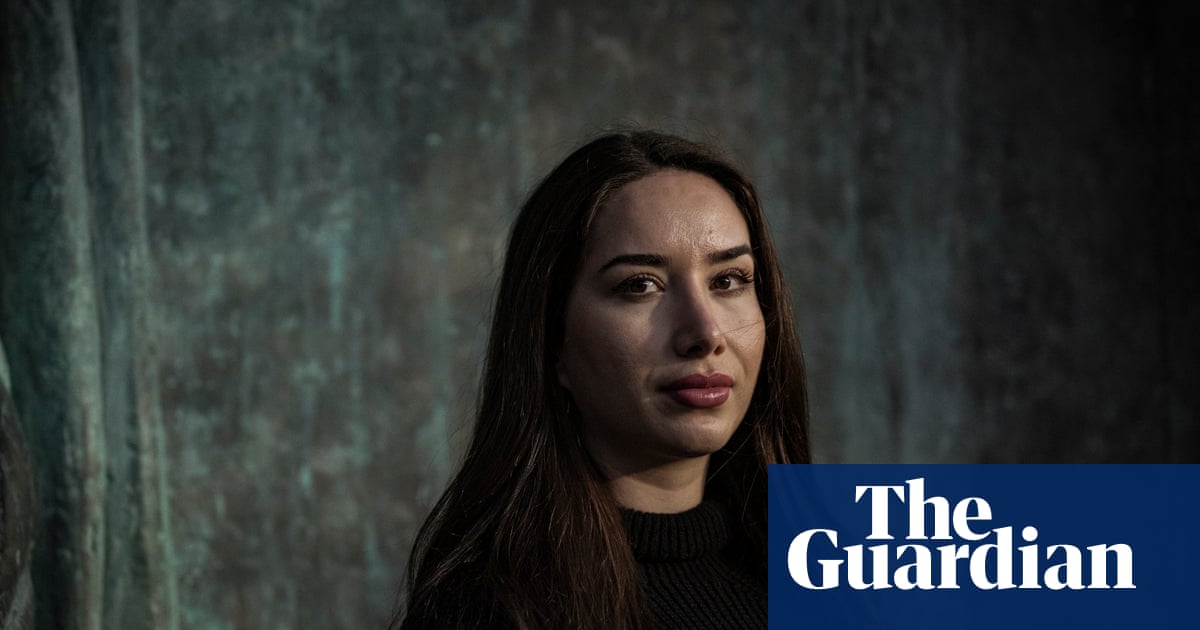
From Refugee Camp to Law School: Marziya Raji’s Journey
For three years, Marziya Raji’s education consisted of makeshift English and math classes in an Indonesian refugee camp. Born in Afghanistan and raised in Iran, Raji arrived in Australia at the age of 17 with only a rudimentary grasp of English. Determined to continue her education, she set her sights on returning to high school.
A Dream Realized
Now 28, Raji celebrated her admission to the legal profession this year. Her accomplishment is a testament to resilience and hard work amidst challenges. “It was a dream come true,” she reflects.
Controversy Surrounding Immigration and Language
Last month, One Nation leader Pauline Hanson addressed the nation, criticizing what she termed a “growing language problem caused by immigration.” In her speech, she argued that this issue poses a threat to “social cohesion.” One Nation’s platform advocates for stricter immigration policies, including English language requirements for new arrivals.
Demographics and Language Use
Supporting her claims, Hanson cited data from the 2021 Census, revealing that one in four Australians, or 23%, speak a language other than English at home, with Mandarin and Arabic being the most prevalent. She expressed concerns about social cohesion, highlighting that 872,000 individuals reported speaking English “poorly” or “not at all.” Although this group accounts for only 3.4% of Australia’s total population, it includes over 100,000 children and infants.
Challenging Stereotypes
For Raji, who speaks Persian, Dari, and English, such rhetoric undervalues the diverse contributions of immigrants. She asserts that many individuals lack the opportunity to learn English in their home countries. “If they come here, they can learn English just like I did and contribute to the community,” she states emphatically.
The Importance of Language Services
In 2015, Raji undertook a six-month intensive English course designed for newly arrived immigrants in Melbourne, which laid the groundwork for her high school education. “I learned about Australian culture and how things work, and I became more confident in my English,” she recalls. Without access to an immersion language program, Raji believes her integration into Australian society would have been significantly hindered.
Empowering the Community
Currently, Raji serves in a gambling prevention program aimed at multicultural communities, leveraging her language skills to assist clients who are not fluent in English. She emphasizes that language barriers can prevent people from receiving essential support. As a newly minted Australian citizen as of 2020, Raji aspires to be a “spokesperson for the voiceless,” driven by her experiences of injustice against refugees and women worldwide. “Seeing so much injustice ignited my passion to study law,” she expresses.
Language Diversity and Social Cohesion
The 2021 Census revealed that 5.6 million Australians, or about 22% of the population, spoke a language other than English at home, with 72% of these individuals also speaking English. In addition to English, other commonly spoken languages include Mandarin (2.7%), Arabic (1.4%), and Vietnamese (1.3%). Professor Catherine Travis, a linguist from the Australian National University, argues that the assumption that multiculturalism undermines social cohesion is misguided. “Recognizing diverse languages can enhance acceptance within Australia,” she asserts.
