


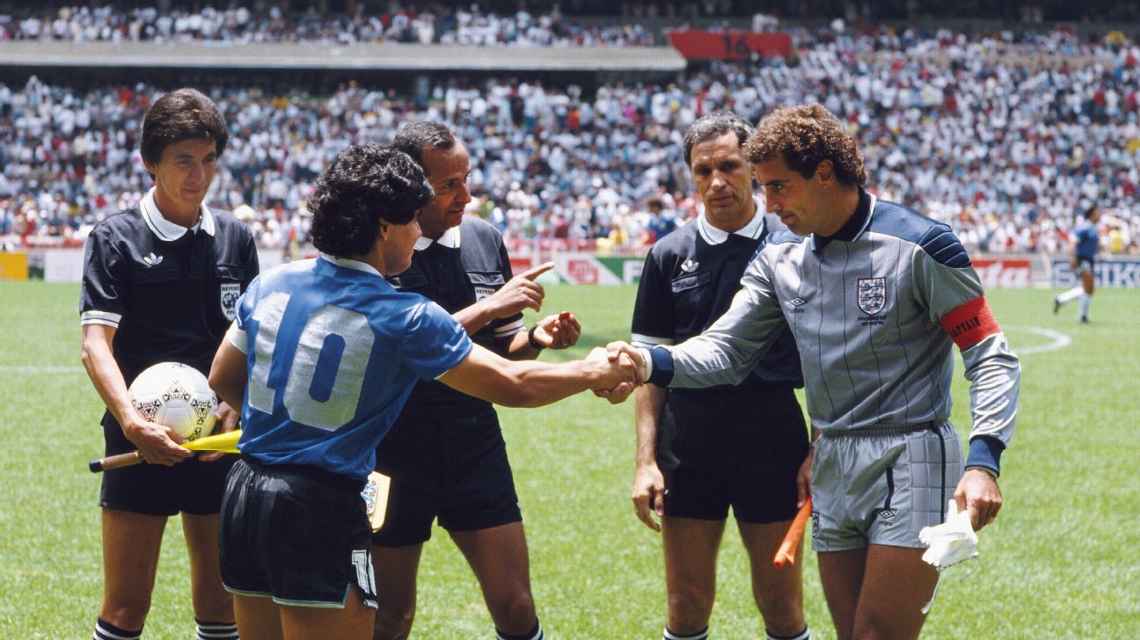
Soccer matches can often feel like mere games; however, the meeting between England and Argentina transcends this notion. As these two football powerhouses prepare to clash in the semi-finals of the 2026 FIFA World Cup in Atlanta, the stakes are significantly higher than just reaching the final. This match marks another pivotal chapter in a storied rivalry that has polarized nations, shaped generations, and produced legendary figures on both sides of the ball.
For over six decades, England and Argentina have faced off in matches fraught with tension, controversy, and profound emotion, fundamentally altering the narrative of the World Cup. From Diego Maradona’s notorious ‘Hand of God’ goal to David Beckham’s redemptive moment, the encounters have not only impacted the teams’ legacies but also resonated deeply with their respective nations. This semi-final is more than just a game; it embodies the greatest untold story in football history.
A Rivalry Rooted in History
The first encounter between England and Argentina took place during the 1962 World Cup in Chile, where England emerged victorious with a 3-1 triumph in the group stage. At that time, few could predict that this competition would later evolve into one of the sport’s fiercest rivalries. The dynamic shifted dramatically in 1966 when the teams met again, igniting a host of controversies that would shape football lore.
1966: A Defining Moment in Football
During the quarter-finals of the 1966 World Cup hosted by England, the two teams faced each other in a match that ended 1-0, thanks to a goal from Geoff Hurst. Yet the central figure of this encounter was Argentina’s captain, Antonio Rattin, who was infamously sent off by German referee Rudolf Kreitlein due to dissent. The language barrier hindered Rattin’s understanding of the referee’s decisions, leading to an extended standoff before police ultimately escorted him from the pitch.
The image of Rattin perched defiantly on the royal carpet designed for Queen Elizabeth II has become iconic, and the incident drew public ire, prompting FIFA to implement the yellow and red card system—one of football’s significant innovations. Tensions escalated further as England manager Alf Ramsey forbade his players from swapping jerseys, labeling Argentinians as “animals.” Rattin later expressed his belief that the refereeing was biased, stating emphatically his conviction that the match had been skewed in England’s favor.
Political Context Deepens the Rivalry
The conflict took on a deeper resonance following the Falklands/Malvinas War in 1982, making every subsequent match laden with political and emotional weight. Former Argentine defender Oscar Ruggeri recounted how Diego Maradona motivated the team prior to their 1986 encounter with England by evoking the war’s toll on their countrymen. The emotions surrounding these matches transformed football into a battleground of national pride and historical grievances.
1986: Maradona’s Infamous “Hand of God”
Among the most defining moments in this rivalry is Diego Maradona’s 1986 World Cup match against England, where he scored two unforgettable goals—one controversial and one celebrated as the best goal in World Cup history. Maradona’s first goal, known as the ‘Hand of God,’ was met with outrage from English players, yet the referee allowed it. Moments later, Maradona dribbled past nearly the entire English defense to score a magnificent second goal. For England, this match represented injustice; for Argentina, it was an act of revenge.
1998: Beckham Becomes the Villain
Fast forward to 1998, when another defining moment in this rivalry unfolded: David Beckham’s infamous red card. The match ended in a dramatic 2-2 tie, but Beckham’s expulsion after a foul on Diego Simeone shifted public perception and made him a target of disdain back home. Despite Beckham’s later reflections acknowledging the difficulty of those years, the rivalry’s heated nature and the desire to defeat England only intensified.
2002: Beckham Redeems Himself
The chapter of redemption for Beckham came four years later at the 2002 World Cup, when he scored a crucial penalty against Argentina, sealing a 1-0 victory for England. This moment erased years of criticism for Beckham and symbolized a shift in fortunes. Despite ongoing debates about the legitimacy of that penalty, Beckham’s celebration encapsulated the emotional weight of the moment and the significance of triumph over past grievances.
A New Era for the Rivalry
As history beckons, England and Argentina prepare to rewrite this narrative once more. It’s been over two decades since Beckham’s redemption, and nearly 40 years since Maradona’s legendary performances, but this time all eyes are on Lionel Messi. Despite his extensive career, the Argentine star has never faced England in an international match. Following Argentina’s quarter-final win, Messi expressed how significant it was to engage with this historic rivalry. For him, this encounter embodies the culmination of years of watching and learning from the past.
This upcoming semi-final is set to be more than just another match; it is a fierce tableau of history, emotion, and national pride. With elements of controversy and revenge stitched into the fabric of this rivalry, it promises a battle that will hang in the annals of football long after the final whistle blows.
