


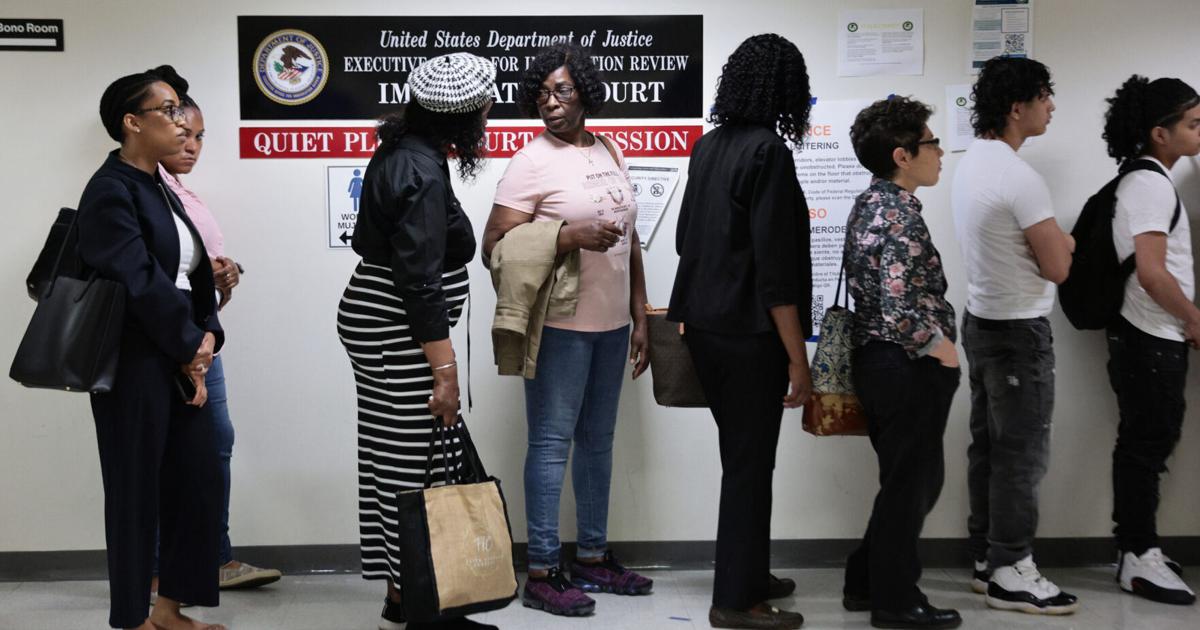
Immigration Hearings Under New Scrutiny
The Trump administration has implemented a method that allows immigration judges to expedite the deportation of numerous immigrants simultaneously. This approach, commonly referred to as megamaster hearings, involves rescheduling numerous cases from their original dates—far into the future—to hearings occurring just days or weeks later. Such hearings can see a single judge preside over more than 100 cases in a single session.
Concerns Over Due Process
Legal experts across the nation have raised alarms about the lack of notification regarding these changes, leaving many immigrants unaware of their new court dates. Consequently, judges often order deportations for those who fail to appear. Analysts Joseph Gunther and Brandon Murrow recently revealed that approximately 40% of individuals scheduled for megamaster hearings failed to show up during a particular week in late May. On two occasions, judges ordered the immediate deportation of all listed individuals simply for their absence.
Insufficient Notice for Hearings
Research indicates that court hearings are frequently rescheduled with as little as nine days’ notice, heightening the risk that individuals will miss their hearings entirely. Gracie Willis, a rapid response attorney with the National Immigration Project, emphasized this issue, stating that the inadequate timeframe does not allow sufficient preparation or awareness for those affected.
Official Defense of Hearing Procedures
An anonymous representative from the Executive Office for Immigration Review (EOIR) defended the agency’s practices, noting their commitment to expediting cases involving unaccompanied minors and ensuring timely processing for all cases. They asserted that unnecessary delays can disadvantage both immigrants with strong claims and U.S. citizens advocating for the swift removal of others.
Challenges of Mega Hearings
The term “megamasters” underscores the sheer volume of cases handled in a single session. Unlike traditional master calendar hearings—which typically involve brief check-ins—these sessions can result in a higher chance of errors due to the overwhelming caseload. Vanessa Dojaquez Torres, from the American Immigration Lawyers Association, expressed concerns about the ability of any judge to adequately address each case’s specific needs within such a crowded schedule.
Broader Implications of Megamaster Hearings
The prevalence of megamaster hearings is growing, with evidence of these mass hearings occurring across multiple states including California, Connecticut, and Texas. Recently, the San Diego Immigration Court conducted its first megamaster hearing, during which Immigration Judge Catherine Halliday Roberts ordered 50 deportations in a single morning. This expedited process raises serious questions about the fairness and thoroughness of judicial proceedings.
Memorable Cases Reveal System Flaws
Specific instances underscore the systemic issues. One case involved a woman who did not fully understand her situation due to language barriers. Despite her unique circumstances, the rapid-fire nature of the hearing left her feeling vulnerable and confused. Legal representatives have reported similar situations where individuals, facing deportation orders, left court unaware of their exclusion from group hearings or without necessary legal representation.
