


This article was first published by FāVS News on July 14, 2026.
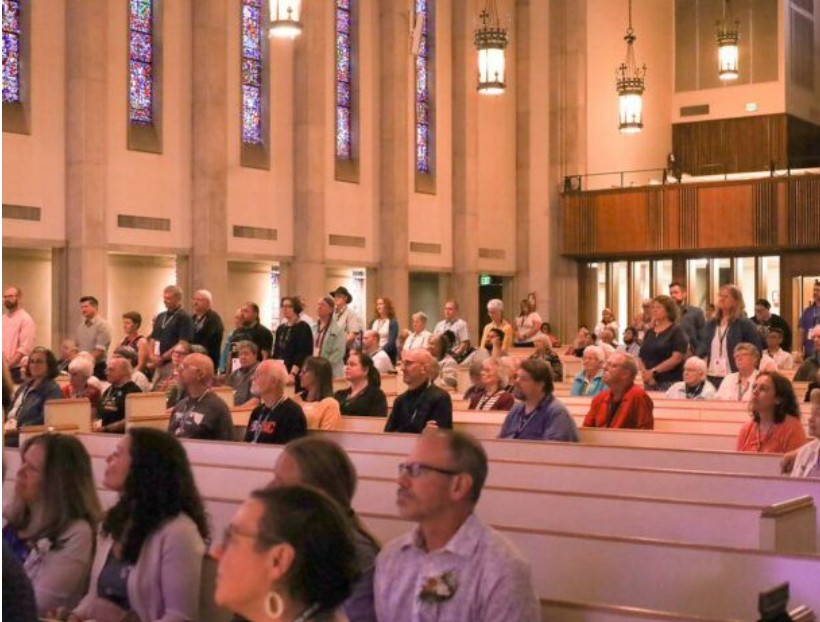
Highlighting the risks facing LGBTQ+ and immigrant communities, the Oregon-Idaho Conference of the United Methodist Church has opted to relocate next year’s annual conference from Idaho. The decision came last month during a congregational session held at the Cathedral of the Rockies in Boise, where representatives from Oregon and southern Idaho gathered to vote on significant topics affecting the church.
During this year’s conference, Pastor Heather Riggs from Montavilla United Methodist Church in Portland proposed a motion to shift the location of the next conference. The ensuing discussion drew dozens of clergy and laity who voiced their opinions on whether the gathering should remain in Idaho or move to Oregon in 2027. The final vote was closely contested but resulted in support for relocating to Oregon or conducting the conference virtually.
Impact of Idaho’s Anti-LGBTQ+ Legislation on the Decision
A prior vote had established that the conference would take place in Idaho for both 2026 and 2027. The Oregon-Idaho Conference, which merged in 1969, had a policy to host the conference in Idaho approximately every four years to ensure fairness, according to Rev. Duane Anders, pastor of Rocky Mountain Cathedral. However, the sociopolitical climate in Idaho has raised concerns, particularly regarding recent legislative measures targeting marginalized groups, including the LGBTQ+ community.
In 2026, the ACLU of Idaho reported the introduction of eleven anti-LGBTQ+ bills, with half specifically targeting transgender individuals. For instance, House Bill 752 sought to criminalize access for transgender individuals to restrooms and locker rooms that correspond with their gender in government-owned and public spaces. While the bill has yet to take full effect, a federal judge has issued a preliminary injunction against it.
The debate at the conference was partly triggered by a specific incident during the public comment period, where a non-binary clergyman from Oregon shared his experience of facing microaggressions while accompanying his wife at a Boise hospital.
Supporters of holding the conference in Idaho acknowledged the fears of LGBTQ+ and immigrant attendees but argued for the importance of maintaining a progressive church presence in a conservative region. Anders, whose church was originally designated to host the conference, noted that some among the clergy expressed hesitation about the gathering in light of the state’s contentious political environment.
Anders, who is a father to a transgender daughter, explained that he currently resides in Washington state due to safety concerns in Idaho. Despite his worries, he believes it is crucial for progressive churches to actively engage with local communities, as there are still LGBTQ+ individuals and people of color in Idaho who need support.
Concerns of Abandonment Among Idaho Clergy
Rev. Hannah Andres from Boise’s Whitney United Methodist Church and the Wesley Foundation at Boise State University expressed that the discourse surrounding the conference was disheartening. As one of only two openly queer clergy in Idaho within the Oregon-Idaho Conference, she understands the fears of many but feels a deep sense of abandonment as efforts in Idaho often go unrecognized.
She emphasized the valuable work that local Methodist churches perform, which is frequently overlooked. “Idaho has many incredibly faithful individuals, not just clergy, striving for impactful change, yet it feels as though our efforts are dismissed,” Andres remarked.
Bishop Cedric D. Bridgeforth, who oversees the Greater Northwest Episcopal region, acknowledged the complex emotions surrounding the votes. He asserted that the close margin indicated not a divided conference but rather a collective grappling with obligations to various vulnerable groups. According to Bridgeforth, the decision was not simply about choosing between Idaho and Oregon but about prioritizing protections for those in need.
Despite the close vote, Bridgeforth recognized that the process did not fully embrace the conference’s theme of “Be Bold to Love.” He noted that queer and immigrant United Methodists in Idaho were insufficiently represented in discussions regarding the future location of the conference. In a subsequent letter, he reflected on the varied perspectives that contributed to the vote, emphasizing the conference’s desire to continue its mission in Idaho while ensuring the safety and support of those it serves.
Future Prospects for LGBTQ+ and Immigrant Communities in Idaho
When asked about the feelings of LGBTQ+ and non-white United Methodists in Idaho who might view the conference’s move as a sign of danger in their home state, Bridgeforth acknowledged the validity of these concerns. “For many, it is indeed too dangerous. That is the harsh reality we face,” he said. “Nonetheless, some individuals feel a calling to provide service within Idaho, and we need their prophetic voices present throughout the state.”
