


Insights from the 2026 African Defense Secretary’s Conference
Luanda, Angola – The recent conclusion of the 2026 African Defense Secretary’s Conference marks a significant milestone in addressing ongoing security challenges. As the discussions wrap up, U.S. Africa Command remains committed to focusing on the critical issues highlighted at the summit in the coming months and years.
Addressing Security and Economic Intersections
This year’s conference gathered defense experts from both Africa and the United States to tackle a diverse range of regional security challenges. A key theme was the evolving intersection of defense and economic strategies, examining how these elements can foster innovation both on and off the battlefield.
Industry Roundtable Drives Collaboration
A standout feature of this year’s gathering was an industry-focused roundtable. This session united senior U.S. officials with industry leaders from both the U.S. and Africa to discuss operational hurdles and forge potential partnerships within the defense sector across the continent. Levi Alexis from the AFRICOM Defense Economics Directorate emphasized the event’s significance, noting that it was the first time the conference dedicated an entire effort to the relationship between innovation and defense economics. The participation of over 11 industry partners facilitated critical dialogue on strategic solutions to Africa’s security challenges while also uncovering substantial economic opportunities.
Feedback and Strategic Pathways
Brig. Gen. Eero R. Kelavuori, AFRICOM’s Deputy Director for Strategy, Engagement, and Plans, hosted the roundtable, which also featured senior leaders from the U.S. Department of the Army and the U.S. Department of Commerce. The primary objective was to gather actionable insights from the private sector regarding persistent operational barriers in Africa. Attendees identified issues such as capital risks, bureaucratic hurdles, asymmetric competition, and constrained defense budgets. To tackle these challenges, strategic pathways were proposed, including adopting an integrated diplomatic, intelligence, military, and economic approach to align defense strategies with economic development.
Highlighting the Lobito Corridor Model
During discussions, the Lobito Corridor—a U.S.-backed rail project linking Angola and the Democratic Republic of the Congo—was highlighted as an exemplary model of government-private industry collaboration. Mark Mitchell, Assistant Secretary of the Bureau of Global Markets for the Middle East and Africa, observed that this vital corridor not only fosters economic activity but also enhances stability for surrounding communities, much like historical rivers that served as economic lifelines.
Exploring Economic Opportunities and Innovative Solutions
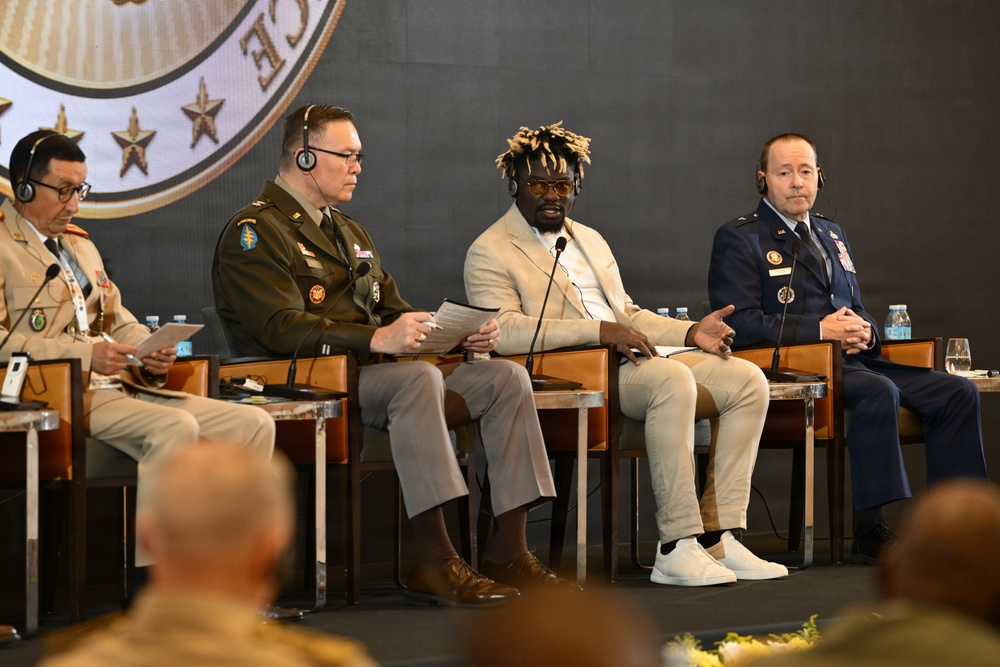
In conjunction with the roundtables, the conference featured two focused forums: “Economic Opportunities” and “Innovative Solutions.” These panels included senior military leaders and top technology executives from Africa, as well as representatives from major U.S. government agencies. The “Economic Opportunities” forum saw Ms. Bethany Aquilina Brez, Deputy Director of the DFC’s Office of Foreign Policy, discussing how African nations can leverage the Development Finance Corporation (DFC) to attract direct foreign investment. She noted that the DFC’s capacity to offer up to $1 billion in political risk insurance could revolutionize the decision-making process for companies eager to enter African markets.
Encouraging Innovative Military and Private Sector Partnerships
The “Innovative Solutions” forum, attended by prominent figures such as Nathan Nwachukwu, CEO of Terra Haptix, focused on the symbiotic relationship between the military and the tech industry. Discussions revolved around accelerating technology adoption, enhancing large-scale production, and aligning operational strategies to adapt to rapid advancements in drone warfare. Nwachukwu emphasized the need for Africa to develop its defense capabilities domestically instead of relying on foreign security structures, highlighting that a robust pan-African defense industrial base is essential for achieving long-term peace.
As the conference wrapped, it became evident that integrating defense economics with commercial innovation will serve as a foundational pillar in the quest for sustainable security in Africa. AFRICOM Commander Gen. Dagvin Anderson articulated that the aim is not just to address security, but also to uncover innovative solutions that support African partners’ unique needs and aspirations. The dialogue at the conference reflects a broader commitment to creating lasting stability and economic opportunities across the continent.
