


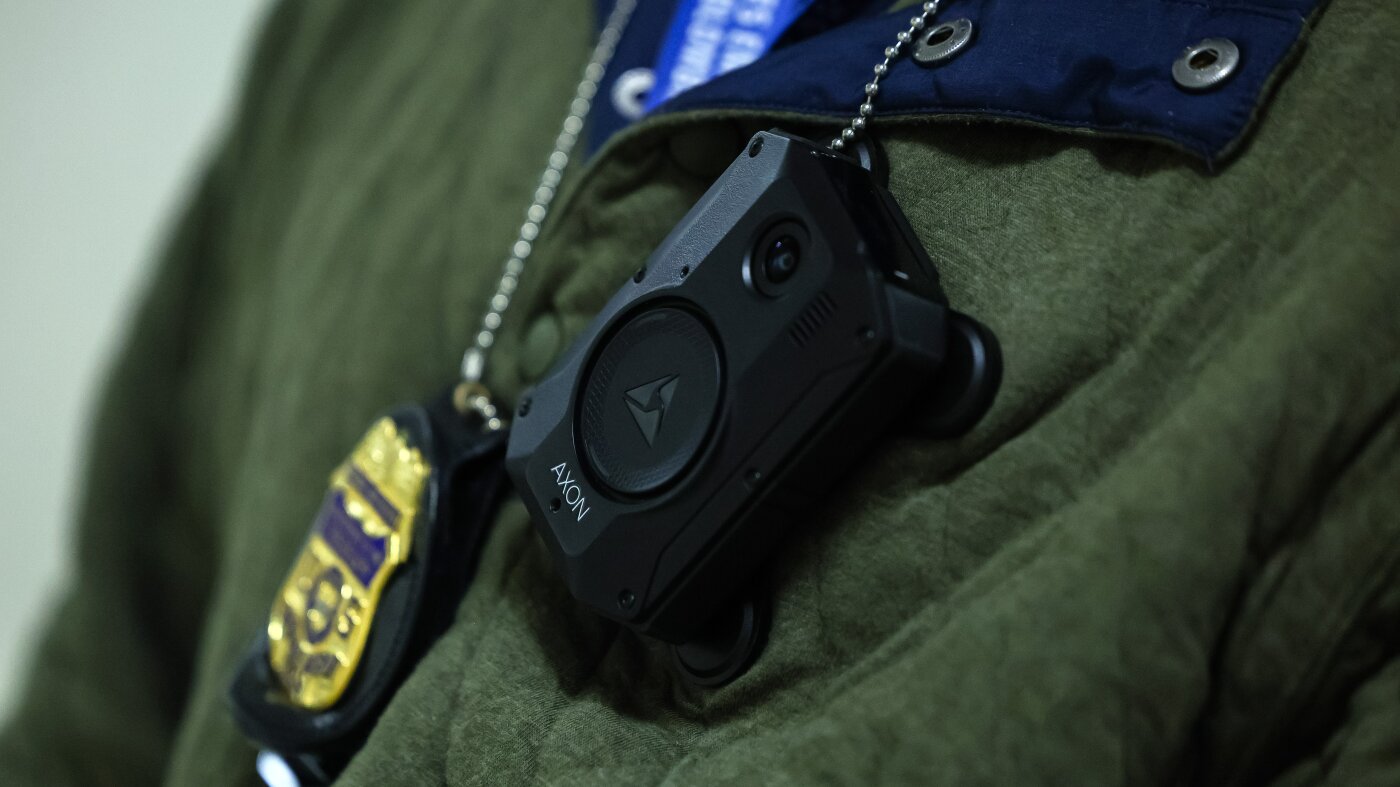
Federal agents wear body cameras as they patrol the halls of the Immigration Courthouse in the Jacob K. Javits Federal Building in New York City on March 4, 2026. Michael M. Santiago/Getty Images North America
Michael M. Santiago/Getty Images
Following the fatal shooting of two Americans by an immigration officer in Minneapolis earlier this year, the Department of Homeland Security (DHS) pledged to expedite the deployment of body cameras for law enforcement agents nationwide. However, nearly six months later, this initiative remains largely unfulfilled.
In a recent incident, DHS faced scrutiny after federal immigration agents shot and killed two immigrant fathers. In Texas, Lorenzo Salgado Araujo was charged with using a deadly weapon while attempting to run over an employee. In Maine, fugitive João Duran Guerrero was implicated for endangering public safety. Notably, none of the federal personnel involved in these incidents were equipped with body cameras.
In light of these events, lawmakers, including Senator Susan Collins (R-Maine), are intensifying their calls for the swift implementation of body cameras by the DHS. Collins emphasized that these cameras are essential for the protection of both law enforcement officers and the individuals they engage with.
Lauren Bonds, executive director of the National Police Accountability Project, highlighted the significance of body cameras as accountability tools in instances of law enforcement misconduct. She noted that these devices have proven vital in revealing excessive force and debunking misleading narratives presented in incident reports.
Funding Challenges for Body Camera Deployment
White House border czar Tom Homan announced that “hundreds” of body cameras had been acquired and dispatched to Minnesota following the recent shootings of Renee Good and Alex Preti. However, Homan acknowledged that there were insufficient cameras to outfit all Immigration and Customs Enforcement (ICE) officers, leading to delays pending additional funding.
In the prior year, bipartisan funding made ICE the most well-resourced federal law enforcement agency. Earlier this year, DHS leadership appealed to lawmakers for dedicated funding earmarked for body cameras and associated training. Consequently, Congress recently allocated $31 billion towards technology, including body cameras, although a mandate for ICE’s purchase or utilization of these devices did not come to fruition.
In a statement to NPR, DHS indicated the government shutdown had hindered the timely distribution and acquisition of body cameras. The agency disclosed that the process was complicated by political conflicts, leading many to question the commitment to this initiative.
David Bier, director of immigration studies at the Cato Institute, expressed skepticism regarding DHS’s priorities surrounding body camera issuance. He asserted that the agency appears resistant to having agent actions publicly documented, which he believes is indicative of a reluctance to promote transparency in law enforcement activities.
Despite these challenges, Homan reassured that there is a deployment timetable in progress, with training already underway across various field offices. Currently, DHS reported that half of its field offices are equipped with body cameras, with plans for the remainder to be outfitted within 60 days. The agency has stressed that ensuring all ICE officers are equipped with body cameras is a top priority, especially in light of increased attacks against law enforcement officials.
However, Bonds warned that simply providing body cameras does not guarantee the prevention of misconduct among law enforcement officers. She noted that there have been instances where officers failed to activate their cameras or deleted footage following controversial actions. In her view, fundamental reforms are necessary to limit interactions between police and civilians to reduce the likelihood of violence.
Recent incidents have demonstrated a pattern where video evidence contradicts DHS narratives. In the Minneapolis shootings, DHS initially labeled the victims as domestic terrorists attempting to harm federal agents, a claim later disputed by bystander footage. As investigations continue into the deaths of Salgado Araujo and Duran Guerrero, surveillance footage is beginning to shed light on the events leading up to their deaths. While some independent witnesses have come forward, the challenge remains in holding ICE officers accountable, given the vague statements released by DHS amidst ongoing scrutiny.
