


Jackson Joseph faced a difficult decision when leaving his role as a high school English teacher in Haiti. The escalating gang violence in 2021 forced him to flee for the safety of his family. Since settling in Lima, he has dedicated himself to creating a new home for his wife and two children.
“Starting anew in a different country made me adopt a mindset of a learner,” Joseph reflects. “In challenging situations, you either learn or win. I choose to never lose.”
Joseph resided in Lima under Temporary Protected Status (TPS), a federal protection that allows individuals from specific countries to live and work in the United States during unsafe conditions at home, due to armed conflict, natural disasters, or similar challenges.
Under the Trump administration, officials claimed improvements in Haiti and initiated actions to revoke TPS for the nation. However, the timeline for these protections remains unclear, as legal complexities persist after the U.S. Supreme Court upheld the administration’s decision regarding TPS for Haiti and Syria.
Despite these developments, Joseph maintains that returning to Haiti remains far too dangerous. His responsibilities in Lima continue to mount, making daily life increasingly difficult.
Living in Uncertainty
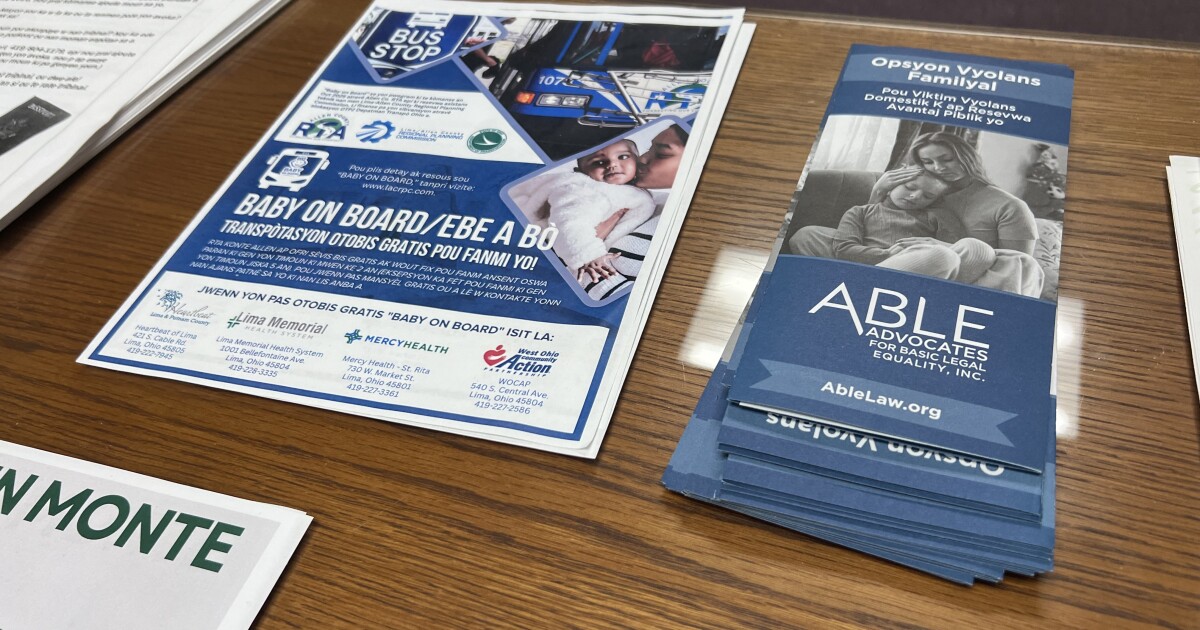
Immigrant advocacy organizations in Lima have increasingly focused on assisting approximately 5,000 Haitian residents in finding employment, English as a Second Language (ESL) classes, and financial literacy programs.
Angelica Buettner, who leads Connecting Borders, a local resettlement agency, emphasizes the ongoing challenges faced by Haitians. “Our primary goal now is to help them navigate these precarious times,” she said. “Many struggle to afford rent due to job losses, often banding together to share expenses.” She added, “We’re truly living day by day.”
Community Response
Local churches and nonprofit organizations have stepped up by organizing food drives, providing rental assistance, and offering legal aid. Katie Thielshot, who directs the Lima Newcomer Coalition, a community group serving Haitian immigrants, noted widespread support across political divides.
A Sense of Belonging
The Rev. Frank Estars, a Haitian immigrant who joined the community in 2021, expressed concern over the potential loss of Haitian residents in Lima. Active at the Elm Street Nazarene Church, he describes the Haitian community as a vital asset rather than a burden.
“We’ve contributed to this city by paying taxes, working hard, and making investments like purchasing cars and renting homes,” Estars stated. He advocates for assistance in restoring safety to Haiti, emphasizing the importance of collective change. “I’m not asking for TPS or residency; I’m seeking collaboration to bring about change in our homeland,” he expressed.
As the future remains uncertain, Estars and his congregation continue to hope and pray for stability in their lives.
