


In 2026, the World Cup will mark a significant milestone as the largest tournament in its 96-year history, featuring a record 48 teams. However, the 2030 World Cup is set to raise the bar even higher.
Three Countries to Host the 2030 World Cup
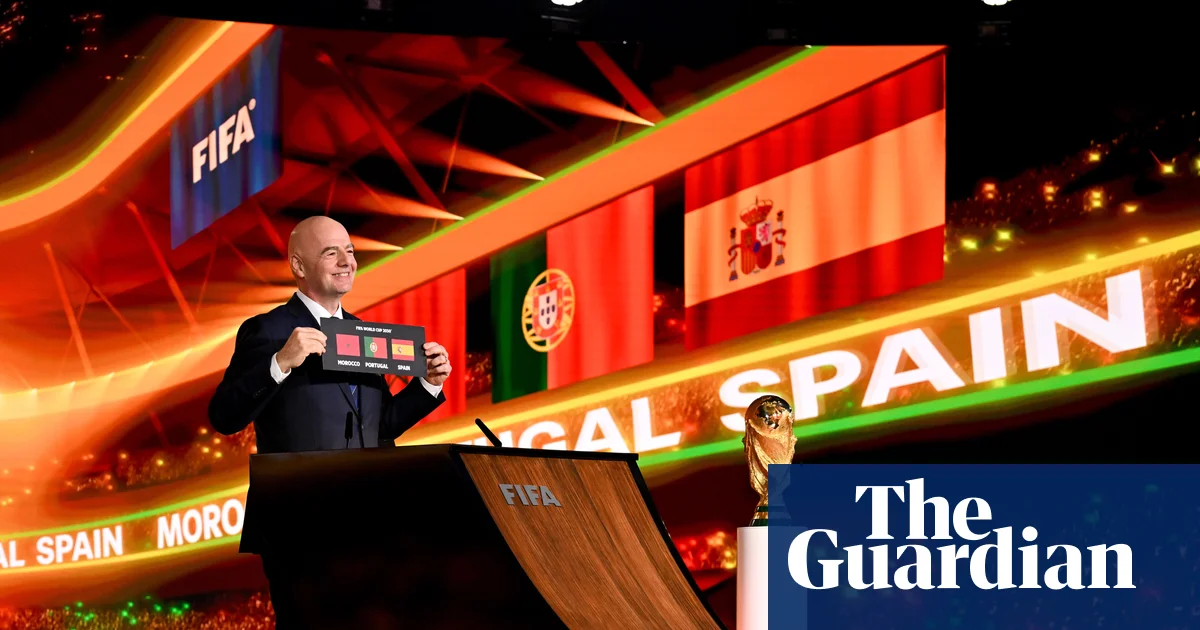
The 2030 tournament will be co-hosted by Morocco, Portugal, and Spain, making it the first instance of multiple federations collaborating for a World Cup. This event will also be notable for being the first World Cup to take place in North Africa.
In a nod to history, there will be a special match to commemorate the centennial anniversary of the World Cup, held at the Estadio Centenario in Montevideo, Uruguay—site of the inaugural tournament final in 1930. Additionally, one match each will occur in Argentina and Paraguay.
The Bidding Process Unfolds
The 2030 World Cup bidding process officially commenced in 2022, with the host country announcement set for the 2024 FIFA conference. As per FIFA’s rules governing the rotation of tournaments among continents, both the Asian (AFC) and North American (CONCACAF) federations have been excluded from hosting rights following their bids for Qatar 2022 and North America 2026, respectively.
Spain and Portugal, both part of the UEFA federation, had previously unsuccessful bids in 2018 and 2022, and failed to qualify for the 2026 tournament. They added Morocco to their joint bid for 2030. In that same year, Uruguay, Argentina, Paraguay, and Chile—a collective of CONMEBOL members—launched a competing bid, dubbing it the “100th Anniversary World Cup.”
In October 2023, the FIFA Council made a decisive choice in favor of Morocco, Portugal, and Spain, rejecting the South American proposal.
South America Will Still Host Matches
FIFA President Gianni Infantino confirmed that Uruguay, Argentina, and Paraguay will each host one match as part of the centennial celebrations for the World Cup. Notably, Uruguay not only hosted the first tournament but also emerged victorious in the inaugural final against Argentina. Paraguay’s participation will honor its status as the home of CONMEBOL, the federation that has been operational since 1930.
In addition to the matches, FIFA plans a unique celebratory event in Montevideo the week before the tournament kicks off on June 13, 2030.
Possible Expansion of Participating Teams
Initially, there was a proposal for 48 teams, but the possibility of expanding to 64 teams was recently suggested by Infantino. He mentioned that this topic would be on the agenda for relevant committee discussions following the current World Cup.
The idea of increasing the team count was previously hinted at in 2025, when CONMEBOL President Alejandro Dominguez made an official request to raise the number of participants to 64 for this landmark anniversary. “The 100th anniversary is a unique occasion worth celebrating,” Dominguez stated.
Anticipated Host Cities and Stadiums
Spain last hosted the World Cup in 1982, when Italy triumphed over West Germany at the Santiago Bernabéu. Co-hosts Morocco and Portugal have a rich history of hosting major sporting events, including Euro 2004 and AFCON 2025.
The 2030 World Cup will unfold across 17 host cities—one more than for 2026—featuring 20 proposed stadiums, with 11 located in Spain. These cities will include Marrakech and Tangier in Morocco, Porto and Lisbon in Portugal, as well as Barcelona, Madrid, and San Sebastián in Spain.
Key Developments in the Build-Up
One major topic of discussion has been FIFA’s decision to reject the South American bid while allowing Uruguay, Argentina, and Paraguay to host a single match each. This arrangement positions CONMEBOL favorably for future bids, specifically for the 2034 World Cup, which can only be hosted by Asia or Oceania. Notably, the 2034 tournament has been awarded to Saudi Arabia, a choice that has drawn criticism from various human rights organizations.
Future Speculations and Considerations
Looking ahead, the landscape of international football events remains unpredictable. With various developments on and off the pitch, including political interventions and disciplinary actions, fans can only speculate about the broader implications and potential changes leading into the 2030 World Cup.
