


FIFA Initiates Disciplinary Proceedings Following World Cup Final Chaos
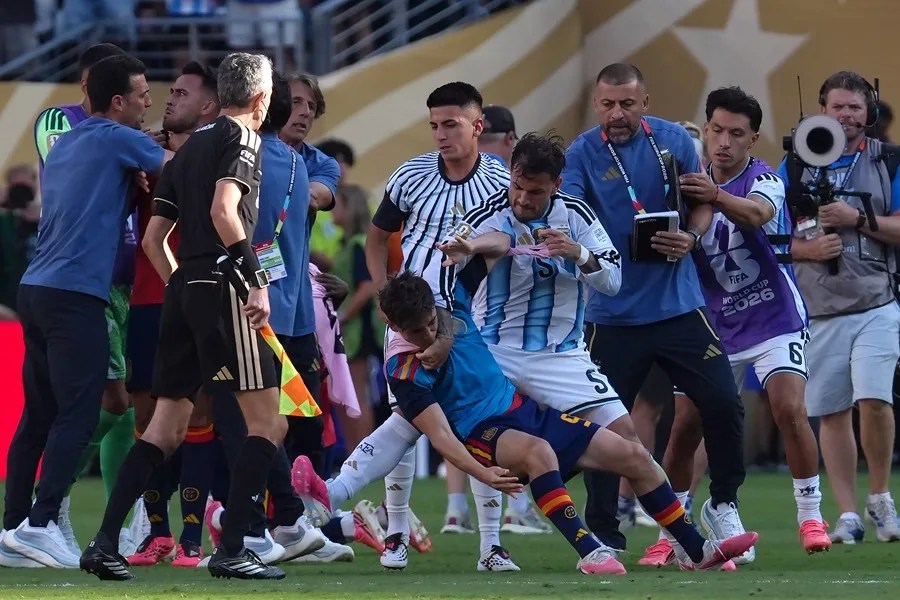
World football’s governing body, FIFA, has launched disciplinary proceedings in response to the chaotic scenes that unfolded after Spain’s narrow 1-0 extra-time victory over Argentina in the 2026 FIFA World Cup final. This development follows announcements from players and officials of both teams regarding potential sanctions stemming from the incident.
Post-Match Turmoil Overshadows Historic Victory
Spain’s momentous triumph at New Jersey’s MetLife Stadium was marred by a heated exchange between players that quickly escalated into a significant clash on the field shortly after the final whistle. The post-match altercation involved both teams, necessitating interventions from teammates, coaches, match officials, and security personnel to restore order, thereby delaying Spain’s post-match celebrations.
FIFA Confirms Investigation into Incident
On Tuesday, FIFA officially acknowledged the incident, announcing that its disciplinary committee has commenced a formal investigation. “The FIFA Disciplinary Committee has begun the process of investigating the incident that occurred after the FIFA World Cup final,” the organization stated. Further information will be provided once the disciplinary process is completed.
Scope of the Investigation
The investigation will scrutinize the actions of players and coaching staff from both Spain and Argentina, focusing on one of the most volatile endings to a World Cup final in recent years. Broadcast footage captured Argentine midfielder Leandro Paredes in a heated exchange with Spain’s defenders Eric Garcia and Gavi, which ultimately led to a large-scale melee involving players from both teams.
Potential Disciplinary Actions
FIFA’s disciplinary committee will review referee reports, video evidence, and submissions from both national football associations to determine whether disciplinary action is justified. Potential sanctions may include fines, suspensions, or other measures as dictated by the FIFA Disciplinary Code.
Controversial Moments Throughout the Final
The chaotic incident transpired just after a hard-fought final, in which Argentina’s Enzo Fernandes received a red card for a second offense, leaving his team down to ten players. Ferran Torres subsequently scored the decisive goal in stoppage time, securing Spain’s first World Cup victory since 2010. Argentina’s head coach, Lionel Scaloni, along with his coaching staff, played a pivotal role in separating the players as tensions peaked, ultimately allowing a jubilant Spanish team to receive and lift the World Cup trophy before a sold-out crowd.
A Tournament Marked by Controversy and Commercial Success
This disciplinary investigation contributes to the growing controversy surrounding a tournament that has also been lauded for its commercial success. Expanded to 48 teams, the event generated unprecedented revenues for FIFA through broadcast rights, sponsorship agreements, ticket sales, and merchandise, setting a new financial benchmark for the organization.
Ongoing Debates on World Cup Controversies
Despite its financial triumphs, the tournament has faced scrutiny for controversial officiating, crowd disturbances, security incidents, and governance issues. These controversies have led to increasing discussions about whether the 2026 World Cup might be considered the most contentious in history. FIFA’s ongoing investigation adds yet another layer to a tournament that will undoubtedly be remembered not only for Spain’s victory but also for the controversies threatening to overshadow football’s grandest stage.
