


Bipartisan Bill to Shield U.S. AI Companies from Chinese Competition
A bipartisan coalition of lawmakers unveiled plans on Thursday to introduce legislation designed to protect American artificial intelligence firms, such as OpenAI and Anthropic, from emerging competition posed by Chinese companies.
Details of the Proposed Legislation
The proposed bill, titled the Cooperation on Hostile Threats and Security Risks Act, categorizes alleged Chinese counterfeits as security threats to the United States. It seeks to create exemptions from antitrust laws, allowing AI companies and industry groups to collaborate in response to these threats. Typically, antitrust laws restrict coordination among companies with the aim of preventing price increases for consumers.
Key Legislators Behind the Initiative
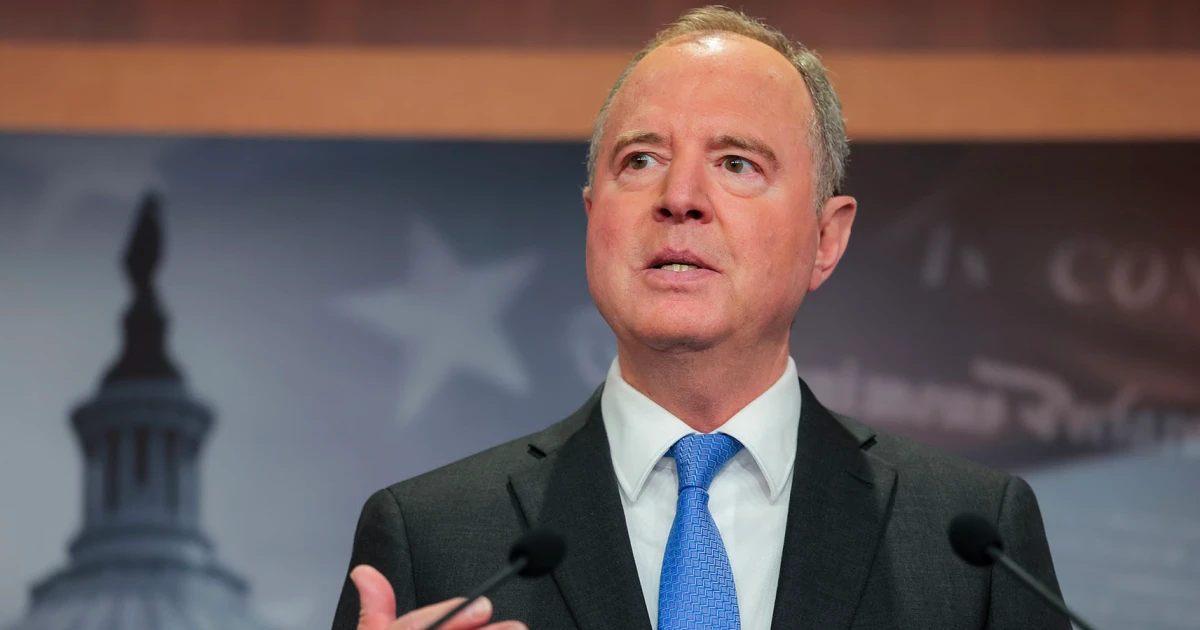
The bill is being championed by Senators Adam Schiff (D-Calif.) and Jim Banks (R-Ind.), along with Representatives Bob Latta (R-Ohio) and George Whiteside (D-Calif.).
Enhancing Information Sharing Among AI Companies
According to lawmakers, the legislation will facilitate the sharing of information concerning specific security risks, provided such actions are undertaken in good faith and exclusively to prevent or mitigate AI-related security concerns. The bill also states that the deployment of high-risk AI models could be postponed or restricted as a precautionary measure, contingent upon prior written notification.
Guardrails for Antitrust Exemption
Lawmakers emphasized that the proposed antitrust exemption will include stringent safeguards to maintain competitiveness within the AI sector. The bill would empower the Attorney General to seek injunctions against organizations that exploit this immunity.
Addressing Rising Competition from China
This initiative is part of a broader governmental strategy to defend the burgeoning U.S. AI industry from escalating competition from China. Recently, various Chinese AI firms, including Moonshot and Z.ai, have unveiled new systems that appear capable of rivaling major U.S. AI technologies, marking a significant advancement in China’s AI landscape.
Concerns Raised by U.S. Officials
In a recent interview with Fox Business, Treasury Secretary Scott Bessent warned of potential sanctions against “foreign models” for allegedly appropriating American innovations. He reiterated his stance the following day, suggesting that sanctions against specific entities were being considered.
Accusations of Intellectual Property Theft
Simultaneously, Michael Kratsios, director of the White House Office of Science and Technology Policy, accused Moonshot of infringing upon U.S. technology. The firm did not respond to requests for clarification regarding these allegations.
Citing Concerns Regarding AI Distillation
Major U.S. companies like Anthropic, Google, and OpenAI have voiced concerns over the practice known as “distillation,” which involves conducting extensive queries on advanced AI models to enhance inferior counterparts. This practice can create cheaper alternatives, raising questions about the legitimacy of such methods.
Chinese Government’s Rebuttal
In response to these claims, the Chinese government has dismissed accusations of theft as unfounded. Liu Zhang, spokesperson for the Chinese Embassy in Washington, stated that China prioritizes the protection of intellectual property rights and aims to uphold the legitimate interests of rights holders both domestically and internationally.
Legislators Assert the Need for Action
U.S. lawmakers contend that the threats posed by foreign adversaries are real. They emphasize the importance of facilitating information exchange among AI firms to counteract these dangers. Schiff highlighted the necessity of safeguarding U.S. advancements in AI technology from being weaponized against national security.
AI Security as a National Priority
Latta, chair of the House Energy and Commercial Energy Subcommittee, drew parallels between the significance of AI models and critical infrastructure, like the power grid. He underscored the importance of maintaining secure systems that Americans rely upon daily, from hospitals to water systems.
Context of Antitrust Exemptions
Traditional antitrust laws restrict collaborative efforts that could lead to price-fixing or trade limitations, though Congress has previously made exceptions for issues centered around national security, including the sharing of cybersecurity information.
Debate Over Distillation Practices
The tech industry continues to grapple with the implications of distillation. While some believe it offers lower-cost solutions, others suggest U.S. companies should pursue legal action against infringements rather than lobbying for changes in the law.
U.S. Companies’ Stance on Foreign AI Models
Some American firms are actively exploring the merits of foreign AI developments. Hugging Face recently incorporated a Chinese model to effectively analyze large-scale cyberattacks when its U.S. counterparts fell short. OpenAI has also acknowledged that one of its autonomous agents contributed to post-compromise incidents.
Venture Capital Perspectives
Clement DeLang, CEO of Hugging Face, praised the distillation practice, arguing that it aligns with fair use and enhances the field, particularly for open-source models. Meanwhile, Elon Musk, in a recent testimony, indicated that distillation techniques were integral in training a new AI chatbot.
