


Surge in Deportation Orders Linked to Immigration Court No-Shows
Deportation orders for individuals who miss their immigration court hearings have reached alarming levels in New York City and nationwide, according to a recent report from bklg.org, an organization that specializes in analyzing immigration court data. This rise is attributed to large-scale hearings, frequently referred to as “megamaster hearings,” which involve over 100 participants and often occur without prior notification.
In June, immigration judges in New York City issued almost 4,500 removal orders to individuals absent from their hearings. This marks a significant increase compared to the 2,000 to 3,000 deportation orders issued between January and May. Notably, June’s total ranks third in the nation, trailing only behind immigration courts in Dallas and Chicago.
While officials from the Trump administration have not commented on the increase in deportation orders stemming from these hearings, federal representatives have defended the implementation of larger-scale hearings as essential for addressing the considerable backlog in immigration cases.
The rise in deportation cases follows the Supreme Court’s decision not to review a lower court ruling that mandated additional measures to ensure immigrants are informed about their hearings, particularly when mail notifications are returned undelivered. Immigration lawyers and advocacy groups have expressed concern that many affected individuals receive little to no notice about their scheduled court appearances.
Robert Ziegler, an immigration attorney based in New York City, critiqued the strategy, stating, “They claim to enhance efficiency by consolidating more master hearings to tackle the backlog. However, this approach creates a chaotic situation that undermines the due process rights of vulnerable individuals.”
New York City’s immigration courts have conducted the highest number of hearings in the country recently, leading to the most deportations in that timeframe, as highlighted in a bklg.org report and an analysis by immigration scholar Austin Kocher.
Understanding the Differences Between Megamaster and Standard Hearings
Preliminary immigration court proceedings, known as master calendar hearings, typically involve judges informing immigrants about their rights, discussing legal representation, and scheduling subsequent hearings. Standard preliminary hearings generally encompass 10 to 40 cases. In contrast, megamaster hearings can see over 100 cases addressed simultaneously by the same judge. Participants often receive minimal notification—sometimes only a few days—compared to the customary weeks or months, and in some instances, lawyers report that no notice is provided at all.
Conditions at New York City’s Main Immigration Court
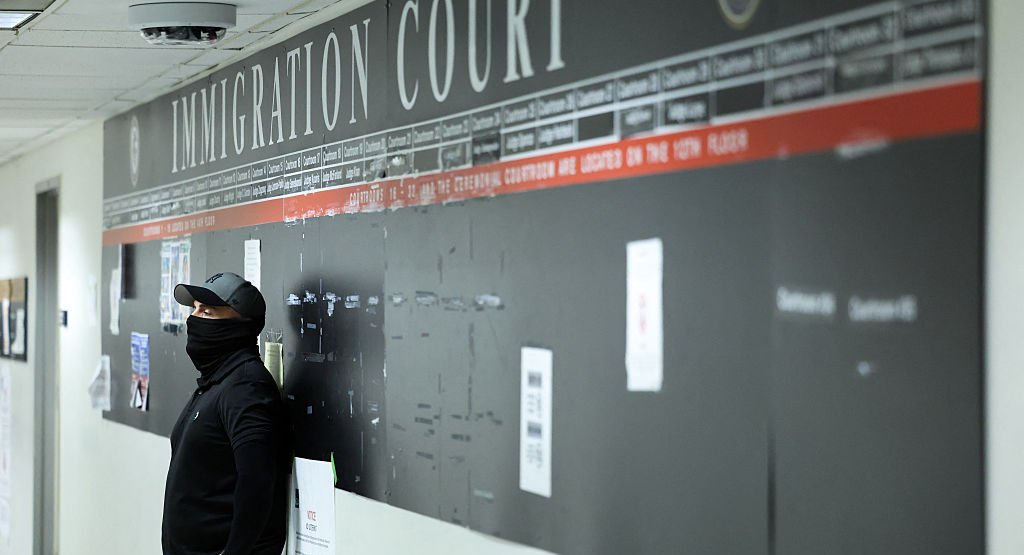
Long lines have become a common sight at New York City’s main immigration courthouse located at 26 Federal Plaza in Lower Manhattan, where individuals gather for megamaster hearings. The courtrooms and waiting areas are often overcrowded, with many participants forced to sit on the floor due to the limited space.
Statistics indicate that 39 megamaster hearings took place in New York City from January to June 2026, with a staggering 26 occurring in June alone. This frequency positions New York second only to Chicago, which held 41 megamaster hearings during the same month. Notably, prior to this recent increase, only a handful of such hearings were conducted each month.
The trends observed in New York’s immigration courts echo a broader surge in nationwide eviction orders issued in absentia, which spiked to nearly 35,000 in May and reached approximately 54,000 in June, according to bklg.org’s analysis.
Advocates Raise Concerns About Due Process Rights
Immigration lawyers and advocacy groups are increasingly alarmed, asserting that the current surge in megamaster hearings is eroding the due process rights of immigrants under the guise of efficiency. Many advocates note that immigrants frequently receive inadequate notice regarding their hearings, and failing to appear can result in immediate deportation.
Benjamin Remy, an attorney with the New York Legal Assistance Group, highlighted that the sheer volume of individuals summoned for a single hearing raises significant concerns regarding the ability of all attendees to adequately address their issues with immigration judges. Remy remarked on the difficulties many face in navigating the bureaucratic system, stating, “People become ensnared in that kind of bureaucratic grinding.”
Essential Advice for Immigrants Navigating Court Hearings
Lawyers advise individuals with pending immigration cases to frequently check for updates regarding their hearing dates, potentially even on a daily basis. Real-time information can be accessed online through the Immigration Review Automated Case Information Office website or by calling the hotline at 800-898-7180.
Ziegler suggests that individuals consider hiring an attorney who can receive notifications about hearing changes via a more efficient electronic system. The course of action for those who miss a hearing will depend on the specifics of their case; however, both Ziegler and Remy agree that the most common recourse is to petition the court to reopen the case.
