


Africa’s Pioneering Lunar Mission Set for 2029 Launch
Africa is poised to embark on its inaugural space exploration endeavor with the launch of the Bounced African Low Moon Sphere, commonly referred to as BALLS. This groundbreaking mission is scheduled to take flight alongside China’s Chang’e 8 lunar module in 2029.
Overview of the Africa2Moon Project
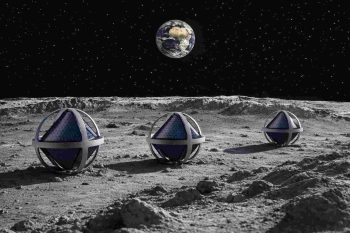
The Africa2Moon initiative encompasses two primary missions aimed at enhancing the continent’s scientific exploration capabilities. The first mission will deliver a technology demonstrator to the Moon, featuring a radio astronomy array composed of three antennas located in the lunar south pole region. Following this, a subsequent mission will see the deployment of an additional 55 antennas on the far side of the Moon, with each antenna representing one of Africa’s nations.
Shifting from Concept to Reality
Kara Mitchell of the South African Radio Astronomical Observatory (SARAO) recently outlined the extensive journey from conceptual plans to actual hardware during the NASA Exploration Science Forum at the Ames Research Center in Silicon Valley. The multi-year endeavor underscores the collaborative efforts across various institutions, including the South African National Space Agency and organizations in Kenya, Ghana, and Botswana.
Significance of the BALLS Technology
The BALLS mission is designed to operate in the ultra-low frequency range below 20 megahertz (MHz), a frequency band that is largely obscured by terrestrial ionospheric distortions and radio interference. This capability will allow researchers to conduct observations that have been previously unattainable from Earth.
Collaboration in Component Manufacturing
A collaborative team from Petrawel, the Aerospace Systems Institute at the University of KwaZulu-Natal, and the Institute of Electronic Systems at the University of Stellenbosch has played a vital role in developing the structural and functional models of the BALLS apparatus. This model was officially assembled in April 2026 and has since been handed over to the Chang’e 8 team for thorough testing.
A Future-Focused Vision for Lunar Exploration
Mitchell emphasizes that the Africa2Moon project represents a low-cost, low-mass radio astronomy telescope array aimed at advancing new scientific research and showcasing innovative technologies pioneered in Africa. This initiative also strives to inspire greater involvement in space-related fields among young people in Africa and other developing regions.
Advanced Design for Scientific Discovery
The three BALLS units will be strategically positioned several dozen meters apart on the lunar surface, facilitating high-quality data collection. Signals captured from these antennas will be relayed to a Chinese lander, enabling further analysis on Earth. Each BALLS unit comprises a spherical frame constructed from interlocking rings, housing dual solar panel arrays strategically oriented to maximize solar energy capture and efficiency.
Exploring the Early Universe
Deployed from the Chinese lunar lander, the BALLS technology is intended to detect very low-frequency radio waves from outer space, aiding scientists in their quest to study the early universe. This innovative mission not only marks a significant milestone in African space exploration but also contributes to the global scientific community’s understanding of cosmic phenomena.
