


Demonstration in Chicago Honors Lives Lost to Immigration Enforcement
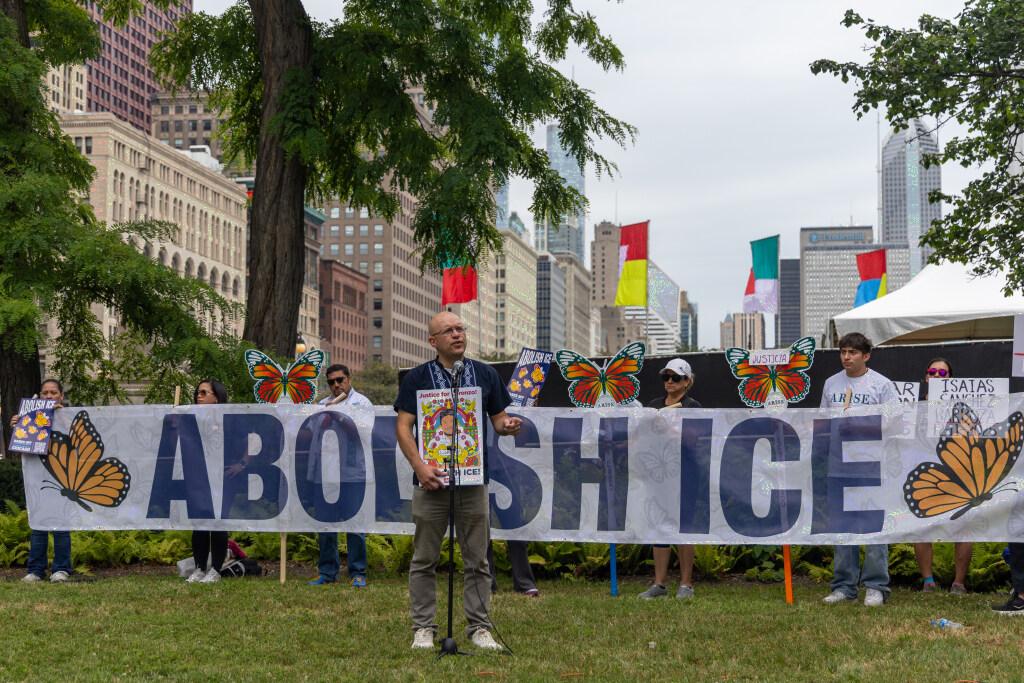
On Saturday, hundreds gathered along Michigan Avenue for a vigil honoring two men fatally shot by immigration agents during separate traffic violations. This march through downtown Chicago served as a poignant demonstration against the Trump administration’s increasingly stringent immigration policies.
The event began at Grant Park around 11 a.m., where participants came together to remember Lorenzo Salgado Araujo, a Mexican father killed by immigration agents in Houston, and Joao Sebastian Guerrero, a 25-year-old Colombian father shot days later during an operation in Maine. Activists expressed their grief and anger while highlighting the urgent need for change.
Megan Sullivan, a member of the advocacy group Singing Resistance, participated in the vigil dressed as the Statue of Liberty, symbolizing hope and remembrance for the deceased. Rev. Hannah Cardon, pastor of Rogers Park United Church, addressed the crowd, urging them to “remember the dead and seek a world that never lost them.” Her powerful message resonated with many who gathered in solidarity.
Organized by four Chicago advocacy organizations, the vigil emphasized the call to end violence inflicted upon immigrant communities. Although the Department of Homeland Security recently mandated a suspension of most vehicle stops, organizers reported that incidents of raids continue to cultivate fear and anxiety among immigrants.
Since the onset of President Trump’s second term, ICE and Border Patrol agents have been linked to the deaths of 11 individuals, while over 50 have died in ICE custody, according to the National Immigration Justice Center. Volunteers displayed more than 60 placards bearing the names and dates of those who lost their lives as a result of these policies.
Among the crowd, some demonstrators sported cardboard monarch butterflies, a colorful and meaningful representation of the immigration experience. Participating in chants and songs led by Singing Resistance Chicago, activists united to voice their discontent with current immigration policies. Mark Osing, a 69-year-old community member, expressed his motivation for protest, stating, “I don’t just come away angry; I feel better knowing we are taking action against this injustice.”
For many attendees, the recent killings revived painful memories of last fall’s Midway Blitz, leading to ongoing fears among immigrant families about their daily lives. Melody Rose, a 46-year-old resident, spoke about the collective trauma haunting her community, emphasizing that these unsettling realities remain invisible to those outside of it. She underlined the importance of continual activism, noting, “All of us must show up and spread the word because this situation is not over yet.”
Michael Rodriguez, a local Alderman, highlighted the lasting impacts of immigration raids, recalling a previous incident where several residents, including his Chief of Staff, endured lengthy detentions. As the crowd listened, Rodriguez lamented, “What will happen to the countless people who will never know their homeland again?” These sentiments echoed throughout the gathering, underscoring a collective yearning for justice and remembrance.
Controversy around immigration tactics has surged following recent deadly incidents linked to federal enforcement policies. Just days after the Department of Homeland Security’s vehicle stop moratorium, President Trump publicly criticized the plan, arguing that such stops are crucial for effective law enforcement. Meanwhile, advocates claim that arrests have increasingly targeted individuals entering and exiting local courthouses, suggesting a deliberate effort to fulfill enforcement quotas.
The vigil’s tone shifted momentarily to somber reflection as Laura Garza, executive director of Arise Chicago, read aloud the names of individuals reportedly killed or who died while in ICE custody. Among those attending, the Morna brothers and their mother, Melinda Gordon, expressed a profound sense of duty to honor the victims of these troubling policies. Gordon remarked, “I hope this vigil awakens humanity,” illustrating the emotional weight carried by the gathering.
As the event progressed, volunteers provided chalk to participants, encouraging them to inscribe the names of the deceased across the pavement. Following this, demonstrators marched from Grant Park onto Michigan Boulevard, accompanied by police on bicycles and patrol cars. Passersby, including tourists applauding and cheering, joined the demonstrators in solidarity as they made their way toward Trump Tower.
However, not everyone was actively participating; one woman stood silently at the corner of Michigan Avenue and Jackson Boulevard, tears streaming down her cheeks. “It’s just inspiring that people take the time to show others what is right,” said Jill Gray, visiting from Iowa with her family, capturing the spirit of compassion shared by many present.
