


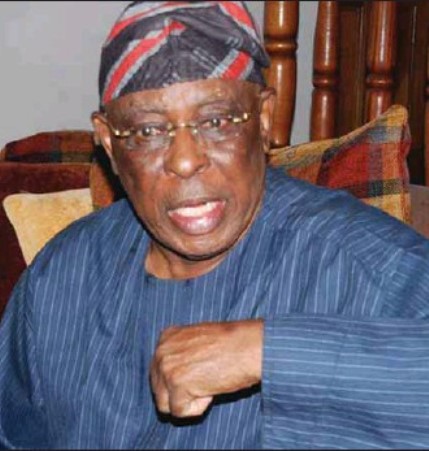
Conflict Reignited Between Obasanjo and Osoba Over 2003 Elections
The ongoing political rivalry between former President Olusegun Obasanjo and former Ogun State Governor Aremo Olusegun Osoba has resurfaced, sparked by new excerpts from Osoba’s autobiography, “Battle Lines: Adventures in Journalism and Politics,” which highlights the contentious prelude to the 2003 general elections—an election marked by significant controversy in Nigeria’s Fourth Republic.
Both Obasanjo and Osoba hail from Egba, a politically influential group in Ogun State, and they are pivotal figures in Nigeria’s democratic journey. In his autobiography, Osoba accuses Obasanjo of persuading the leadership of Afenifere and six governors from the now-defunct Alliance for Democracy (AD) to back his re-election campaign under false pretenses, claiming that promises made were ultimately broken once Obasanjo secured a second term.
Obasanjo Responds to Allegations
In a vigorous rebuttal, Obasanjo issued a statement addressing Osoba’s claims, categorically denying any misleading behavior towards the AD governors. He argued that the key political players from Egba were inadequately informed about the negotiations that occurred during that period. This exchange has reignited a long-standing debate over whether the AD governors fell victim to betrayal or simply misjudged the shifting political landscape, resulting in their electoral demise.
Political Undertones and Family Dynamics
The timing of this renewed dispute is particularly noteworthy. Analysts suggest that underlying tensions may be related to the recent defeat of Obasanjo’s daughter, former Senator Iyabo Obasanjo Bello, in the All Progressives Congress (APC) gubernatorial election. Earlier this year, Iyabo aligned with the APC in pursuit of the governorship; however, after the party designated Senator Solomon Olamilekan Adeola as its unity candidate, she resigned, citing exclusion from party decisions.
ASP Leaders’ Allegations and Responses
Following her departure, Obasanjo expressed dissatisfaction over not receiving either the APC governorship or deputy governorship nomination. Meanwhile, Ogun State APC leaders have contended that while they respect Obasanjo’s ambitions alongside Peter Obi and Senator Rabiu Kwankwaso within the Nigeria Democratic Congress (NDC), he lacks the moral authority to advocate for his daughter’s political aspirations. Iyabo subsequently returned to the Peoples Democratic Party (PDP) and secured the Ogun Central Senate ticket, although the fallout from her APC exit incited public criticism, especially after Adeola claimed she asked for reimbursement of campaign expenses.
Historical Context of Political Alliances
As Ogun State gears up for the next gubernatorial election in 2027, the ongoing hostilities between these two prominent figures remind us of the cautionary tales inherent in political alliances. Osoba maintains that Obasanjo sought support from the AD governors during a tumultuous first term, characterized by strained relations with the Congress, threats of impeachment, and growing tensions with then-Vice President Atiku Abubakar.
Unfulfilled Promises and Electoral Fallout
Osoba claims that Obasanjo engaged the six AD governors amid an unstable political climate, cautiously noting that negotiations could only progress with the assurance of involving Afenifere leaders. The discussions went beyond Obasanjo’s re-election and sought to address broader governance and constitutional challenges, including critical issues like fiscal federalism and merit-based appointments. However, Osoba asserts that these commitments were never codified in a binding agreement, resulting in a trust-based arrangement lacking enforceable guarantees.
Implications for Ogun State’s Political Landscape
The implications of the current conflict stretch beyond the Obasanjo-Osoba feud, as Ogun State braces for another political transition. Governor Dapo Abiodun’s impending term completion in 2027 is catalyzing shifts in political alliances, with both Obasanjo and Osoba still wielding considerable influence despite their claims of stepping back from the political arena. Their rivalry, while centered on personal ambitions, underscores the complex dynamics of ethnic and regional identities that often fail to unify political factions in Ogun State.
