


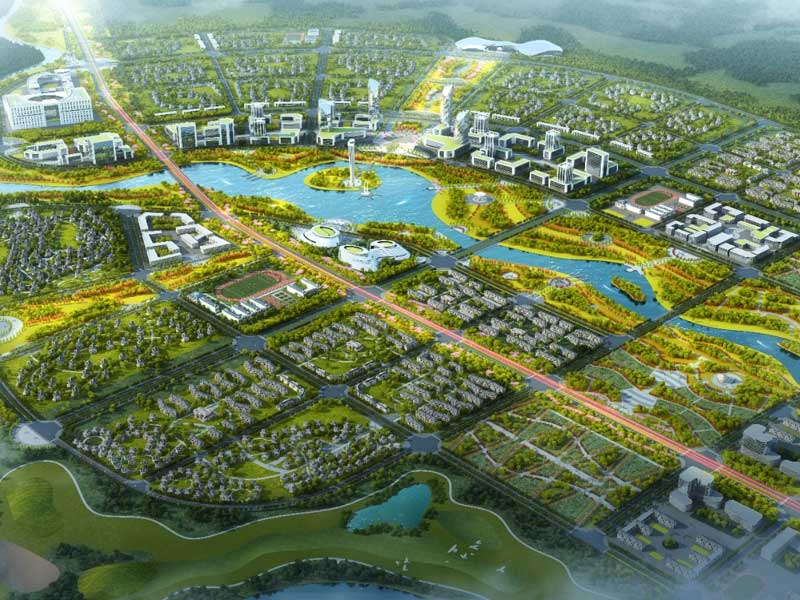
Smart Cities as a Standard for Sustainable Urban Development
Pat Onukwuri emphasizes that smart cities could set a new benchmark for disciplined planning and sustainable urban development. The true measure of urban civilization goes beyond impressive architecture; it is rooted in the quality of life a city can provide. The future of urban living hinges on effectively balancing growth, technology, and investment with sound planning, environmental stewardship, and social inclusivity. In Nigeria, the upcoming Enugu Smart City represents a unique opportunity to establish a more sustainable and forward-thinking model of urban development.
The Need for Well-Planned Urban Centers
Over the past five decades, Nigeria has seen the emergence of very few well-planned cities. Abuja stands out as the premier example, having been designed and constructed primarily from scratch. This initiative aimed to alleviate congestion in Lagos while establishing a dedicated federal capital. The original master plan for Abuja was one of Africa’s most ambitious urban endeavors, intricately integrating residential, commercial, institutional, and recreational spaces, as well as critical infrastructure.
Lessons from Abuja’s Development Journey
However, the Abuja experience has also imparted important lessons. Many foundational principles of its master plan have been diluted through multiple amendments, inconsistent enforcement of development controls, and increasing exceptions to regulations. Consequently, Abuja has grappled with rising congestion, infrastructure strain, and development patterns that echo the urban challenges it was designed to avoid. The key takeaway is that when the city fails to uphold its master plan, it ultimately ceases to safeguard its integrity.
The Legacy of City Leadership
Generational inheritance of cities often leaves subsequent leaders with urban environments they did not create. Leadership should not be assessed solely on completed projects but also on how well institutions, standards, and public spaces are maintained for future generations. True progress encompasses not just what is built today but what can be sustained over time.
Significance of Enugu Smart City
The new Enugu Smart City initiative holds considerable importance. It has the potential to illustrate how disciplined planning can resist the fluctuations of political cycles and commercial interests. Long-term vision can prevail over short-term gain, and coherent institutional frameworks can protect a city’s core values. This project reflects Governor Peter Mbah’s vision alongside the practical leadership of Mrs. Nkele Arum, with its ultimate success hinging on steadfast and faithful implementation.
Long-Term Viability is Key
The longevity of urban projects is often a truer test than their initial launch. Successful cities typically require decades to develop and frequently outlast their founders. Thus, the Enugu Smart City must be shielded by robust institutional standards and planning regulations capable of enduring changes in leadership and vision.
Ensuring Quality of Life through Technology
A genuinely smart city is characterized not by the sheer volume of technology employed, but by its efficacy in enhancing residents’ quality of life. Technology adds value only when it advances living standards, work efficiency, mobility, and community safety while promoting sustainable infrastructure and responsive governance. These enhancements increase competitiveness through improved livability, well-being, and productivity.
Balancing Opportunities and Risks
With the pursuit of innovation comes inherent risk. While technologies designed to boost efficiency can also jeopardize privacy and compromise public finances, it is essential to foster strong institutions rather than retreating from bold aspirations. Unchecked ambition can lead cities astray, making it crucial that technology is firmly anchored in robust governance structures, discipline, and accountability.
The Human Element in Urban Development
The human dimension cannot be overlooked. Regardless of technological sophistication, credibility hinges on transparent land and environmental management, community engagement, and institutional accountability. Investors need a stable environment, communities seek fairness, regulators demand compliance, and residents have a right to protection from future burdens. Sustainable urban centers are established not only through infrastructure and technology but also through the foundation of trust.
Consistency in Urban Development
Global experience underscores that successful cities thrive under consistent management, while a pattern of exceptions can lead to decline. While individual deviations from the approved plans may appear minor, they can cumulatively disrupt traffic flow, strain existing infrastructure, degrade environmental quality, and erode investor confidence. Therefore, the preservation of the master plan should not be misconstrued as a limitation on administrative flexibility; it represents responsible urban management.
The Opportunity Ahead for Enugu Smart City
The Enugu Smart City initiative finds itself at a pivotal juncture. It could either devolve into yet another ambitious undertaking that loses its original vision over time, or it could establish new standards for disciplined planning and sustainable urban development. The distinction lies not merely in architectural or technological attributes, but in the sustained adherence to planning principles.
Nigeria’s future hinges on building cities that are as much about ecological responsibility as they are about economic growth, where technology enhances human experience, and governance is robust. If the Enugu Smart City remains committed to the integrity of its initial vision, it may contribute not only advanced infrastructure but also serve as a beacon of hope for lasting urban institutions in Nigeria, steering clear of historical missteps.
Dr. Onukwuri is a legal scholar and public relations analyst. pa*************@******co.uk
