


Expanding Africa’s AI Opportunities through Local Data Centers
Africa, despite housing nearly a fifth of the global population, contributes less than 1% to the world’s data center capacity. This stark contrast underscores the significant digital infrastructure deficit on the continent. Executives from Schneider Electric and Boston Consulting Group (BCG) emphasize that to harness the full potential of the AI economy, Africa must prioritize policy reforms, streamline permitting processes, enhance data governance, and invest in reliable power and water systems. They argue that bolstering local data center capacity can enable African nations to process and retain data locally, thereby fostering job creation, developing engineering skills, and supporting the growth of homegrown AI applications.
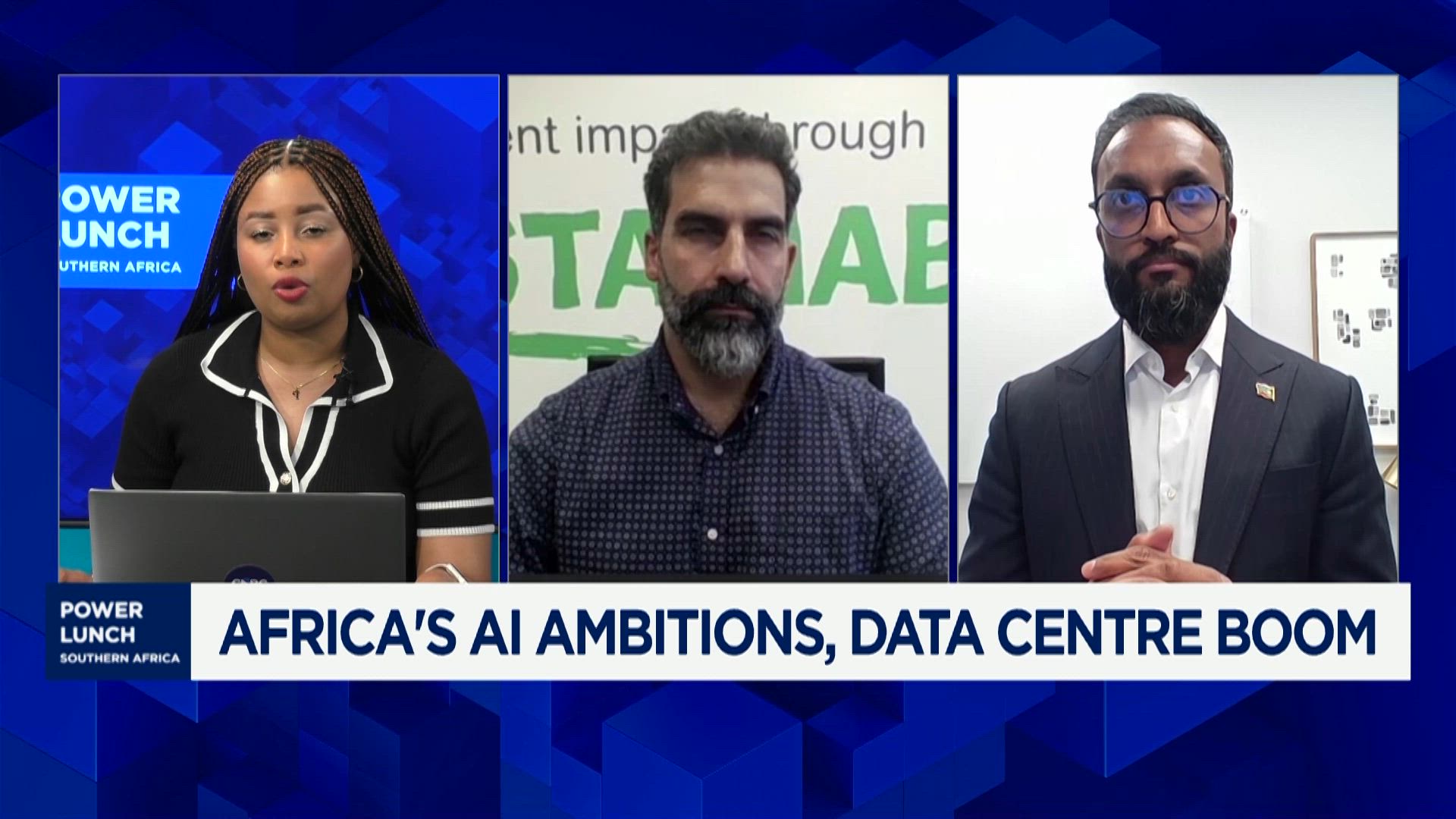
The ambitions of African nations to emerge as key players in the artificial intelligence sector hinge on rapid actions from both governments and investors. In a recent interview with CNBC Africa, Schneider Electric’s Stephen Santini, Vice President of Secure Power for Francophone and Sub-Saharan Africa, along with BCG’s Managing Director Akesh Mahali, warned that the opportunity is narrowing. If these nations fail to act swiftly, they risk becoming mere consumers of AI technologies developed and hosted in other regions.
The urgency of the situation highlights both significant potential and stark limitations. Analysts predict that AI could contribute nearly $16 trillion to the global GDP by 2030. Alarmingly, Africa, which comprises approximately 18% to 20% of the global population, remains responsible for less than 1% of the world’s data center capacity.
Mahali pointed out the looming risk of repeating historical patterns, where Africa primarily exports raw materials while importing finished goods at inflated prices. He stressed that, in this AI era, there is a similar danger of African data being processed abroad and returned to the continent through foreign applications and platforms.
With the right investments in digital and physical infrastructure, Mahali believes there is an enormous opportunity for Africa to retain its data’s value. The executives’ foremost objective is to attract hyperscale investments and to establish local data centers capable of accommodating cloud services and data processing strictly within the African market. This would enable countries to capitalize more effectively on their data and to drive innovation that meets their unique needs.
Santini noted that the demand for AI-related infrastructure is already evident, attracting both local and foreign investors who view Africa as a prominent growth market. However, he cautioned that for the region to avoid relinquishing its infrastructure potential to other areas, it must take decisive steps to invest in its capabilities.
Regulatory clarity remains a pivotal concern. Mahali underscored the necessity for robust data governance, sovereignty regulations, and market interoperability among African countries. He warned that without clear guidelines regarding data storage, utilization, and transfer, infrastructure development, including data centers, may not achieve scalability.
The policy agenda intertwined with infrastructural development necessitates reliable utility inputs, especially in power and water supply. Both Santini and Mahali reiterated that expanding AI-related infrastructure need not compromise residential, industrial, or development priorities. Santini argued that data centers should not be seen as an “either-or” proposition; instead, they can act as essential customers for broader investments in power generation and water systems.
Sustainability is a pressing issue for many African nations grappling with water scarcity and energy shortfalls. Addressing these concerns early in the design phases of projects is crucial. Santini highlighted innovative cooling technologies, such as closed-loop systems, to optimize resource use and mitigate impacts on limited resources.
The overarching question for Santini and Mahali is not just about the feasibility of constructing data centers but also about who ultimately benefits from these investments. They believe that developing local infrastructure fosters opportunities for education and job-training in engineering, data analysis, and app development. Transforming Africa into a data and technology hub can reduce dependence on foreign tech solutions, thereby nurturing local talent and innovation.
A collaborative approach among policymakers is essential, according to Mahali. He advocates for a unified strategy that aligns data regulation, energy planning, and financial incentives. A coordinated effort across various government sectors would lay a stronger foundation for the growth of Africa’s AI sector.
Investors are increasingly directing their focus towards Africa, identifying it as a promising frontier for data center expansion due to ample land and the potential for innovative energy systems. However, Santini emphasizes the need for improved regulatory frameworks to facilitate this growth, calling for predictable permitting processes and clear sustainability guidelines.
Progress should be measured not solely by the number of data centers erected but also by how effectively African economies can leverage technology to become self-sufficient. Both executives suggest that success will manifest in an increased reliance on local talent for AI solutions, moving away from a dependency on external sources. Ultimately, with decisive action, Africa has a precious opportunity to carve out its position in the global AI landscape, but only if it develops the necessary infrastructure and regulatory frameworks to nurture domestic innovation.
