


Inside the Southern Kaduna Village Where Criminals Control Daily Life
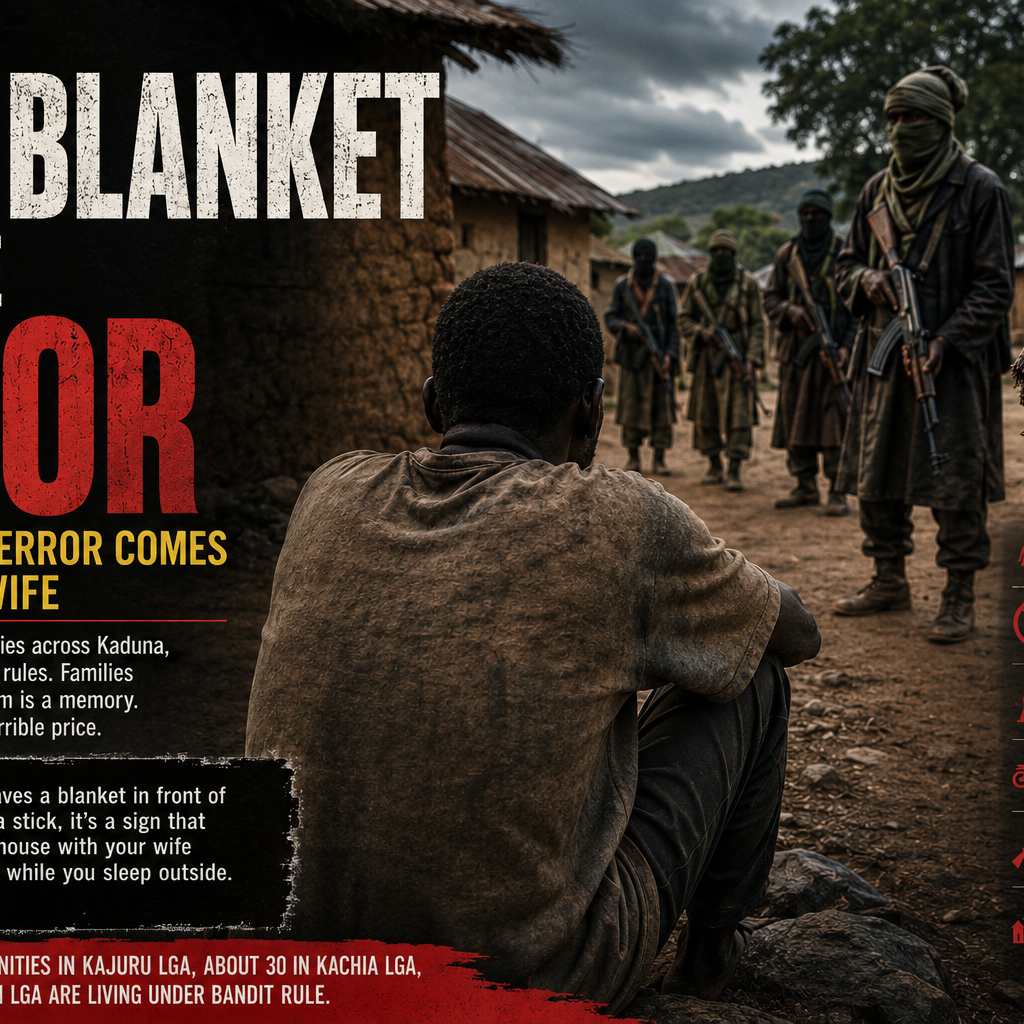
In the remote communities of Kajuru Local Government Area in Kaduna State, the sight of blankets left on doorsteps carries an ominous message. For residents, it signifies the brutal choice made by armed groups, often believed to be Fulani, on a given night. Men are forced to sleep outside their homes, while their wives and daughters are frequently victims of sexual violence, with children often witnessing these horrific acts.
One father, whose identity is concealed for security reasons, describes a life under the oppressive rule of these criminals, noting the harrowing reality that many in his community face. This man recently fled after a week of planning, highlighting how lawlessness has permeated their lives, while the presence of the Nigerian state has nearly vanished.
Reuben Buhari, a veteran journalist who has chronicled these survivors’ stories, recently reported on the grim circumstances that compel villagers to enter into agreements with their captors. Many have endured rampant violence, leading them to consider a morbid coexistence with their kidnappers. As Buhari documented, this community has now lived under such oppressive terms for nearly three years.
Survivor accounts reveal that these so-called agreements are not a matter of choice but rather a forced capitulation to ongoing violence. Villagers face the harrowing dilemma of either succumbing to the terrorists or facing death. The price of survival, however, is steep. Buhari painted a stark picture of a man who, despite being married with children, no longer possesses his wife, who is regularly assaulted by their captor. If he dares to protest, he risks being shot; similar abuses extend to all women in the village.
Survivors describe a community governed by a brutal set of rules enforced by these armed groups, where any attempt to venture outside without permission can result in death. Farmers may tend their crops, but a significant portion of their harvest is taken by their captors. Ownership of basic items, including mobile phones, is forbidden, with severe consequences for disobedience.
The conflict has also suffocated community life. Regular activities like church services have been disrupted, and public services have effectively collapsed. Schools are no longer operational, as teachers have fled, and local healthcare facilities lie abandoned, leaving many without essential care.
The psychological impact of this terror cannot be overstated. Armed groups often execute community members to consolidate compliance and instill fear. Buhari emphasizes that this situation is not isolated; numerous communities across Kajuru, Kachia, and Chikun have similarly yielded to their captors, trapped in a relentless cycle of coercion and violence. The Middle Belt Times has independently confirmed assertions consistent with these harrowing survivor accounts.
The situation raises urgent humanitarian concerns for the thousands affected by the oppressive conditions orchestrated by these gangs. That a father must resort to meticulous planning to escape illustrates the dire state of affairs. While he managed to flee, many others remain at home, anxiously awaiting the next ominous indication—a blanket at their door.
