


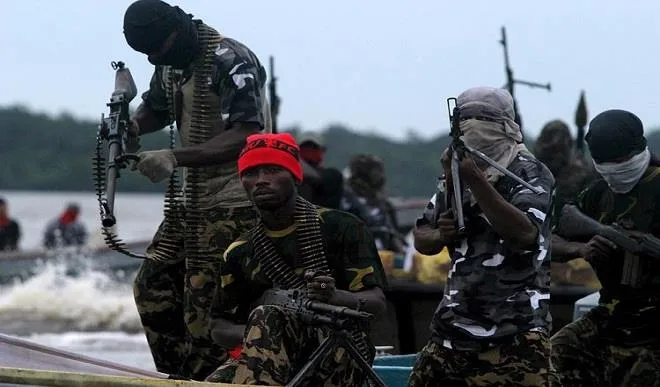
Federal Government Allocates Billions to Former Militants under Amnesty Program
Recent data reveals that the Federal Government has disbursed at least N88.79 billion through the Presidential Amnesty Program (PAP) to former Niger Delta militants from 2018 to early 2026. This substantial amount includes payments directed to notable figures such as Ebikabowei Victor Ben, widely known as Boylohu.
Expenditure Details from Government Reports
An analysis of records from the government’s expenditure tracking platform, GovSpend, indicates a total expenditure of N88,791,131,022. This sum was allocated to leaders of various ex-combatant camps for the distribution of monthly stipends to thousands of registered beneficiaries enrolled in the PAP.
Yearly Breakdown of Payments
According to the data analyzed by Pointblanknews.com, the payments were structured annually: N3.51 billion in 2018, N11.07 billion in 2019, and N7.1 billion in 2020. In subsequent years, allocations increased to N70 million and N15.11 billion in 2021, followed by N12.2 billion in 2022, N12.52 billion in 2023, N15.32 billion in 2024, N8.53 billion in 2025, and finally N3.44 billion in the first half of 2026.
Distribution Process Among Ex-Combatant Camps
The stipends were issued in bulk payments to representatives of various ex-combatant camps. These representatives were tasked with ensuring that monthly stipends reached registered beneficiaries under the amnesty initiative. Notably, key camps include Ateke Camp Phase 1, led by Dashimaka Adokye Sami, and Boy Loaf Camps 1 and 2, represented by Ebi Kaboway Victor Ben, along with several others each governed by their appointed leaders.
Detailed Payment Records and Descriptions
Further government expenditure records highlighted that several representatives received multiple payments of N99.99 million each as part of the disbursement of monthly stipends. The payment details indicated that these funds had been approved by the Presidential Pardon Program Administrator, specifically to cover beneficiary payments for March, April, and May of 2026.
Historical Context of the Presidential Amnesty Program
Initiated in 2009 under the leadership of the late President Umaru Musa Yar’Adua, the PAP emerged in response to prolonged armed conflict in the Niger Delta. This unrest severely disrupted oil production, damaged vital infrastructure, and posed significant threats to Nigeria’s economy. The program was designed to offer amnesty to militants who renounced violence, providing them with monthly stipends, job training, educational scholarships, and other essential support to facilitate their transition to civilian life.
Future Funding and Ongoing Debate on Program Effectiveness
In 2026, funding for the Presidential Amnesty Program is set to increase dramatically, with Parliament approving a budget of NOK 115 billion—an increase from NOK 65 billion allocated for the years 2024 and 2025. This adjustment signifies a substantial 76.9 percent rise and represents the highest budget allocation for the program in nearly a decade. Nevertheless, this increase has sparked ongoing discussions regarding the program’s long-term sustainability and its potential shift from simple monthly payments to investments in sustainable economic opportunities, skills development, and job creation for beneficiaries, nearly 17 years after its inception.
