


Credibility as Key to Attracting Global Investment in a Changing Economic Landscape
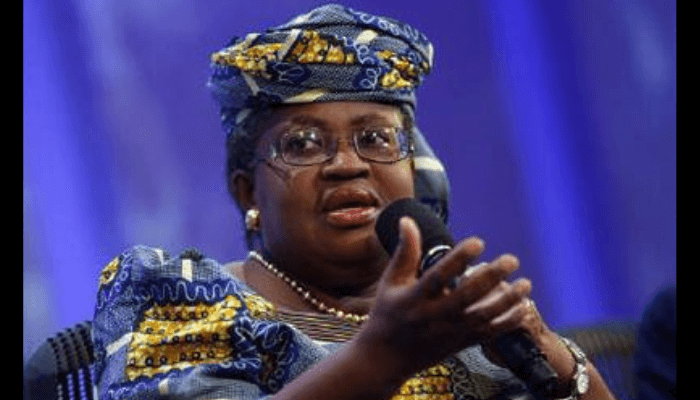
In 2025, global trade surged to an unprecedented $34.7 trillion, despite the challenges posed by rising tariffs, geopolitical tensions, and policy uncertainties. However, according to Ngozi Okonjo-Iweala, the Director-General of the World Trade Organization (WTO), Africa stands to miss a critical opportunity if it does not swiftly adapt to transformational shifts in global supply chains. In her keynote speech at the 7th African Emerging Markets Forum in Abuja, Okonjo-Iweala emphasized the need for Africa to capitalize on these changes to enhance its economic prospects.
Delivering her insights before a dialogue with Nigeria’s Central Bank Governor Olayemi Cardoso, Okonjo-Iweala clarified that the world is not witnessing the demise of globalization. Instead, she characterized it as a significant restructuring phase, marked by the balance between economic integration and strategic competition. “What we are seeing is not the end of globalization, but a shift from cooperative to competitive interdependence,” she noted, underscoring the ongoing relevance of the rules-based global trading system.
Amid rising geopolitical strife, trade has increasingly become a battleground, with major economies imposing tariffs and restricting technological exchanges. Nevertheless, as Okonjo-Iweala pointed out, the global economy has exhibited remarkable resilience, defying many expectations. “Global trade in goods and services rose by 7% year-on-year, reaching a record $34.65 trillion in 2025,” she explained, attributing this growth to heightened demand for artificial intelligence-related products and digital services.
The WTO leader also countered the narrative that the multilateral trading framework is becoming obsolete in the face of growing protectionism. She highlighted that approximately 72% of global merchandise trade continues to operate under the WTO’s most-favored-nation tariff structure, with only 16% governed by bilateral and regional trade agreements developed from WTO principles.
Strategies for Africa’s Accelerated Industrialization
While acknowledging the unprecedented challenges facing the global trading system, Okonjo-Iweala stressed the importance of not viewing geopolitical competition as grounds for dismantling international trade regulations. She advocated for diversification in supply chains and international partnerships to mitigate over-dependence on a select few economies, while still maintaining the essence of globalization. Recent disruptions have revealed dangerous concentrations in critical minerals and technological resources, which demand broader and more diversified manufacturing networks for enhanced economic resilience.
According to Okonjo-Iweala, this shifting landscape provides Africa with an extraordinary opportunity to enhance its economic environment, especially as multinational corporations look for alternative production sites. With approximately 30% of the world’s notable mineral reserves, Africa possesses a strategic advantage that could support the global energy transition. However, she cautioned against repeating historical errors by solely exporting raw materials, which often results in minimal industrial development and job creation.
She urged African nations to prioritize the establishment of regional value chains and investment in processing industries. By aligning policies and negotiating from a unified front, African countries can enhance their collective power in attracting investments. Okonjo-Iweala cited Morocco’s growth as a key supplier of electric vehicle components and increased investments in nations like Zambia and Nigeria as examples of potential pathways beyond mere raw material exports.
Furthermore, she called for expedited reforms within the WTO, stressing the need for trade regulations to evolve alongside technological advancement and the digital economy. Current negotiations in Geneva aim to address subsidy rules, transparency in trade practices, and the management of digital trade and artificial intelligence, with deliberations set to continue until the next ministerial meeting in 2028.
Importance of Mobilizing Domestic Resources
In a separate address preceding the panel discussion, Nigeria’s Central Bank Governor Olayemi Cardoso emphasized that Africa’s ability to navigate changes in the global economic landscape hinges on its capacity to build credibility, enhance institutional strength, and attract long-term investments. He noted that as the world progresses into a more discerning investment environment, African economies must demonstrate stability and coherent policies to compete for capital.
Cardoso pointed out that the conventional reliance on foreign investment is no longer sufficient; instead, African nations must also harness domestic resources such as pension funds, insurance capital, and savings from expatriates to fuel productive growth. He remarked, “The world system that has long shaped relations between nations is aging before our eyes,” indicating the need for African regions to convert global challenges into opportunities for shared prosperity.
Factors Impacting Africa’s Economic Future
In his remarks, Cardoso identified three pivotal elements reshaping Africa’s economic framework: disrupted trade and supply chains, the evolving nature of global capital flows, and the swift expansion of artificial intelligence. He explained that businesses and governments are increasingly restructuring supply chains around reliable partners and regional markets, presenting both challenges and opportunities for African nations.
Despite the limited share of intra-African trade within the continent’s overall commerce, he stressed the necessity for deeper regional integration, fortified value chains, and the removal of barriers that hinder trade. The African Continental Free Trade Area (AfCFTA) has the potential to facilitate these improvements but will require enhanced transportation infrastructure, streamlined customs regulations, and efficient cross-border payment systems.
Cardoso highlighted that the era of abundant liquidity seeking returns without regard for risk is waning. Investors are now focusing on economies that convey credibility and institutional robustness. “Investors must trust our policies, understand the rules, and plan beyond the next political or economic cycle,” he advised, underlining that credibility transcends the responsibilities of the central bank to become a vital economic asset.
Foundational Elements for Future Competitiveness in Africa
Cardoso concluded by detailing how Nigeria’s recent economic reforms aim to restore both confidence and resilience. Initiatives such as exchange rate reform, heightened transparency in the foreign exchange market, disciplined monetary policies, and strengthening the financial sector exemplify this approach. He asserted that true credibility is achieved through consistent decision-making and committed action.
Looking ahead, he stressed that Africa’s competitiveness will be anchored in four critical pillars: macroeconomic stability, the continent’s extensive market size, dedicated capital, and investment in human capital. While acknowledging the necessity for foreign investments, he accentuated the need for capital that fosters job creation, technology transfer, and the development of local industries rather than merely extracting value.
He mentioned the significant opportunities in artificial intelligence and urged African nations to transition from being mere consumers of technology to become innovators of digital solutions. Investments in reliable electricity, affordable connectivity, and digital infrastructure will be essential for cultivating a workforce equipped to engage in this competitive landscape. Finally, Cardoso warned that Africa must establish robust institutions capable of translating its potentials into tangible outcomes, stating, “With established rules in place, emerging markets have an opportunity to move from being rule-followers to rule-setters.” The Africa moment, he noted, requires collaboration, reliable institutions, and collective action to fully seize the opportunities presented by the ever-changing global economy.
