


Cancer Care in Nigeria: Beyond Clinical Treatment
When the term cancer is mentioned, the immediate associations often include hospitals, chemotherapy, surgery, radiation therapy, and medication. While these elements are crucial to cancer treatment, they only paint a part of the overall picture.
For the thousands of Nigerians receiving a cancer diagnosis annually, the obstacles to survival extend far beyond the confines of medical facilities. Questions arise regarding the logistics that patients face: Are they expected to travel hundreds of miles for radiation therapy without reimbursement for travel expenses? Where do caregivers find a place to stay during weeks of treatment away from their homes? How can families afford nutritious meals after depleting their savings on surgery and chemotherapy? What happens when the expenses of lodging, food, and transportation force patients to abandon their treatment plans?
Such inquiries highlight what public health experts recognize as “social determinants of health” (SDOH). These factors encompass the social, economic, and environmental conditions that significantly affect individuals’ ability to access healthcare, complete treatment, and, ultimately, survive.
For cancer patients, these social determinants are not peripheral; they can mean the difference between hope and despair, treatment completion and abandonment, or survival and early death.
Launch of the Nigeria Social Determinants of Health Initiative
In acknowledgment of these realities, the National Cancer Control Plan (NCCP) Technical Working Group initiated the Nigeria Social Determinants of Health Initiative. This groundbreaking effort aims to extend cancer treatment beyond mere clinical care, ensuring that patients receive essential support throughout their journey.
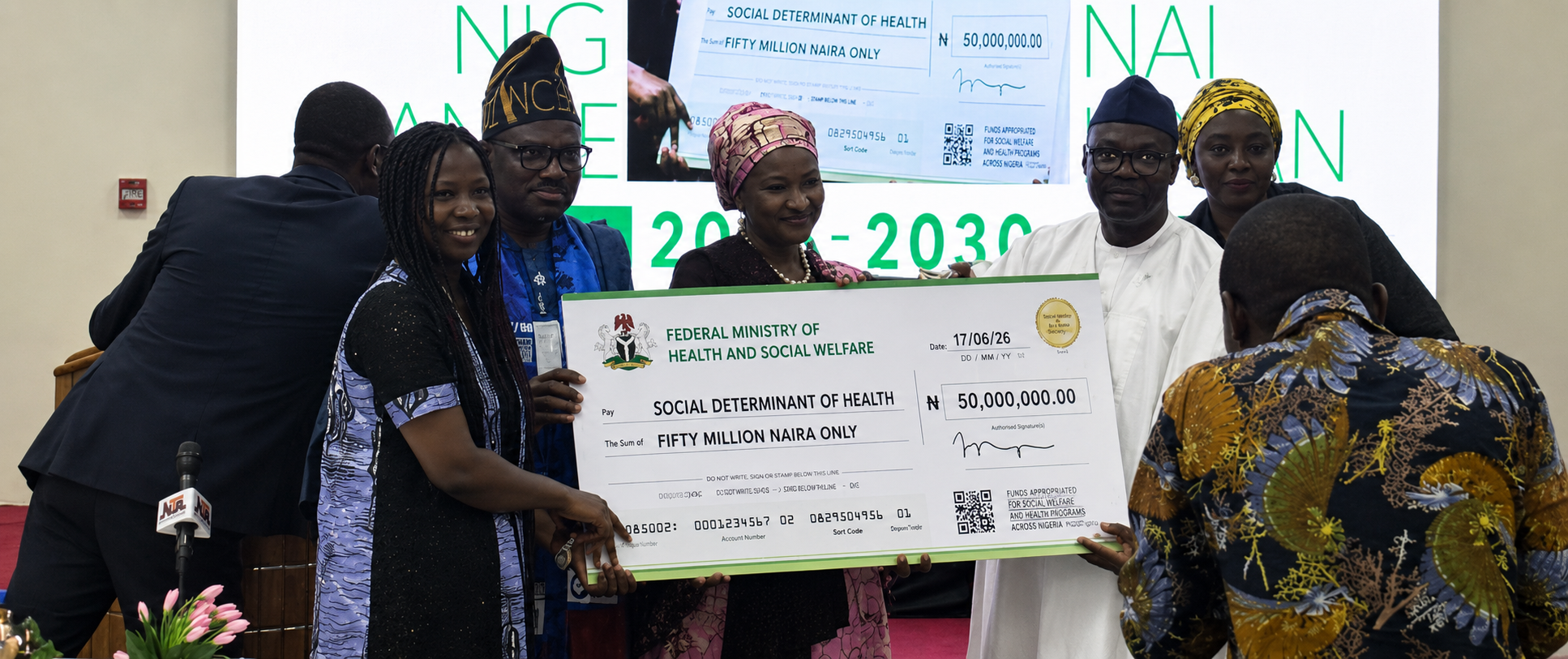
On June 17, 2026, this vision transformed from policy into action as the Minister of Health and Social Welfare, Dr. Isiak Adekunle Salako, formally inaugurated the initiative in Abuja. This moment marked the government’s commitment to allocating N50 million for its implementation. More significantly, the initiative swiftly translated compassion into actionable support, with 228 selected cancer patients and survivors slated to receive direct assistance of N100,000 each, aggregating to a total of N22.8 million.
Transparency and Fairness in Assistance Distribution
Behind these figures lies a process grounded in transparency, accountability, and fairness. Rigorous verification and quality screening of applications ensure that assistance reaches the genuine beneficiaries across Nigeria’s six geopolitical zones and the Federal Capital Territory. In an environment where public trust is essential, the integrity of this selection process stands as a vital strength of the initiative.
Expanding Momentum Across Regions
The momentum in Abuja is gaining traction. Following its national launch, the South East Geopolitical Zone has commenced its regional implementation, uniting stakeholders from Abia, Anambra, Ebonyi, Enugu, and Imo states to tailor the initiative to the unique challenges faced by cancer patients in these areas. Similar launches are in the pipeline for the other geopolitical zones, reflecting a growing national movement towards equitable and patient-centered cancer care.
For many patients in southeastern Nigeria and other regions, the reality of traveling long distances for treatment often entails leaving family members behind, incurring accommodation costs, losing income, and facing months of emotional and financial uncertainty. Such circumstances elucidate why numerous patients discontinue their treatment—not due to a lack of will, but because the burdens have become insurmountable.
Addressing Social Realities for Cancer Control
Professor Folakemi Odedina, Global Chair of the NCCP Technical Working Group, aptly noted that true cancer control cannot be achieved by focusing solely on treatment. It is imperative to address the societal realities that dictate whether patients receive care, complete their treatment, and can lead productive lives. This philosophy underpins the SDOH initiative.
The testimonies of cancer survivors have underscored the importance of this approach. Many individuals assert that the most daunting aspect of their treatment was not chemotherapy itself, but the hidden costs—transportation, accommodation, food, lost income, and emotional strain. One beneficiary summed it up well, describing the initiative as “humanizing cancer care” because it acknowledges that patients are human beings first and foremost, rather than merely diagnoses.
Building a Coordinated National Cancer Support Ecosystem
This initiative also seeks to create an unprecedented national cancer support ecosystem in Nigeria, which unites patients, caregivers, healthcare providers, survivor organizations, civil society, philanthropists, development partners, and the private sector. Rather than mere isolated acts of philanthropy, the goal is to cultivate sustainable channels for mobilizing, coordinating, and delivering support with dignity.
The SDOH initiative merits national attention as it signifies a vital shift from treating diseases to genuinely helping people. It recognizes that health outcomes are influenced not only by medical interventions but also by individuals’ ability to afford hospital visits, maintain a nutritious diet during treatment, support their families, and uphold hope through one of life’s toughest challenges.
Encouragingly, plans are in place for a high-profile national fundraising and partnership dinner that will convene government officials, business leaders, development partners, philanthropic organizations, and notable Nigerians. This collaboration is essential to extend the reach of the initiative beyond hundreds of beneficiaries, helping thousands of Nigerians battling cancer.
It is clear that governments alone cannot tackle this issue. Collaboration is required across various sectors of society, including media engagement, business participation in cancer support, and the involvement of development partners and philanthropists who should view patient support as an investment in human dignity. Communities, faith-based organizations, and individuals too must contribute to this collective effort.
The engagements initiated by governmental officials are merely the starting point for a national commitment to compassionate, equitable, and human-centered cancer care. While medical treatment is crucial, the support that extends beyond the clinical aspects often proves to be vital in enabling patients to navigate their treatment journeys successfully.
*Dr. Olufunmilayo Oduniyi is Chair of the National Cancer Control Plan (NCCP) Technical Working Group, Social Determinants of Health Initiative
