


Immigrant Advocates Complete Pilgrimage to Dilley Detention Center
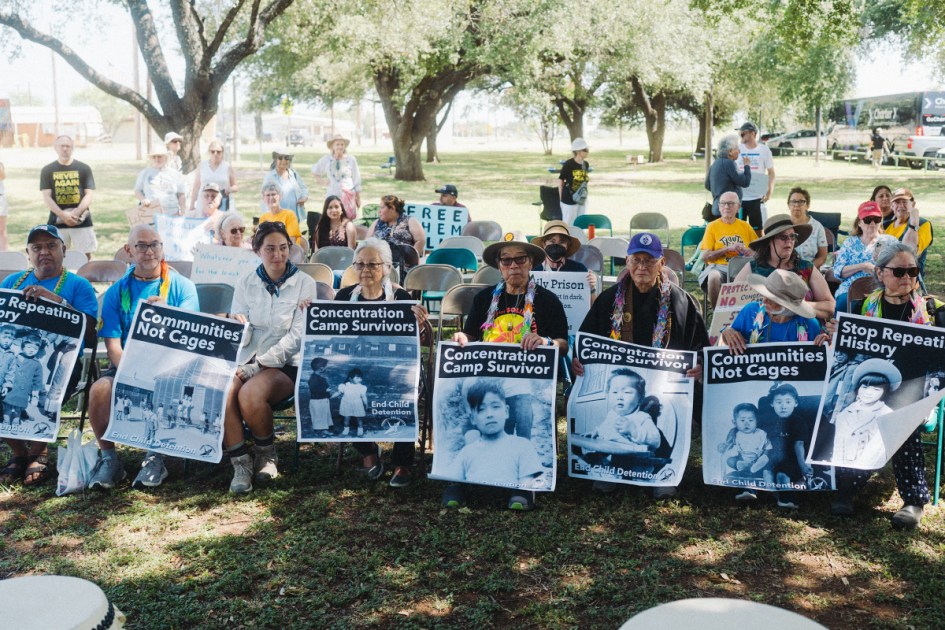
About two dozen advocates for immigrants, faith leaders, and survivors of Japanese concentration camps, along with their descendants, completed a four-day, 45-mile pilgrimage to an immigration detention facility in Dilley, Texas, on Saturday.
Call for Closure of Family Detention Center
Activists are demanding the closure of the nation’s only federal family detention center, which survivors of Japanese internment have likened to a tragic repetition of past injustices in American history.
Organizers Unite for Immigration Justice
The pilgrimage was organized by Free Families, a coalition advocating for immigrant rights, in collaboration with the Texas Unitarian Universalist Department of Justice, Grassroots Leadership, and Tsuru for Solidarity—a group comprising Japanese American survivors of concentration camps. Their mission was clear: to seek closure of the Dilley facility, end family detention permanently, and halt the separation of families resulting from the aggressive targeting and detention policies of Immigration and Customs Enforcement (ICE).
Spiritual Resilience Promotes Activism
Throughout the pilgrimage, the emphasis was on collective action and spiritual solidarity. Mike Ishii, executive director and co-founder of Tsuru for Solidarity, urged participants to join the cause from wherever they are, emphasizing a united front in faith and strength. “Together as a nation, we will transform violence and chart a new path for our future,” he stated.
From Historical Camps to Current Detention Facilities
Starting at the former Crystal City concentration camp, where Japanese American families were imprisoned during World War II, the group trekked daily, covering up to 12 miles each morning. They arrived at the South Texas Family Residential Center in Dilley around 10 a.m. on Saturday. Activists and interfaith leaders gathered to pray, chant, and tie colorful paper cranes to the facility’s ten-foot chain-link fence. These cranes, crafted by Japanese American concentration camp survivors, served as poignant symbols of their solidarity with detained families.
Dilley Facility’s Inhuman Conditions Under Scrutiny
Home to families seeking asylum, the Dilley facility has faced intense criticism over its treatment of detainees, particularly young children and their parents. The South Texas Family Residential Center, established in 2014, is managed by the Department of Homeland Security and can accommodate up to 2,400 individuals. Detractors argue that it is inhumane to criminally detain families when they pose no threat. Reports of unaddressed medical issues, insufficient nutrition, and unsanitary living conditions have raised alarms among advocates, prompting comparisons to America’s dark history of internment camps.
A Personal Connection Drives Activism
Reverend Kenji Akahoshi, a survivor of Japanese internment, shared his poignant story with the group, recalling being just two weeks old when his family was imprisoned. He expressed his commitment to standing alongside those currently affected by similar injustices. Accompanied by fellow survivors like Satsuki Ina, who was born in a concentration camp and has seen the cycle repeat itself, their presence carried a powerful message about the dangers of forgetting history.
A Convergence of Voices for Justice
The pilgrimage culminated in a reflective ceremony led by interfaith leaders, where participants sang a song co-created with children currently detained at Dilley. As they chanted a previously used refrain from Japanese concentration camps, the call for justice echoed powerfully, reinforcing the necessity of advocating for the rights of all families affected by the immigration system.
