


Africa Emerging as a New Battleground for Adaptive Drone Warfare
The Influence of Ukrainian Technology and Expertise on Armed Groups in Africa
Ukraine has positioned itself as an unofficial testing ground for the adaptation and deployment of commercial unmanned aerial vehicles (UAVs) in wartime scenarios. In its ongoing conflict with Russia, Ukraine is increasingly turning to civilian technologies as cost-effective alternatives to traditional military drones. Recently, pocket-friendly options such as the Chinese-made Mavic drones, which retail at under R80,000 (approximately US$4,910), have become valuable assets in Ukraine’s military operations.
African nations and armed factions appear to be increasingly tapping into Ukrainian expertise. Historically, Ukraine has ranked among the top ten global arms suppliers. As highlighted by analysts from the Stockholm International Peace Research Institute, the emergence of drone technology in Africa could shift the dynamics between state and non-state actors, offering new tactical advantages.
Ukraine is swiftly evolving its drone manufacturing and modification industry to cater to the growing demand from African clients. Just this spring, Ghana expressed interest in surveillance drones, prompting discussions between President Volodymyr Zelenskiy and several African nations about a potential “drone deal.” This agreement could facilitate the production and supply of not only UAVs but also missiles and artillery, with expedited export license processing promised by the Ukrainian government.
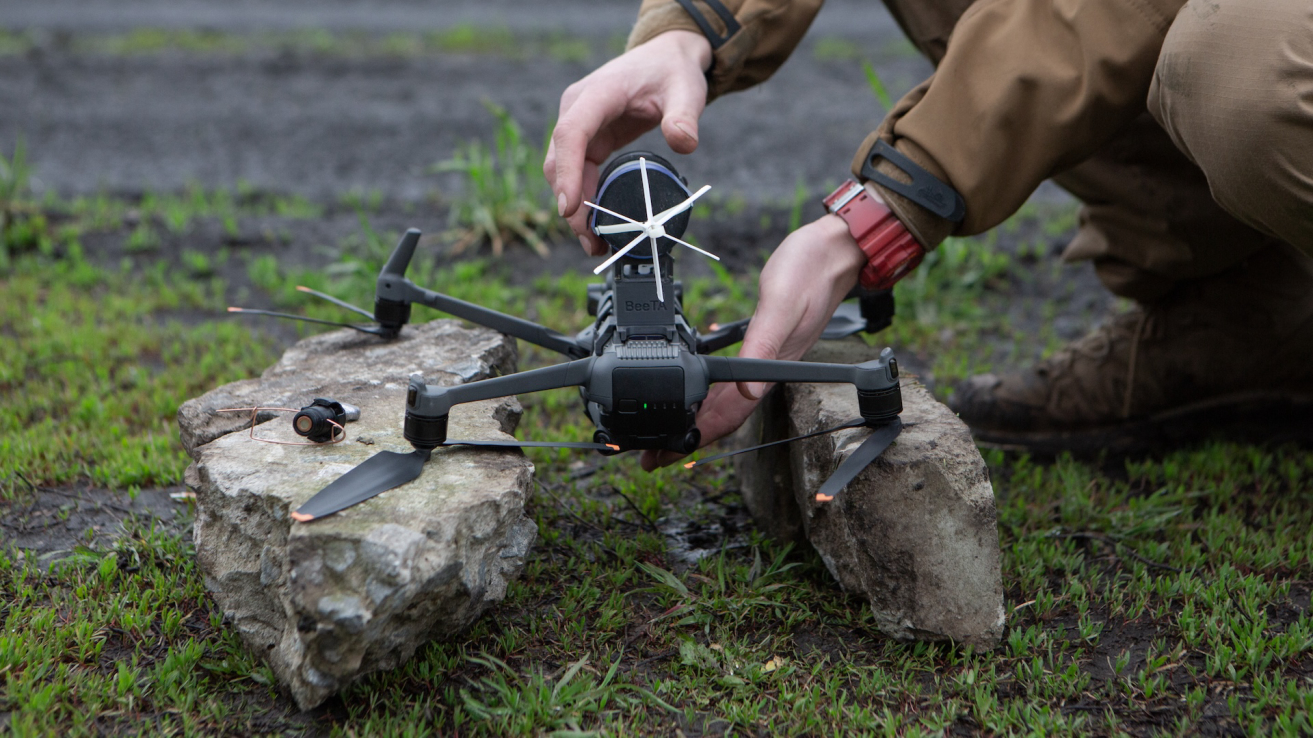
Ukrainian journalist Sashko Chuvko, who attended a June conference focused on modern military reporting in South Africa, emphasized how the Ukrainian military has integrated commercially available drones into their operations. The adaptation process involves civilians enhancing these drones, which allows for the delivery of explosives while maintaining the airborne capabilities of the vehicles. This innovative blending of commercial and military-grade technologies has proven effective in the ongoing conflict.
In the early 2020s, Ukrainian forces began repurposing Mavic drones by equipping them with grenades and DIY explosives. These modified UAVs, capable of executing precision strikes, were deployed extensively during 2022 against Russian fortifications until countermeasures, including jamming tactics, were developed by Russia. Looking ahead, Ukraine plans to introduce advanced first-person view drones that stream live video to pilots’ goggles, capable of flying at speeds exceeding 100 km/h and maneuvering around obstacles with agility.
By 2024, it is anticipated that Russia will catch up with Ukraine in terms of capabilities, particularly through the use of fiber-optic drones. These high-tech devices, while more costly, promise clearer communication and can evade conventional jamming techniques—a significant advantage in combat scenarios. The competition for drone superiority in the context of the Russian-Ukrainian war is intensifying, and the implications for Africa are profound.
The landscape of modern warfare in Africa is shifting dramatically, with armed groups rapidly acquiring drones not only for reconnaissance but also for propaganda and military campaigns. As noted by Ruben Das, a research fellow at the South Rajaratnam School of International Relations, the deepening ties between Ukrainian technology and African defense forces suggest an evolution in how conflicts are waged on the continent. While there is no formal partnership reported between Ukrainian engineers and African militias, the clandestine use of drones in recent operations highlights a growing rapport.
With the rise of African smuggling networks, the potential for drone components to become part of illicit trades looms larger. These networks, often linked to rebel factions, are already facilitating the exchange of weapons parts and electronics. As Ukraine continues to innovate and adapt its drone technology in response to its military needs against Russia, Africa stands as a potential new frontier for adaptive drone warfare, inviting both opportunity and significant challenges in maintaining regional stability and security.
