


Colorado Immigration Officer Faces Assault Charges
In a significant development, Colorado prosecutors have charged a federal immigration officer with third-degree assault and criminal mischief, stemming from an incident during a protest last October. This case could challenge the boundaries of immunity for federal officials, particularly as states evaluate the use of force adopted under the previous administration’s immigration policies.
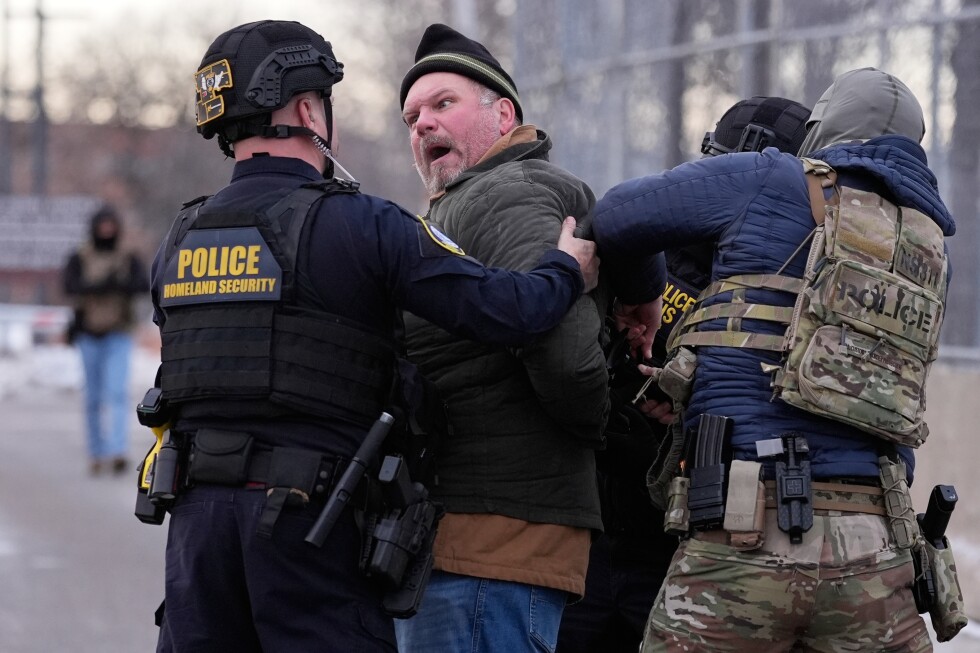
The charges arise from a protest in Durango, where videos reportedly show a masked federal agent grabbing a 57-year-old woman and allegedly strangling her. This incident may provoke further legal scrutiny of federal enforcement tactics, especially as states like Colorado have stringent regulations against chokeholds and neck restraints.
Ongoing Investigations in Minnesota and Chicago
The immigration enforcement strategies employed during the Trump administration have prompted multiple investigations at state and local levels. Recently, a Minnesota county prosecutor announced two counts of second-degree assault against an Immigration and Customs Enforcement (ICE) officer, Gregory Donnell Morgan Jr. He allegedly pointed a gun at the occupants of a car during an enforcement operation in the Minneapolis area, citing fear for his safety as the vehicle swerved in front of him.
In addition, Minnesota authorities have filed a lawsuit seeking access to evidence related to three shooting incidents linked to immigration enforcement, including one that led to a fatality. Meanwhile, in the Chicago suburbs, an off-duty ICE officer was charged with misdemeanor assault for allegedly throwing a 68-year-old protester to the ground during a recorded incident at a gas station, with the Department of Homeland Security claiming the officer acted in self-defense.
Legal Protections for Federal Employees
Federal law enforcement officers benefit from considerable legal protections while carrying out their duties, and the Justice Department typically opposes state efforts to prosecute federal employees. Last year, Deputy U.S. Attorney Todd Blanche emphasized the supremacy of federal law, denouncing state arrests of federal officers on duty as “unlawful and wasteful.” However, legal experts caution that while these protections are significant, they are not absolute, and supremacy clauses do not offer complete immunity from accountability.
As ICE undergoes a rapid hiring surge, increased attention is being paid to the conduct of its officers. Concerns about the vetting processes for new applicants, especially those with questionable backgrounds, have also emerged.
Tensions in Durango Spark National Debate
The escalating tensions in Durango began with protests on October 27, triggered by the arrest of three Colombian asylum seekers, including two children, on their way to school. This incident galvanized demonstrators outside an ICE facility in the area, a college town situated in the picturesque San Juan Mountains of southwestern Colorado.
Footage from the protests reportedly shows federal agents employing chokeholds, a tactic that has ignited intense public discourse and legislative efforts surrounding acceptable uses of force. The case echoes the tragic 2014 death of Eric Garner in New York, where a chokehold led to widespread outcry and calls for reform.
Franci Stazi, a former hypnotherapist involved in the incident, described how a federal agent restrained her by the hair and neck before forcefully throwing her down an embankment. Official court documents allege that Customs and Border Protection officer Nicholas Rice was responsible for third-degree assault, but they lack details on Stazi’s injuries or any specific allegations of strangulation. No attorney has been listed to represent Officer Rice.
A spokesperson for U.S. Customs and Border Protection, which has commenced its own investigation, did not provide immediate comments regarding the charges. Despite having her expectations tempered by the nature of the charges against Rice, Stazi expressed hope that the prosecution’s actions would convey that immigration officers must refrain from using excessive force.
