


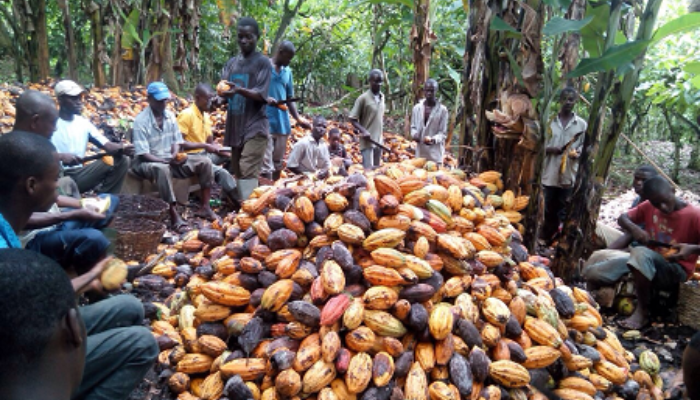
Nigeria’s Agricultural Decline: From Cocoa Powerhouse to Oil Dependency
In 1960, Nigeria was recognized as a nation brimming with agricultural potential, particularly in the context of its independence. Back then, crops such as rice, maize, yams, rubber, cassava, cotton, and cocoa were integral to the economy, accounting for nearly 30% of the country’s foreign exchange earnings and a significant portion of its GDP.
Cocoa’s Diminished Role in the GDP
Fast forward to 2026, and cocoa’s contribution to GDP has plummeted to under 1%. Despite still being a crucial agricultural export, this figure starkly contrasts with the agricultural era of 1960, when agriculture comprised over 60% of GDP and cocoa was the leading source of foreign exchange and government revenue.
The Economic Shift from Agriculture to Oil
The transformation of Nigeria’s economy began in the 1970s with the discovery and development of the oil sector, which significantly altered the economic landscape. Consequently, while cocoa’s direct GDP contribution has waned, it remains economically valuable, contributing approximately 24% to 30% of Nigeria’s non-oil export earnings.
Boosting Cocoa Exports through Targeted Initiatives
Supported by consistently high global market prices, Nigeria aims to achieve cocoa export earnings in the billions of dollars. The government’s One Million Improved Cocoa Seedlings Rollout program is poised to enhance the cocoa value chain, targeting farmers across 14 cocoa-producing states. This initiative, spearheaded by the Federal Ministry of Agriculture and Food Security, seeks to rejuvenate aging plantations and enhance compliance with international sustainability standards.
Sustainable Practices and Local Processing Efforts
The rollout includes distributing one million disease-resistant and climate-resilient hybrid cocoa seedlings to replace old and unproductive trees. Plans are also underway to revive state-owned processing facilities and establish cottage factories. These efforts aim to shift the focus from merely exporting raw cocoa to processing it locally into final products, thus boosting local economies and enhancing global competitiveness through traceability and sustainable practices.
Strengthening Support for Cocoa Farmers
In addition, improved agricultural advisory services and farmer training programs have been implemented to help farmers adopt climate-smart techniques and increase their yields. Farmers interested in participating in government initiatives are encouraged to reach out to local chapters of the Cocoa Farmers Association of Nigeria or their respective state’s Departments of Agriculture.
Pivotal Economic Contribution of Cocoa Exports
Nigeria’s cocoa industry, valued at approximately $6 billion, remains the largest agricultural earner of non-oil exports, contributing over 356 billion naira to GDP annually. With an estimated 300,000 smallholder farmers directly employed in the sector, Nigeria stands as Africa’s third-largest cocoa producer, generating up to $700 million annually from green coffee exports.
The Need for Infrastructure Development
Despite the potential market value of $25 billion through domestic processing into chocolate, cosmetics, and beverages, the sector faces challenges due to a lack of mechanized infrastructure. Each year, Nigeria loses roughly 90,000 tonnes of cocoa, equating to $180 million, due to insufficient processing and storage facilities. The aging demographics among farmers and cocoa trees further exacerbate yield disparities.
