


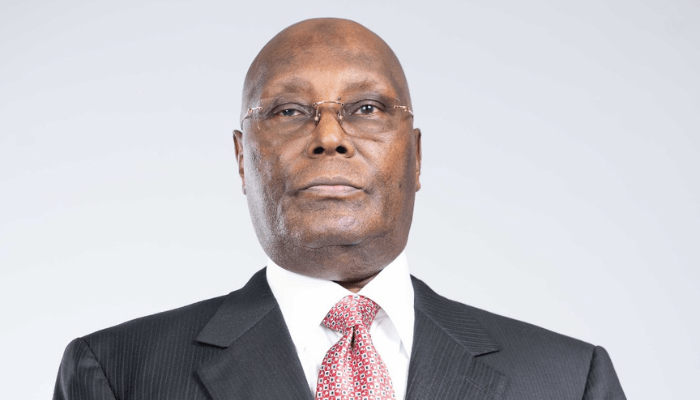
Political Analysts Divided on Atiku’s Prospects for 2027
Former Vice President Atiku Abubakar has been selected as the presidential candidate for the African Democratic Congress (ADC) in the lead-up to the 2027 general elections. This marks his seventh attempt to secure Nigeria’s presidency.
Atiku has been a prominent figure in Nigerian politics since the restoration of democracy in 1999, contesting the presidential election six times across various political party platforms. His persistence has earned him a reputation as one of the country’s most resilient opposition leaders.
His recent candidacy has reignited discussions regarding his influence, public appeal, and the possibility of finally attaining the top office after years of effort. Atiku triumphed over two competitors for the ADC nomination—former Rivers State governor Rotimi Amaechi and economist Mohammed Hayat-Deen—garnering 1,846,370 votes from a total of 2,527,977 in a direct primary election held recently.
Amaechi secured second place with 504,117 votes, while Hayat-Deen finished third with 177,120 votes. Atiku first entered the presidential race in the 1993 primaries of the Social Democratic Party (SDP) but withdrew in favor of the late Mosufud Kashimawo Abiola, who won the historic June 12 election.
After Nigeria’s return to democratic governance in 1999, Atiku served as vice president alongside former President Olusegun Obasanjo for eight years. His first significant presidential bid came in 2007 when he represented the Action Congress (AC) after a fallout with Obasanjo, although he lost to Umaru Musa Yar’Adua of the Peoples Democratic Party (PDP).
Subsequently, Atiku returned to the PDP to contest the presidential primaries against then-incumbent President Goodluck Jonathan in 2011 but did not win. He later shifted to the All Progressives Congress (APC) in 2014, only to lose the party’s presidential ticket to the late President Muhammadu Buhari in 2015. In 2017, rejoining the PDP, he again aimed for the presidency in 2019, emerging as the main challenger to Buhari but fell short in a closely contested election.
Most recently, in 2023, Atiku stood against Bola Ahmed Tinubu of the APC and Peter Obi from the Labor Party. Although Tinubu was declared the winner by the Independent National Electoral Commission (INEC), Atiku’s attempt to overturn the results in court was unsuccessful. As he prepares for the upcoming elections on the ADC platform, many political analysts regard this as his final significant bid for the presidency.
The former vice president’s campaign is unfolding against a backdrop of increasing economic difficulties, discord within major political parties, and widespread public discontent with governance. Analysts believe these factors could heavily influence the upcoming election.
Political analyst Jackson Lekan Ojo noted that Atiku remains a significant contender as the 2027 presidential election approaches, particularly in northern Nigeria. Ojo suggested that the emergence of multiple candidates from the southern regions could fragment their vote, inadvertently enhancing Atiku’s chances. He indicated that the late President Buhari’s passing leaves a void that Atiku may capitalize on, especially in a political landscape where northern support is crucial.
However, Ojo also highlighted pressing issues such as insecurity, poverty, and economic challenges faced by northern communities, which are likely to impact voter sentiment in 2027. He pointed out the ongoing violence and kidnappings affecting many residents, including farmers, as key elements shaping electorate behavior.
Chief Chekwas Okolie, a former presidential candidate, remarked that the election is likely to be a fiercely contested three-way race between Atiku, Tinubu, and Obi. He believes that Atiku may have gained an advantage following Buhari’s death, as he could inherit part of Buhari’s voter base, although it remains uncertain if he will attain complete loyalty from those voters.
Despite these prospects, some analysts warn that Atiku’s ambitions could be undermined by regional dynamics and past sentiments. Political scientist Bernard Mikko argued that the presidency should remain in the south until 2031, in line with an informal power-sharing agreement. He asserted that Atiku’s candidacy contradicts earlier positions in which many northern politicians advocated for returning power to the north.
Supporters of Atiku highlight his extensive governmental experience, political networks, and national visibility as key advantages for his campaign. Yet, voter fatigue represents a significant challenge, especially among younger Nigerians eager for a new direction in leadership.
Ultimately, the path ahead for Atiku and the ADC will depend on the ability of opposition factions to unify before the election, as a divided opposition may present another opportunity for the ruling APC to secure victory. As the political landscape evolves, Atiku Abubakar’s participation signals the onset of yet another intense contest for power in Nigeria.
