


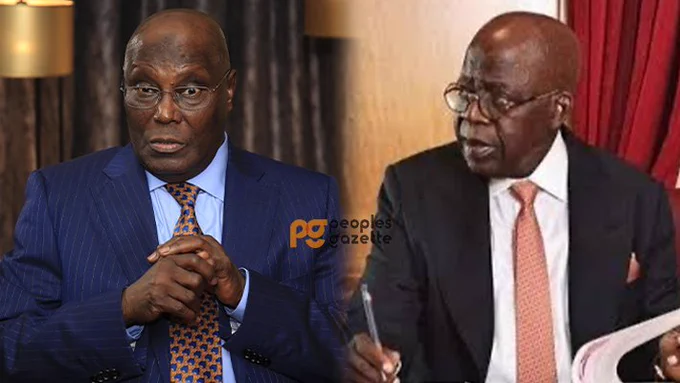
Atiku Abubakar Urges President Tinubu to Sign Auditor General Bill
Atiku Abubakar, former Vice President and presidential candidate of the African Democratic Congress (ADC), has demanded that President Bola Tinubu act swiftly by signing the Federal Auditor General Bill or resigning from his post. Abubakar accuses the President of failing to adhere to constitutional timelines regarding the bill’s approval, alleging that this inaction undermines constitutional governance, institutional accountability, and the rule of law.
Delay Cited as Breach of Constitutional Mandates
In a statement issued on Friday through his spokesperson, Plank Shaib, Abubakar pointed out that Article 58, Section 4 of the 1999 Constitution (as amended) necessitates that the President must either approve the proposed bill within 30 days or explicitly deny it. He emphasized that this requirement is not merely a suggestion but a firm constitutional obligation.
Implications for Good Governance and Accountability
Abubakar articulated that the Federal Auditor General Bill is designed to enhance the independence of the Auditor General, modernize Nigeria’s public audit practices, and strengthen oversight of government spending. He believes that any delay in signing the bill undermines the ongoing efforts for enhanced transparency and accountability, particularly at a time when citizens are increasingly demanding clarity regarding government financial management.
Broader Concerns Over Governance Practices
The former Vice President extended his critique to wider governance issues, linking the delay in addressing the bill to the ongoing controversy surrounding the Presidential Foreign Intervention Initiative Council (PFIPC) and reports indicating significant unspent public funds. He expressed concern that the erosion of institutional frameworks could lead to larger governmental failures.
Institutional Safeguards Under Threat
“Small deviations in institutional protocols can lead to major scandals,” Abubakar warned. “When constitutional provisions are regarded as mere formalities and when oversight bodies are weakened, we risk descending into a governance vacuum where laws are flouted, and responsibility is obscured.”
Concerns Raised About PFIPC
Regarding the PFIPC, Abubakar stated that the ongoing controversy should not merely be viewed as an isolated incident. Whether or not ongoing investigations yield significant findings, he argued, the situation exposes the broader vulnerabilities of governance when institutional safeguards are weakened and public trust deteriorates.
Call for Enhanced Transparency in Financial Management
The statement comes at a time when public outcry is growing over allegations of vague government spending and intensified calls for transparency in managing public finances. As of now, the Office of the President has not offered any response to Abubakar’s assertions.
