


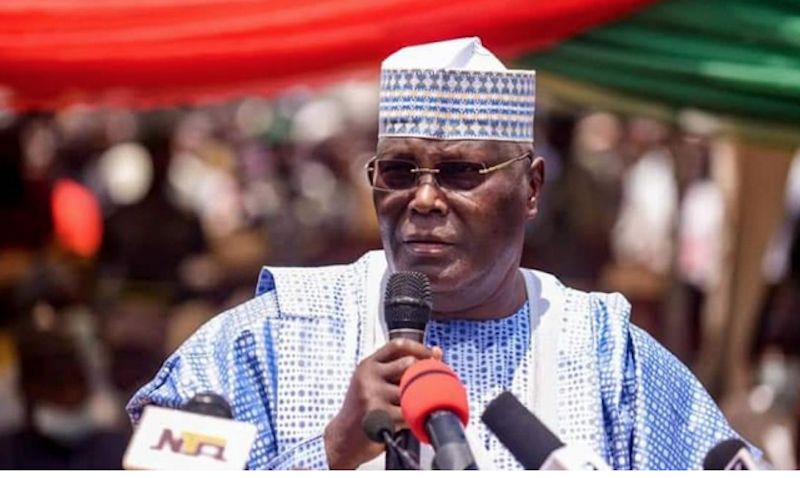
Atiku Abubakar Secures African Democratic Congress Presidential Ticket for 2027 Elections
As anticipated by analysts, former Vice President Atiku Abubakar has emerged victorious in the African Democratic Congress (ADC) presidential primary, securing his party’s nomination for the 2027 general elections. This marks the fourth time he has won a presidential ticket, having previously contested in 2007 with the Action Congress. His lengthy pursuit of the presidency began in 1993 when he participated in the Social Democratic Party’s primaries.
Primary Results Paint a Clear Picture
In the recent ADC primary, Abubakar triumphed with a total of 1,846,379 votes, a substantial lead over his nearest competitor, former Transport Minister Chibuike Amaechi, who garnered 540,117 votes. Economist Mohammed Hayatuddin trailed significantly behind in third place with 177,120 votes.
A History of Contested Elections
This victory is not without precedent for Atiku, who has previously been the presidential candidate for several major opposition parties. In 2007, he ran under the Action Congress banner but finished third, behind the late President Umaru Musa Yar’Adua of the People’s Democratic Party (PDP) and the late Muhammadu Buhari, then of the All Nigeria Peoples Party (ANPP). He also represented the PDP in the 2019 elections, ultimately losing to the incumbent President Buhari from the All Progressives Congress (APC).
More Attempts on the Horizon
Since his initial attempt in 1993, Atiku has contested the presidential ticket six times. In 2011, he lost the PDP primary to then-incumbent President Goodluck Jonathan, while in 2014, he was defeated by Buhari in the APC primary for the 2015 elections. His longstanding political career has subjected him to criticism as opponents label him a “serial contestant.” As he prepares for his seventh attempt in 2027, analysts observe that the political landscape may present new challenges.
The Road Ahead and Political Alliances
In his acceptance speech, Atiku hailed the ADC as a party “built through hard work, great sacrifice, and compromise” and emphasized the need to safeguard democracy amidst what he views as pressing threats. However, many observers believe that the APC, under Tinubu’s leadership, is in a strong position to maintain its hold on power, particularly given the current fragmentation within the opposition. The outcome of the 2023 elections, where the APC secured a minority vote, raises questions about the opposition’s ability to unify.
Challenges of Coalition Building
Despite Atiku’s calls for unity, discontent among key figures like Amaechi threatens to undermine the ADC’s credibility. Amaechi has alleged electoral irregularities in the primary, asserting that the results were manipulated and do not reflect the will of the party’s membership. In a bid to foster reconciliation, Atiku visited Amaechi’s residence to address these grievances, which could prove critical as they strive to present a united front against the APC in 2027.
Political Tensions and Future Prospects
Despite Atiku’s efforts, the political landscape remains layered with complicating factors. Amaechi has publicly stated his intention to run for president, rejecting offers to serve as a potential vice-presidential candidate. The presence of the Kachikwu-led faction of the ADC, along with the growing appeal of the NDC under Obi and Kwankwaso, complicates Atiku’s path forward. As the 2027 elections approach, the former Vice President must navigate these intricate dynamics while addressing the ambitions of his rivals within the opposition.
