


Alberto Onetti
The global innovation economy is primarily shaped by agglomeration dynamics. Currently, 19 ecosystems dominate the international innovation landscape, intensifying both the demand from companies and the supply of scale-ups while drawing in additional growth capital from investors.
In contrast, some ecosystems are struggling to make a significant mark on the global map, facing risks of technological disruption and potential economic decline.
However, a significant shift is occurring beneath the surface. Over the past decade, the global innovation ecosystem life cycle curve has undergone notable changes, with the number of scale-up ecosystems more than doubling.
This upward trend is expected to continue, with projections indicating that this number could triple in the upcoming years.
Africa’s Evolving Innovation Landscape
Africa is one of the emerging players in this new landscape. An analysis conducted by Mind the Bridge, in collaboration with Terna and Crunchbase, revealed that while the continent still lacks ecosystems at advanced stages of maturity, it boasts four ecosystems in the startup phase and 40 in the ramp-up stage—up from 25 each a decade ago.
Currently, Africa’s innovation economy comprises 883 technology scale-ups, together raising a total of $24.7 billion. Despite this positive trajectory, Africa represents only about 1% of the global total.
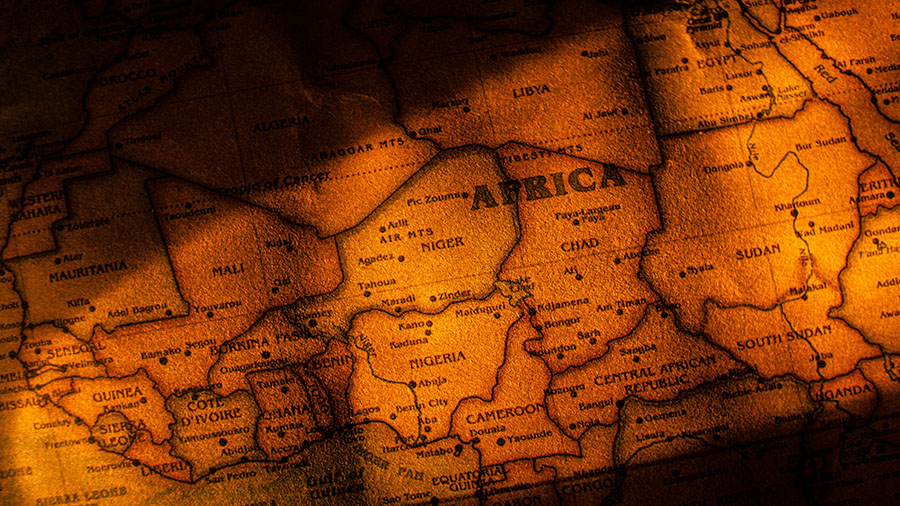
This innovation landscape is predominantly concentrated in four major hubs: South Africa, Egypt (North East), Nigeria (West Africa), and Kenya (East Africa). There remains a notable gap in the northwest region, although countries like Tunisia, Morocco, and Algeria show promise.
Pioneering Clean Technology
Emerging innovation economies, such as those in Africa, often thrive through the unique characteristics of specialized regions.
Recent findings indicate that Africa possesses substantial potential for developing clean energy systems and technologies. The continent is home to 95 cleantech scale-ups, making up about 11% of the total scale-up base, and these ventures capture nearly one-fifth of all capital invested in African startups. Moreover, cleantech is a significant contributor to high-growth companies, accounting for approximately 20% of both scale-ups that have raised over $100 million and those surpassing $1 billion.
Within the cleantech sector, a distinctive vertical known as “gridtech” is currently emerging, comprising 16 scale-ups—17% of the total cleantech segment—and two scalers, which make up 25% of this sector. Kenya-based Sunking stands out as Africa’s sole cleantech technology giant in the gridtech field.
Addressing the Infrastructure Challenge
Despite positive developments, a significant challenge looms: the lack of adequate grid infrastructure, which inhibits the expansion of energy system technologies. The current state of Africa’s electricity grid infrastructure is highly fragmented, as high-voltage networks are limited to densely populated regions, leaving many areas without connectivity.
Addressing grid infrastructure and enhancing electrification are crucial for unlocking Africa’s growth and innovation potential, especially given that the continent currently accounts for about 5% of the global energy supply.
At the same time, Africa possesses exceptional renewable resources, contributing roughly 13% of the world’s technical hydropower potential and around 60% of the globe’s top solar resources.
While Africa’s energy systems are expanding, fully realizing their economic and innovation potential hinges on accelerating electrification and reinforcing grid infrastructure.
The role of blended finance is essential for fostering this growth. Both private capital, which stimulates innovation, and public funding, which supports basic infrastructure like grid expansion, are needed. Structured public financing initiatives must complement private sector investments to address the limitations of the relatively small domestic venture capital market, which tends to focus on early-stage funding.
Public investments are vital for infrastructure development. Particularly in the grid tech space, retail investors are expected to contribute up to 80% of total investments by 2030, reflecting the need for capital-intensive and high-risk infrastructure projects. Currently, international capital dominates this market, with about 69% of active investors coming from outside the continent, underscoring the reliance on foreign investment despite a growing local presence.
For more insights, refer to our report: Grid Innovation: Mapping the Opportunities and Challenges Ahead – 2026 Report Africa.
Alberto Onetti serves as the Chairman of Mind the Bridge and is a Professor at the University of Insubria. With experience as a serial entrepreneur—including founding Funambol, one of Italy’s most funded scale-up companies—Onetti is recognized as a leading international expert in open innovation. He has facilitated numerous open innovation projects with large multinational corporations and provides advisory services on the topic. His insights feature in esteemed platforms such as Sifted (Financial Times) and various technology blogs.
