


U.S. Presence at SPIEF Undercuts Putin’s Propaganda Efforts
A select group of American influencers and administration officials recently arrived in Russia, coinciding with Russian President Vladimir Putin’s need for a propaganda uplift. Their arrival coincided with the opening of the St. Petersburg International Economic Forum (SPIEF), often dubbed Russia’s version of Davos, which commenced in St. Petersburg on June 3. This annual gathering serves as a platform for Putin to project Russia’s strength and global presence. Officials reported that the event attracted over 20,000 attendees from more than 100 countries, with high-level representatives from 76 nations.
Challenges Facing Putin Amidst Ongoing Conflict
Putin’s challenges are intensifying, particularly with Ukraine’s drone strikes disrupting crucial logistics and diminishing domestic support. The forum opened under a pall of black smoke, a direct result of Ukrainian military operations targeting Russian infrastructure, including a naval base and an oil terminal. These developments underscore the heightened tensions and the precarious position of Putin’s administration.
High-Profile Guests Draw Mixed Reactions
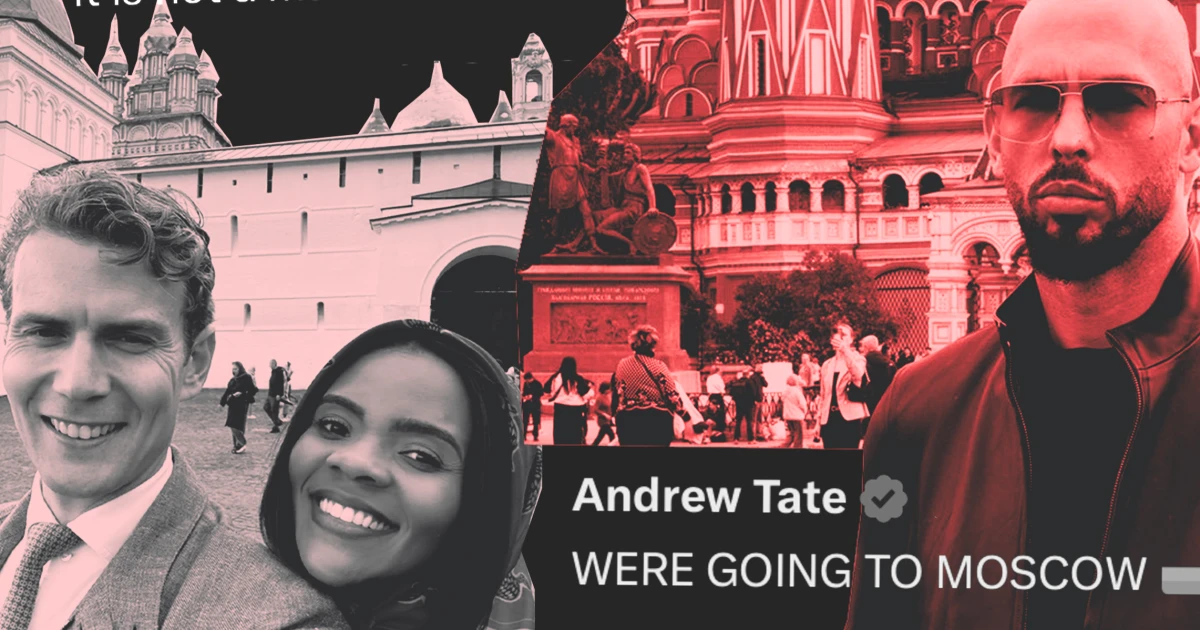
Among the notable Americans attending the forum was Candace Owens, a prominent right-wing podcaster and past supporter of Donald Trump. She was accompanied by Rodney Mims Cook Jr., the chairman of the American Board of Fine Arts. Meanwhile, Andrew and Tristan Tate, American-British influencers, were visible in Moscow, sharing social media moments amid fans but did not participate in SPIEF.
Domestic Propaganda Implications of American Visits
Experts suggest that the presence of these Americans could serve as a propaganda tool for Putin, providing him with a domestic morale boost at a time of growing discontent surrounding the war’s economic repercussions. As gas shortages force Russians to queue for hours at fuel stations, the symbolism of American visitors may serve to mitigate national dissatisfaction.
The Forum’s Atmosphere and Messaging
At the SPIEF, discussions surrounding Russia’s internal issues were notably absent, highlighted by the strong presence of state media. RT, the Russian state broadcaster, even introduced cocktails creatively named after political figures, reinforcing an image of conviviality during a period of significant international tension. Notably, RT has previously faced sanctions for its efforts to recruit American influencers for propaganda purposes, creating a complex backdrop for their involvement.
Responses From American Officials and Media
Owens found herself in the spotlight during an interview with RT host Rick Sanchez, who has adjusted to life in Russia since facing sanctions. During the discussion, Owens spoke about her favorable impressions of Moscow, casting aside the prevalent narratives of distrust toward Russia. Simultaneously, the U.S. State Department continues to advise against travel to Russia, citing serious risks, including unlawful detention.
Discrepancies in Diplomatic Messaging
The involvement of American representatives at SPIEF sparked confusion back in Washington. Secretary of State Marco Rubio expressed he was unaware of any official attendance, highlighting the disconnection between Russian media claims and the U.S. government’s understanding of its diplomatic stance. Russian officials have touted this visit as a thaw in U.S.-Russian relations, which many analysts view with skepticism.
