


ZURICH (AFP) – Leading figures in Switzerland’s business and labor sectors are uniting in opposition to an impending vote on immigration restrictions, scheduled for this Sunday. They express fears that the outcome could significantly impact employment and trade relations with the European Union.
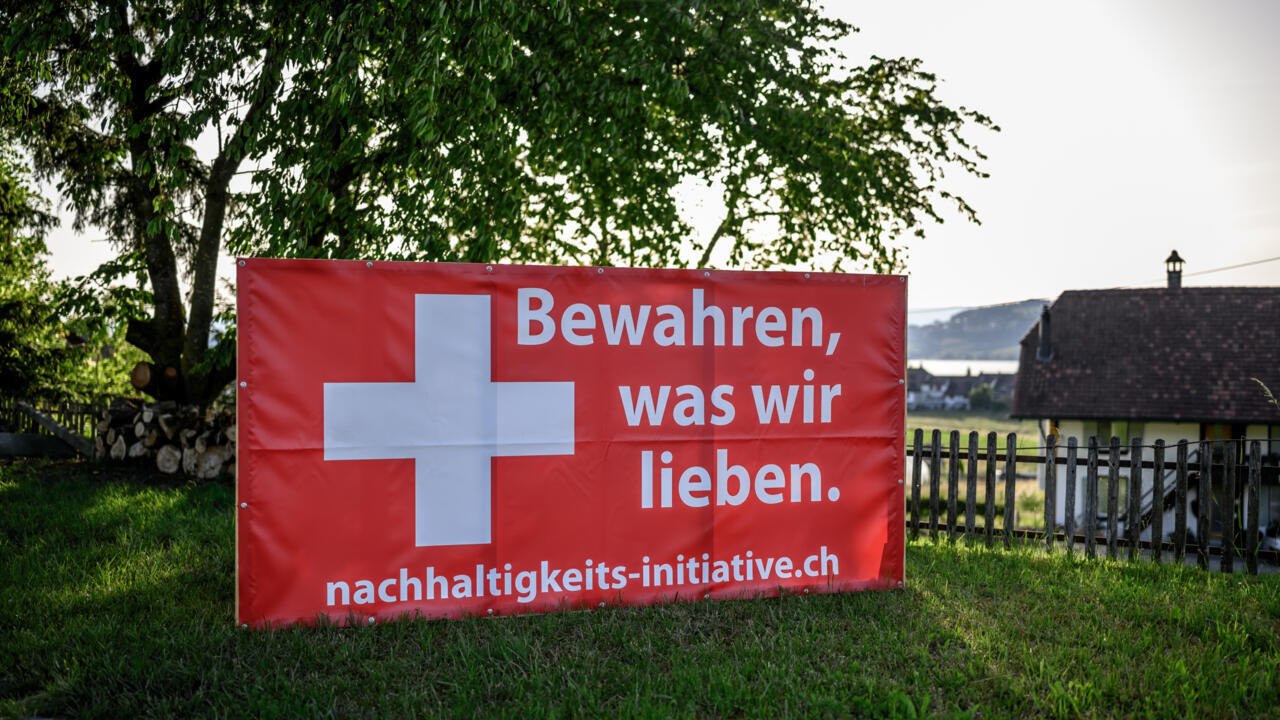
At the heart of the upcoming vote is a proposal put forth by the far-right Swiss People’s Party (SVP). This initiative seeks to cap the population of the affluent Alpine nation at 10 million by 2050. Dubbed “No to 10 Million Switzerland!”, the SVP contends that such measures are essential to address “out-of-control” immigration, which they assert has caused a variety of societal issues, including overcrowded public transport, rising housing costs, and urban sprawl.
Despite the initiative’s widespread resistance from government officials, legislators, and business leaders, polls indicate the vote may be more contested than expected. Major employer organizations and unions have labeled the proposal the “Chaos Initiative,” warning that it threatens to undermine Switzerland’s economy—particularly sectors like healthcare, construction, and medical research, which heavily rely on foreign labor, primarily from neighboring EU countries.
In the hospitality sector, for example, over 50% of the workforce is comprised of foreign nationals, according to Martin von Muth, president of the Hotelerie Switzerland industry group. He cautions that passing the initiative could exacerbate existing labor shortages within the industry.
Potential Threats to EU Market Access
Concerns are also mounting regarding the potential ramifications of the vote for key bilateral agreements between Switzerland and the EU, such as the 1999 Agreement on Freedom of Movement of Persons. Last year, the EU accounted for more than half of Switzerland’s total exports, which exceeded 147 billion Swiss francs ($185 billion).
Pierre-Yves Bonvin, president of textile machinery manufacturer Steiger, emphasizes the importance of EU market access for his business, which exports all of its production to the EU. Although the company’s operations have moved some production to China, it retains high-value machinery in Switzerland, employing a diverse workforce, over one-third of whom are foreigners.
Bonvin underscores the need for specialized skills, stating that while Switzerland has a sufficient pool of engineers to design and assemble machinery, it falls short in expertise for testing and calibrating. He highlights that the diminishing training opportunities in Switzerland have compelled companies like his to seek qualified experts from France and Germany to maintain operations.
Concerns Over Workforce Allocation
Although proponents of the immigration initiative highlight a proposed quota allowing 40,000 immigrants annually, critics argue that such numbers are insufficient and potentially skewed. Simon Michel, head of Ipsomed—a medical technology company—foresaw industry suffering due to prioritization of healthcare roles, which would leave sectors like manufacturing at the bottom of the queue.
As Michel’s company anticipates hiring around 100 precision machinists in the coming years to meet rising demand for obesity treatments, he acknowledges the intense competition for these skilled professionals. Despite implementing a robust apprenticeship program, he expresses skepticism about the company’s ability to train all necessary positions locally, further underscoring reliance on talent from neighboring countries.
Echoing these sentiments, trade unions warn that this shift could prompt exporters to relocate, resulting in job losses within Switzerland. The largest union, Unia, has cautioned that the initiative may weaken labor protections and eliminate regulations that prohibit discrimination against foreign employees, ultimately opening the floodgates to wage exploitation. They assert that the SVP’s so-called “xenophobic campaign” could adversely affect salaries for all workers in the country.
© 2026 AFP
