


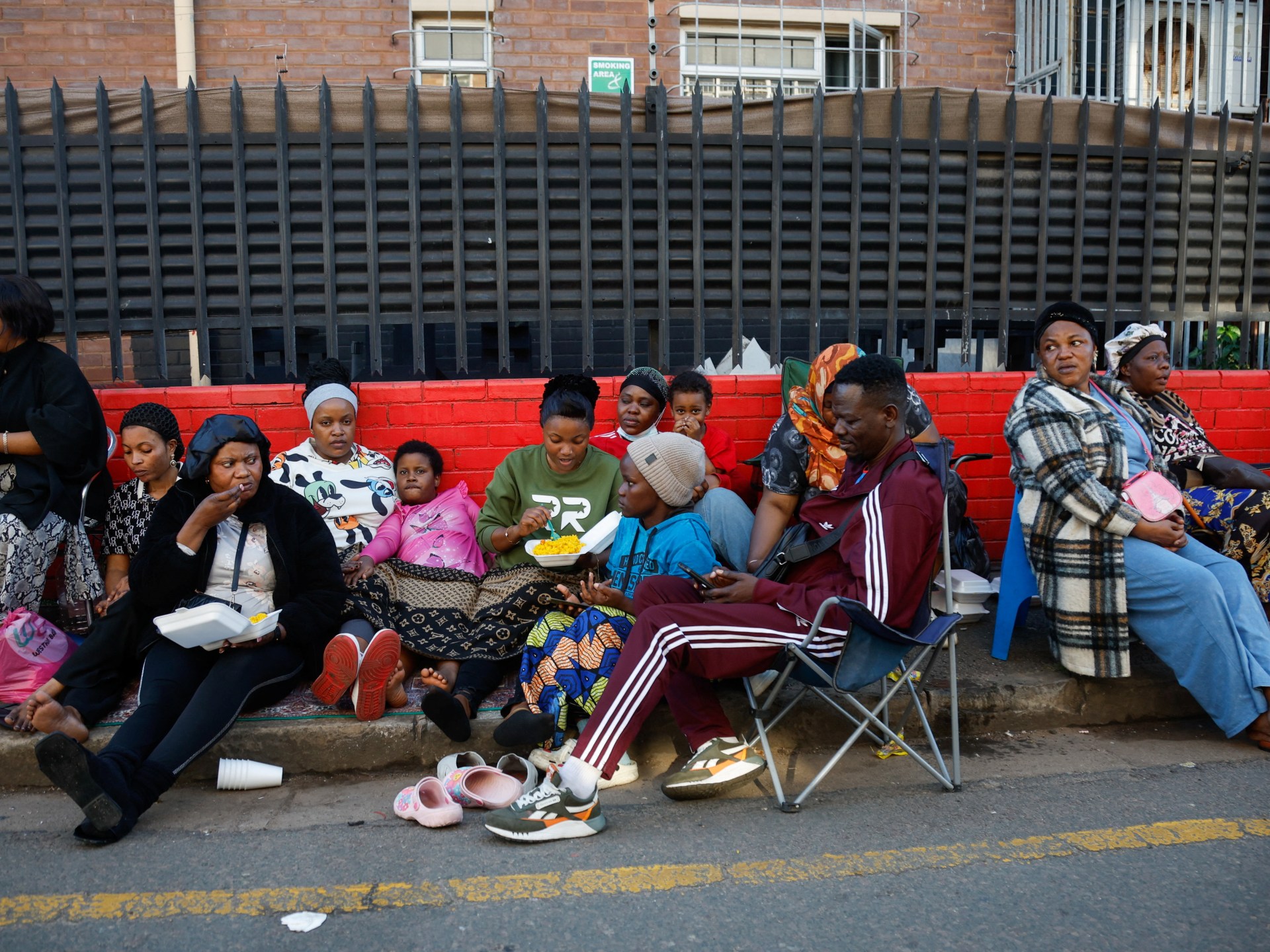
Residents of Themberile, an informal settlement on the outskirts of southern Johannesburg, congregated on Sunday, bracing themselves for a looming deadline imposed by anti-immigrant activists. These activists have demanded that foreigners leave South Africa by June 30.
The rally, organized by the Themberile Crisis Committee, sought to counter escalating xenophobic violence. Committee leaders emphasized their intent to protect foreign nationals amid rising tensions across the nation.
Approximately 300 attendees included many Malawian immigrants, all voicing their concerns about the uncertain future they face. The meeting, however, highlighted a significant divide in opinions among participants; some urged unity and non-violence, while others pointed fingers at immigrants for various social and economic issues. Calls that encouraged foreigners to leave South Africa were met with applause from segments of the audience.
As the gathering wrapped up near Park Station, news broke that a Malawian national had been stabbed in the vicinity. The nature of this attack remains ambiguous—whether it was a random act of violence or a reflection of the anti-immigrant narrative swirling in the area.
Luke Shinwell, a professor from the University of Johannesburg, commented on the situation, noting how efforts to quell violence are complicated by internal divisions within community councils. Leading up to the rally, discussions had centered on persuading locals that violence was not the solution. However, conflicting opinions on the status of undocumented immigrants surfaced during the event.
The news of the stabbing, Shinwell noted, was viewed by local residents as a criminal act rather than one of organized xenophobia, yet he recognized the interconnectedness of these incidents and public sentiment.
Escalating Fear and Misinformation
For many Malawians outside their consulate in Johannesburg, the debate surrounding the stabbing seems remote; they feel acutely aware of being targeted and marginalized. The June 30 deadline looms large, intensifying anxiety among immigrant communities.
A Malawian man, who spoke anonymously, shared his fear of danger to his family if he does not return home by the deadline. He spent the night outside the consulate while desperately seeking transportation. With the clock ticking down to less than 48 hours, uncertainty hung in the air.
The unofficial deadline appears to have spread through social media and pamphlets that falsely mimicked official government notices. These leaflets alleged that undocumented immigrants must vacate South Africa by June 30 or risk arrest, detention, and deportation, claims the South African government has deemed fraudulent.
James Makki, a barber from Malawi, recounted hearing of the impending deadline through neighbors, expressing his distress, claiming that failure to depart would lead to violence. He is among many anxious individuals awaiting assistance to return home, fearing for their safety.
Mobilization and Rising Tensions
The anti-immigration group, March and March, contends that its focus is on addressing government failures related to illegal immigration rather than targeting individuals. Nevertheless, various incidents associated with similar mobilizations have raised alarms among local authorities.
Tragic outcomes have accompanied these movements, such as the death of a Mozambican national in Mossel Bay and a Malawian man killed in Pietermaritzburg, both linked to anti-immigration mobilization activities.
In response to increasing unrest, South Africa’s acting police minister announced heightened security measures, including canceled police leave and additional personnel deployment, all in anticipation of potential violence. Protests have already erupted in regions like Johannesburg and Durban, with demonstrators in Soweto blaming illegal immigration for wider government failures while calling for stronger border control measures.
Jacinta Ngobese-Zuma, founder of March and March, defended the demonstrations as a critique of government policy, rejecting accusations of xenophobia. Yet for migrants who find themselves sleeping on the streets or in shelters, the lines between political dissent and personal threat are rapidly blurring.
Government Stance and Ongoing Uncertainty
Minister Mmamoloko Kubai, who leads the Inter-Ministerial Committee on Migration, stated that the rhetoric surrounding the situation had tempered over the weekend following government warnings. Organizers of the recent rally emphasized the necessity for a peaceful demonstration while expressing concern over unauthorized pamphlet distribution linked to their agenda.
Statistics South Africa estimates that around 2.4 million immigrants, both documented and undocumented, inhabit the country. Kubai underscored the government’s commitment to maintaining order while addressing the needs of migrants wishing to leave, although she confirmed that no refugee or transit camps would be established.
Lingering Anxiety and Societal Divisions
Shinwell reflected that the unrest surrounding the June 30 deadline highlights simmering grievances related to unemployment, crime, and governmental ineptitude. He cautioned against the community’s tendency to categorize individuals as either belonging or not belonging, suggesting that such divisions can foster dangerous consequences.
As government officials have sought to downplay the urgency of impending protests, President Cyril Ramaphosa emphasized that violence would not be tolerated. Yet pervasive anxiety remains in southern Johannesburg, with individuals preparing for what may come just hours before the deadline.
“If they don’t leave, we will take matters into our own hands,” warned one local resident, encapsulating the tense atmosphere in the community.
